Hugh Likes Video Games
Geometry Wars 3: Dimensions Evolved
Played on PS Vita

The Geometry Wars series has a simple concept. A little ship flies through a 2D grid and shoots enemies for points. It also has an elegant, pseudo-vector graphics visual style. So how do you improve on a classic formula whose visual flair is so immediately iconic? Any change to the gameplay or graphics would be too drastic with so simple a concept. Rather than just retreading the same formula or completely retooling it, “Geometry Wars 3” does something both unexpected and completely unique.
Geometry Wars 3 Dimensions Evolved is not a 3D shooter. It is a 2D shooter mapped to a 3D object. A tradition 3D shooter lets you maneuver thought a vast environment of empty space filled with enemies and objects. Geometry Wars 3’s environment is a 2D grid, but presented as a variety of 3D solids, like globes, hemispheres, cylinders and cubes. Projectiles, enemies, and obstacles are likewise set on these objects, making movement surprising, innovative, and just as addictive as previous incarnations. For example, your projectiles move very differently on a capsule-shaped surface than they do on a disc. These shaped playing fields put interesting spin on gameplay.
There are plenty of other additions as well. A variety of level types and gameplay modes keep the experience fresh, and a lengthy first player Adventure mode does a good job of introducing them to the player. Players also get a variety of computer controlled drones that assist in a number of ways, from collecting shards to increase your score modifier, to ramming opponents or firing highly accurate, sniper rounds. Drones also have customizable special attacks that further increase their novelty.
The only major flaw of the game is that the soundtrack is rather forgettable techno-pop that soon grates. Overall, Geometry Wars 3 is a winner. Its addictive but varied gameplay will keep shooter aficionados trying for one more high score for a long time.
Hugh Likes Video Games: Geometry Wars 3: Dimensions Evolved
September 4, 2015
Hugh Likes Video Games Gaming, Geometry Wars 3, HLV, Hugh Likes Video Games, Shooter, Sierra, Video game Leave a comment
Nice Kicks! Queen City Conquest and In Their Own Worlds
May 3, 2015
Uncategorized Arts, Gaming, kicstarter, Nice kicks! Leave a comment
Nice Kicks-Queen City Conquest and In Their Own Worlds!
Hello readers! It’s finally spring! The temptation to turn off the computer and frolic in the sunshine weighs heavily upon me, but I have news to share. Specifically, some Kickstarter projects I’m backing that you should jump on before they finish.
Queen City Conquest
The fourth itteration of this Buffalo, NY table-top and board gaming convention is quickly becoming a local institution! This more than any other is the con where I get introduced to new games that I HAVE to get, stretch my dungeon-crawling legs, and score great swag in their charity silent auction. Last year, I played “Boss Monster” and “Sentinels of the Multiverse” for the first time. This is a real community convention, and it is the highlight of my September. Weekend Passes for this year’s event are going for $30 on the Kickstarter! Trust me, that’s a deal too good to pass up!
In Their Own Worlds
J. R. Blackwell is one of those rare creative polymaths with a golden touch. A Photographer, Journalist, Writer, Costumer and Game Designer, she’s something of a geek renaisance woman. Nowhere is this more apparent than in her latest project, “In Their Own Worlds.” A synthesis of her exceptional talents, she has begun a series of photography sessions in which she photographs authors in the settings of their own works. She photographed her husband Jared Axelrod as a bystander of his own super-villain creation Comrade Cocroach as a proof of concept, and has plans for shoots with Mur Lafferty, Ursula Vernon, Chuck Wendig, and other popular speculative fiction authors. New shoots are being constantly unlocked as stretch goals, so the more you donate, the better it gets.
These two projects are in their last weeks. I wholeheartedly recommend both of them.
Support Hugh on Patreon for bonus content and more goodies!
“The City: A Story in 140 Characters” is now available via Amazon and Gumroad!
Hugh Likes Video Games: Velocity 2X
January 26, 2015
Hugh Likes Video Games Gaming, HLV, Hugh Likes Video Games, Playstation, review, Velocity 2X Leave a comment
Hugh Likes Video Games
Velocity 2X
Published by FuturLab
Playstation 4/Playstation Vita

“Velocity 2X” is a neat little indie game that defies classification. The sequel to “Velocity Ultra,” it follows the adventures of ace pilot Kai Tana and her prototype teleporting space fighter the Qwarp jet as she fights an evil alien empire and searches for a way home.
Mashing up a traditional shooter with tricky teleportation puzzles, “Velocity Ultra” was a blast to play. The sequel expands on it just about everywhere, with touched-up graphics, a delightful story, more bonus content, and platforming sections. I expected the latter additions to break the flow of gameplay, but they are just as fun and challenging as the flying. The controls and abilities used on foot cleverly echo what you do in the cockpit, and feel very organic. Thanks to excellent level design, these sections feel like an enhancement rather than a disruption.
The other main enhancement in the sequel is a much beefed-up story. Kai’s one-woman assault on a stock empire of war-like aliens feels like both a trope and an inversion. She is hardly the first lone fighter pilot to go up against a fleet of aliens, but having her invade them, backed up by a slowly forming revolt of enslaved pacifist scientists, feels perfect. Kai is an outstanding character of the mold we see too rarely in games. She’s equal parts sass-mouthed and kind-hearted, and she’s a big enough bad-ass to back it up. She’s got Samus Aran and Lara Croft in her DNA, and she is a one-woman army, not a sex object.
The gameplay remains strong overall, and the challenge ramps up at a nice curve for new players. By the end of the game, you’ll be straining both your reflexes and your puzzle-solving skills to complete the labyrinthine mazes of each level.
Velocity 2X is a fun, challenging indie shooter that defies both genre and convention. It is available for PS4 and Vita as a download from the Playstation store.
Patreon
The Gamer’s Guide to Writing: An Introduction
January 5, 2015
Gamer's Guide to Writing, Gaming, Writing Final Fantasy, Final Fantasy IX, Gamer's Guide to Writing, Gaming, Writing 2 Comments
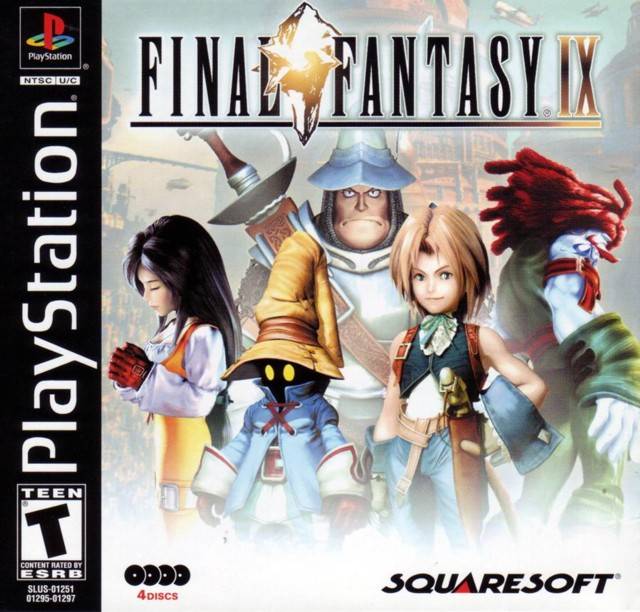
IMG courtesy of Gamefaqs.com
Like many genre writers, I enjoy playing video games, and I often complain that my gaming addiction is taking time away from my writing, and vice-versa. But I’ve found that in some ways, my love of gaming has had a great impact on my writing. Even in a genre that is generally panned for its presentation of script and plot, an observant writer can still pick up pointers about what to do, and what to avoid. This blog is a look at some of the lessons I’ve picked up in my many years behind a game pad.
A game I’d like to look at first is “Final Fantasy IX.” Launched in the U.S. in November of 2000, it is often overlooked because of the timing of its release. It came out at the tail end of the Sony Playstation’s lifecycle, a full month after the blockbusting premier of the Playstation 2. Even though the game pushed the console to its limits, it was competing against more dazzling technology. It also has an awkward place in the franchise, between the panned “Final Fantasy VIII” the next year’s revolutionary “Final Fantasy X” for the PS2.
None the less, FFIX is an excellent source for writers looking at plot, structure, character, and theme. Over the next series of posts, I’ll be drilling deep into the plot of the game, examining the presentation and hunting for literary gold, as Dave Robision would say. Think of this like a very different sort of walkthrough. Instead of looking for secrets to success in the game, I’ll be looking for hints to improve writing craft. Spoilers obviously will be a part of this project. So if you have an old set of discs gathering dust, or a few bucks of Playstation Network credit lying around, come join me as we examine how a classic game tells a great story.
Next week, we’ll look at compact character introductions, and what we can learn from the title screen!
Final Fantasy IX was originally released for the Sony Playstation and is also available as a digital download on Playstation Network.
Patreon
Welcome Back to Mario Kart!
June 13, 2014
Gaming, Review Gaming, Mario Kart, Mario Kart 8, review, Wii U Leave a comment
Although I’ve had a Wii U console since February, I haven’t seen a game that made me keep the system powered until now. After a soft launch, and a library of ports like “The Legend of Zelda: Wind Waker HD” and sequels like New Super Mario Bros. U, I’ve been ignoring it. Mario Kart 8 is the game my Wii U has been waiting for, though.
To be fair, MK8 is as familiar as Nintendo’s other offerings. It is the next iteration in the beloved kart racer with a few new innovations and enhanced graphics. But man, what polish that enhancement brings.
MK8 returns with a lot of the improvements from Mario Kart Wii and Mario Kart 7 intact. Players still race for coins, can control their characters with a variety of control schemes from the Wii U classic controller to the Wiimote racing wheel. Flying and underwater track sections also return, and have never looked or played better.
If there is anything I find disheartening about Mario Kart 8, is that it signifies the final nail in the coffin of the F-Zero series. In the Super Nintendo era, F-Zero was that fast, spectacular racing game, while Mario Kart focused on lower speed, cartoonish battle races. While MK8 still maintains the series’ whimsy, upped its game for spectacle to new heights.
This game is fast! Between the flight sections and the new ability to drive along walls and vertical surfaces, there is a real sense of speed this time around. Even the process for falling off the track has been streamlined. Instead of a lengthy sequence that robs you of precious seconds, Lakitu just takes three coins from your reserve.
The graphics this time around are this most highly polished yet. HD polish agrees with Mario Kart. One of the classic tracks, “Moomoo Meadows,” really showcases the difference between the Wii and the Wii U. The new tracks look great as well, and are filled with dazzling moments, from driving up a waterfall to a track inside of a Mushroom Kingdom Disco.
There are a few nitpicks in all the polish, though. There are fewer customization options for setup, including split-screen multiplayer that is only vertical. Annoying, but not a deal breaker. Also, rather than being set in closed arenas, battles now take place on the racing tracks, which are too big to accommodate a two player match.
Mario Kart 8 is both a return to form and a surprising elevation of the familiar racing franchise. For a console that has been languishing, this is a much-needed “must have’ game.
Donations For Life
May 13, 2014
Writing Drabbles, Fiction, Gaming Leave a comment
He found a likely corner and put on the little red hat. It was kind of a cliche, but people expected it. He set up the bucket and rang the bell. Somewhere time ticked by. One more coin, he promised himself. Then, he could get out of the cold. Someone tried to dip their hand in the bucket. He couldn’t have that, So he ran out and jumped on the thief’s head. There was a satisfying bop. Somewhere, a chime rang. That made a hundred coins. Which meant an extra life. The Save a Princess Foundation was finally getting somewhere.
The Legend of Zelda: A Link Between Worlds
February 12, 2014
Gaming, Review A Link Between Worlds, Gaming, review, Video game, Zelda Leave a comment
The Legend of Zelda: A Link Between Worlds
It has been said that Nintendo is a company stuck in the past. That they retread old ideas and characters, plying on nostalgia rather than innovation. And while there’s truth there, when they get it right, OH MAN do they get it right.
“The Legend of Zelda: A Link Between Worlds” is a 3DS sequel to the Super Nintendo’s “A Link to the Past.” Old School fans of the series will find the maps, designs and plot familiar. Mysterious figure arrives in Hyrule, is immediately revealed to be a bad guy, Link has to collect three pendants and the Master Sword to follow him to the other half of the game.
While it looks like “A Link to the Past’s” Dark World, the other section of the game takes place in Lorule, a more developed mirror kingdom complete with its own Princess and villagers. And Lorule is, for reasons that remain unclear until the end of the game, being torn apart.
Link can travel between the two dimensions using the game’s key new ability. Thanks to a magical bracelet he acquires early in the adventure, Link can change himself into a painting, and walk along walls. It’s a strange ability, and not particularly intuitive at first, but it is masterfully executed in the game, and provides a whole new set of puzzles to solve.
The other major change is that Link’s tools lack ammunition. Instead, Link has a stamina bar that slowly refills, and is shared by all of his rods, bombs, and ranged weapons. Link has access to most of his standard equipment very early in the game as well. This makes “A Link Between Worlds” a much less linear affair than previous games. Link has the ability to tackle dungeons in any order he likes.
The design of the dungeons is quite good, although some of the puzzle solutions felt a bit easy. Since the player has to do a lot less hunting for rupees and equipment, the game seems a bit short.
The artistic elements are reminiscent of the super nintendo, but trades sprites for nicely rendered 3d models. Although most of the game is seen from the top down, a few cut scenes switch to a perspective closer to the ground, and show off the 3DS’s horsepower. The actual 3d is possibly the best I’ve seen on the system. The terrain of Hyrule sinks into the screen, and enemies leap out. This is the first game where I honestly preferred to keep the 3d turned up the whole time.
“A Link Between Worlds” is a great game for players who are new to Zelda, and it rewards fans of the series with plenty of easter eggs, like Majora’s Mask, which can be found on the wall of Link’s House, but unfortunately, can’t be worn.
The game is a wonderful update on a classic, with an amazing twist ending. I highly recommend it.
Megaman I: Elegance in Design
October 1, 2013
Gaming, Review Gaming, Megaman, review, Video game Leave a comment
System: Nintendo NES/Famicom
Release Date: 1987
Megaman’s creator, Keiji Inafune recently funded a kickstarter for his new independent project, Mighty Number 9. Inspired by the buzz surrounding the new project, I went back and looked at the Blue Bomber’s original adventure with new eyes.
I didn’t have “Megaman” for my NES, but lots of my friends did, and I remember the games fondly from the early nineties. I also recall them being controller-threateningly difficult. I was curious to see how the first outing would stack up to my memories.
First of all, it is worth noting that the first game lacks the graphical and musical polish of the sequels. There are only six stages, and once the player determines the proper order for playing them, they fall rather quickly. Especially if you use the well-known ‘pause trick.’ Likewise, there’s not much of a story besides ‘You’re a good robot, they’re evil robots, go fight them.’ It’s the sort of fare from the era that is simple, but has been expanded upon greatly in the years since. For example, in the much-praised Megaman comic, put out by Archie Comics.
While I will agree that Megaman is hard, it was not quite so bad as I remember. Aside from a few of the end stage bosses, (and I am looking squarely at you, one-eyed rock monster) the deaths don’t feel cheap. Unlike other 8-bit era platformers, there is no countdown clock. The game gives you plenty of time to observe and experiment. Megaman really is the start of what later-generation indie developers would call ‘puzzle platformers.’ Most of the game can be best progressed by observing the challenge and discovering the pattern, or choosing the best Robot Master’s subweapon for the situation. For example, the flying torpedo enemies can often knock you into a pit when they explode, but freezing them rather than shooting them with your regular gun solves the dilemma. Most of the jumping puzzles can likewise be bypassed with the Magnet Beam.
This creates an odd challenge curve as the game actually gets EASIER as you gain new powers. The game’s non-linear nature lets you play the stages in any order, but the real challenge is figuring out an optimal path. each Robot Master has a weakness, and some levels, such as Fire Man’s stage, are practically impassable without the right weapon.
All in all, Megaman I is a solid entry in the NES’s roster of games. While its sprites and textures are a little less eye-popping than its successors, it is at the very least noteworthy for being the progenitor of something great, and a whole lot of fun. You don’t need to play it to get into the series, as there isn’t much of a story aside from the window-dressing standard to that generation, but it is certainly worth your time. Just watch out for those disappearing block puzzles.
Final Fantasy IV, Part two: The Fifth Man
June 14, 2013
Uncategorized FFIV, Final Fantasy, Gaming Leave a comment
Being the first Final Fantasy game for the Super Nintendo, Final Fantasy IV featured several technical advancements over the previous incarnations. The graphical tile set shares some similarity with FF III, but 16-bit graphics and an expanded color palate give the objects more depth. Everything feels a bit more real. The added power of the hardware also allowed for two key graphical improvements. The first is layering, which created better visual effects, filling the screen with fog or smoke, and lending atmosphere to the dungeons and other locations. The second is Mode 7 graphics. Mode 7 was an ability that the Super Nintendo had which allowed the background plane to be rotated against another object in a variety of ways. This was used by the Super Nintendo to create the illusion of a 3D environment with 2D backgrounds. FF IV uses the effect for airship sequences in the game. As the airship takes off, the ground literally tilts and shrinks away, creating an appearance of altitude. Square continued to refine and experiment with these effects in later games for the Super Nintendo.
The real thing that makes FF IV stand out in the series, however, is the battle system. Final Fantasy IV is the origin of the Active Time Battle System. In previous games, your characters would line up on one side of the screen, the monsters would take the other side, and you’d take turns hitting each other with swords and magic. IV introduced a system where the speed at which your characters acted was actually based on their speed stats. So faster characters wouldn’t just land more blows on their opponents, they acted more often. This was another break-out moment for the series, and was a key part of the game for years, although players could still set the controls so that monsters would politely wait if you were called away during a fight.
The other unique feature was a five-person party over the previous games’ four. This is the largest they ever got, and challenged the player with a difficult choice. Like in II and III, players could set characters in the front row to do more physical damage, or the back to boost defense. But in IV, some slots were reserved for the front, and others for the back, letting the players choose, but preventing them from putting everyone up front or in back. Again, the player had to familiarize themselves with the characters, and learn their strengths and weaknesses. Usually this wasn’t particularly difficult with knights up front and wizards in the back. However, some sections of the game gave you a party that favored one style over the the other, and left you with more vulnerable characters, or with choosing who to stick in the back for a while.
Final Fantasy IV is a game that focused on delivering one story, and challenging players to master it with very little of the customization offered by previous and later installments. Still, it delivers it so well, and the mechanics are so deep, that it still remains one of my favorites in the series.
Final Fantasy IV: Part One: Marrying the Personal and the Epic
June 13, 2013
Gaming, Uncategorized FFIV, Final Fantasy, Gaming 1 Comment
Picking back up in my look at the Final Fantasy series, let’s take a look at the first entry into the Super Nintendo era, Final Fantasy IV. Leaving aside the technical and nerdy depths of the game’s various versions and releases, today I want to talk about the game’s plot, and the huge step forward it represented for the series.
Final Fantasy IV is the story of Cecil, a Dark Knight of Baron, and the commander of the kingdom’s dreaded airship corps, the Red Wings. The game opens with a lengthy cut scene of Cecil flying to the country of Mysidia, attacking, and stealing their crystal. This is a unique opening for the series, as there is almost no game-play as the player is introduced to Cecil, his friends and subordinates, and his inner turmoil. Cecil is caught between his loyalty to the king and his desire to do what is right.
When he questions why the kingdom is committing such horrible crimes, the king strips him of his rank and demands he deliver a message to a nearby village, alone and on foot. Cecil’s best friend and Dragoon Kain stands with him. This is where the adventure, and the game, really begin. The first few hours of the game chronicle Cecil’s journey as he gains and loses allies, and fights to make sense of the world and his place in it. Finally, he washes up alone and broken on the shores of Mysidia, coming face to face with the horror of what he did at the start of the narrative.
The only way for Cecil to atone for his crime is to climb Mt. Ordeals and become a Paladin, shedding the darkness of his past. And in doing so, the greater motion of the plot is revealed, as he is opposed by fiends serving Golbez, a powerful, shadowy figure gathering crystals to himself for some purpose. And in becoming a Paladin, he transcends his quest to save himself, and takes on a mission to save the world.
Final Fantasy IV marked a turning point for the series. The quartet of tabula rasas with blank spaces for names were replaced by more fully formed characters that had a place and stake in the world. They had their own drive and agency, and drew the story forward as they wove in and out of the adventure tale’s intricate story. IV didn’t give the player any choice as to who was in the party at any given time. It was dictated by the story and the actions of the characters rather than the player. And all the characters had a reason to be there, be it a sense of obligation, a desire for revenge, or just a desire to keep the other characters safe. Square eased up on the narrative drive in later games, giving the player a bit more control, but this is the game when the party really became characters. It was a remarkable step forward, and it had a lasting impression on the series.
Next time: The technical innovations of the 16 bit era, and the five person party.
 Hugh J. O'Donnell