Home

Hugh Likes Video Games: Creature in the Well

Leave a comment

589036-creature-in-the-well-windows-apps-front-cover

Creature in the Well
Developed and Published by Flight School Studio
Played on Nintendo Switch

The Skinny: Post-apocalyptic Pinball Action

Creature in the Well is a stylish and imaginative take on a pinball puzzle game, and while it doesn’t always hit its mark, the concept is so interesting in its execution, that I didn’t mind the missteps.
You play as Bot-C, the last of an army of robots tasked with maintaining a huge, failed machine housed inside a mountain. Your tools and materials will feel very familiar to any pinball player, as the task involves supplying power to a variety of bumper-like conduits with a ball-shaped ‘energy core.’ Opposing you in your task is the eponymous Creature, a huge menacing skeletal figure that haunts the installation. It puts traps in your way and taunts you as you bring the machine back to life one system at a time.
The game really succeeds on design. The various rooms, which function as tables, are challenging and surprising, although there is a fair amount of repetition. The machine feels properly foreboding and industrial, and the creature is menacing and impossible, hiding in the shadows revealing only a legion of huge, skeletal hands and glowing eyes.
The difficulty spikes at places, but the levels can be played in any order, so you can skip and come back to challenges and boss fights when you are better equipped. The default settings are a bit fiddly, with the controls set to the face buttons. Your bot is equipped with a pair of blades, and these can be swapped out for various effects. They work much better mapped to the shoulder buttons, but the player can freely customize them.
Creature in the Well is a great little indie action game based on classic pinball mechanics. It’s available from Steam, Xbox One, and Nintendo Switch. It’s well worth your time.

 Support Me on Ko-fi

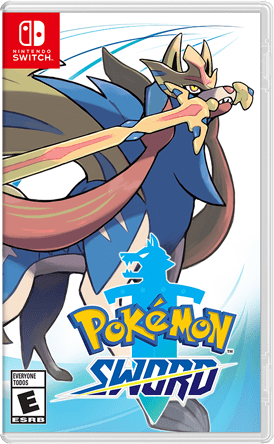
Hugh Likes Video Games: Pokemon Sword

Leave a comment

Pokemon Sword
Published by Nintendo
Developed by Game Freak
Played on Nintendo Switch

packshot_sword.png

The Skinny: Pokemon’s eight generation is a mix of familiar mechanics and exciting new ideas in a charming Pseudo-British region.

It’s another holiday season, which means another Pokemon game has descended from the from the Heights of Mt. Nintendo. This year’s is Pokemon Sword and Shield, the second Pokemon game for the Nintendo Switch, and the first non-spinoff entry on the system.
Set in the new Galar region, a charming, fully 3D rendered world based on The British Isles. Starting with Pokemon Black and White, the series has leaned far in to the cultural associations of each region, and this game is no exception. From catching Teapot ghosts to Team Yell, a team of hooligan antagonists, to enjoying a nice curry with your pokemon, the game feels very British. Or at least, reflective of how the Japanese developers view British culture. You play as a young trainer just starting out, chasing the footsteps of your neighbor, Galar champion Leon. Other rivals include the champion’s cheerful kid brother Hop, A goth trainer supported by Team Yell, and a stylish orphan working for a shadowy businessman. All in all, the plot is very familiar. Collect eight gym badges, do some unpaid cataloging work for a local scientist, and battle your way to the championship. The added spice is in the way the gym challenge plays out. Instead of fighting Gym Leaders One-on-One in some thematically decorated room, you take take them on in packed arenas in front of crowds of screaming fans. The gyms themselves are a mix of old school trainer battles and Sun and Moons unique missions, which strikes the perfect balance when topped with a dramatic battle on the pitch.
While Pokemon Sword and Shield does a lot right, let’s get to the nitpicks, and they’re probably not the one’s you’re expecting if you paid any attention to fan grumbles before launch. The game does a good job of letting players discover mechanics, such as Camping, Cooking, and the Poke Jobs system at their own pace, but the gym challenge is totally on rails. You have to visit towns in a certain order, and can only explore more of the map once you’ve collected the requisite badges. With the vast wilderness of the Wild Area to explore to explore, it feels a bit of a throwback when you are forced onto a lockstep path of Routes and Caves. Also, there isn’t as much customization in your party as I would have liked. Every pokemon in your party gains experience, which is great if you’re grinding to take on a gym, but not so great if you are trying to evolve a difficult Eeveelotion at low level.
The other problem is the online functionality. Mystery trade works great, but any other form suffers from a complete lack of communication. You can see other trainers running around the Wild Area, but they essentially become NPCs with canned dialogue. This can be somewhat overlooked. It is a game meant for all-ages, and Nintendo tends towards caution when it comes to protecting minors online. But without any way to communicate, trading becomes a frustrating process of laboriously showing a pokemon to your trade partner and hoping they somehow pull out one you’re looking for and don’t cancel the trade. Even a rudimentary system like in the DS games would’ve been more useful here.
With a mix of new and old systems, Pokemon Sword and Shield are a great little pair of RPGs full of monsters to collect and secrets to uncover in a charming new 3D setting. You can download the game from the Switch eshop, or buy the physical cartridge from your local game store.

Hugh Likes Video Games: Dragon Quest XI S

Leave a comment

Dragon Quest XI S: Echoes of an Elusive Age Definitive Edition
Published and Developed by Square Enix
Played on Nintendo Switch

cq5dam.thumbnail.319.319
The Skinny: Dragon Quest returns with a massive JRPG in the classic style.

While technically the PS4 version of this game came out in the U.S. last year, Dragon Quest XI S: Echoes of an Elusive Age is probably one of my top games of 2019. I gave the original a pass because I just don’t have that much time to sit down in front of my television. But the portable version has been a delight.
The game follows the familiar tropes of the OGJRPG of a young man being chosen by a great force to leave his remote village and confront evil, recruiting a troupe of companions along the way. But like the other modern iterations of the series, it does a great job interrogating the tropes and cliches of the genre.
Particularly interesting is Sylvando, who is a powerful fighter, and an openly gay character in a genre of game that gets a lot of traction on AO3 but is somewhat lacking in official representation. And while the game does play him for laughs (he is a jester, after all) it also goes out of its way to portray him as strong, brave and chivalrous as well. It’s rare to see something so well done in a space where representation usually boils down to male-gaze lesbians and that time Cloud Strife wore a dress in FFVII.
Combat is fun, a little on the easy side, and about what you’ve come to expect from Dragon Quest over the past 30 years. The 3D mode has an option to let you move the characters around in battle, but it is more for aesthetics than a gameplay feature. Mini-games also make a return, from the ubiquitous Dragon Quest casino to a horse-racing mini-game and a portable forge for making weapons and armor from recipes.
Another nice feature is that while the default is to play in 3D mode, the game also includes the 3DS 2D version, which was previously unavailable in the US, as well as a massive sidequest that was unique to that version. You can even switch back and forth between the two if you want, although progress is gated to certain story chapters that aren’t so clearly delivered.
While the game looks and plays great, there are a few compromises in the animation and display. Some character animations feel jerky and off. Objects, particularly complex ones like trees, pop in as you get close to them. My Switch audibly chugged when it had to render too much in handheld mode. And like most Dragon Quest games, it is entertaining but long. I have already put in over 40 hours and from what I understand I’ve barely scratched the game’s surface. Also like modern localizations of the series, it’s full of puns. So many puns. If you aren’t onboard for a hundred hours of dad jokes, this is not the game for you.
Dragon Quest XI S is a delightful return to form for Square Enix, crammed full of exciting quests, memorable characters and a surprising story. Just be sure to set aside some time to play it, because this game is long.

Buy Me a Coffee at ko-fi.com

Hugh Likes Comics: Heist

Leave a comment

Heist, or How To Steal a Planet #1
Written by Paul Tobin
Drawn by Arjuna Susini
Colored by Vittorio Astone
Lettered by Saida Temofonte
Published by Vault Comics

HLC Heist

The Skinny: A love letter to Science Fiction Noir and the start of something great.

Theirs something about Sci-Fi Noir that I find inexplicably cool. GIve me the rain-soaked neon of Blade Runner, the pitiless urban sprawl of the BAMA. Heist delivers a whole new world of grimy future crime, and it does it with a love for the grubby subgenre on its sleeve. Welcome to Grave City.
The planet Heist was the last Independent hold-out against the monolithic Dignity Corporation. Glane Breld took the fall when Dignity took over. And the man who set him up took his car. Now Glane’s a free man again, and he has a lot of work ahead of him if he wants to put together a crew skilled enough to steal the planet back again.
Heist #1 is one of those rare great comics where the writer and artists are working in perfect synchronicity. Tobin’s writing sets up the characters and the world well, without being too dense. Susini’s art is grimy and evocative of the great indie sci-fi comics of the 80’s and 90’s. This comic feels like how fans talk about 2000 AD. Astone’s colors wash the whole thing in a murky shadowscape that is absolutely perfect and sets the right level of menace for the underground of Grave City.
Heist #1 is a dirty, rotten jewel of a Sci-Fi Crime comic. This is going to be a big one, and you can pick it up at your local shop, or digitally from Comixology. Go out and get it.

 Support Me on Ko-fi

Hugh Likes Comics: Marauders #1

Leave a comment

Marauders #1
Written by Gerry Duggan
Drawn by Matteo Lolli
Colored by Federico Blee
Lettered by VC’s Cory Petit
Design by Tom Muller
Published by Marvel Comics

Marauders

The Skinny: X-Men’s big Sci-Fi experiment embraces the New Wave. On a boat.

Marauders #1 is the X-Men book I’ve been waiting for.
The X-Men, right down to their creation as five white teenagers in 1960’s America, has always been a metaphor for oppressed groups. This isn’t a new idea, whether Marvel Editorial admits it or not. But with House of X, Jonathan Hickman and Pepe Larraz changed tack. The core concept was still there, but Krakoa altered the dynamic and outlook of mutants so it became less of a struggle between them and human oppressors and more of a big, Golden-Age Science Fiction meditation on divergent futures.
But with Marauders #1, at least some corner of the X-line is back on solid New Wave SF ground, and examining the structures of what Krakoa hath wrought, because there’s no such thing as a problem-free utopia. The problem being that not everybody can use the gates to get to the distant island. In some cases, it is because the countries those gates are in have cordoned them off. For Kate, (formerly Kitty) Pride, it’s because Krakoa won’t let her in.
So, along with a crew of Iceman, Storm, and accidentally the original Pyro, she sets to sea in a boat to bring the mutants that want to come to Krakoa but can’f find a way. The result is the usual superhero dustup against a cadre of generic Russian soldier baddies, but the premise has legs to explore the real consequences of the new era. We get to see who’s being left behind, and where the cracks are in Moira and Xavier’s plans. Plus, this looks like the book where we’re going to see all of Emma Frost’s scheming play out, and that was the most interesting part of House of X, in my opinion.
X-Men as a concept always works better for me when it deals with characters rather than concepts. Marauders looks like the book where we’re actually going to see the two intersect in interesting ways. Issue one is out now digitally from Comixology, and in print at your local comics shop. Go check it out.

 Support Me on Ko-fi

Hugh Likes Fiction: Gideon the Ninth

Leave a comment

51EouKph8NL._SY346_

Gideon the Ninth
Written by Tamsyn Muir
Audiobook read by Moira Quirk
Published by Recorded Books

The Skinny: Shirley Jackson’s Lesbian Space Necromancers.

Tamsyn Muir’s Gideon the Ninth is an extraordinary novel that is a bit difficult to describe, pithy sentence above not withstanding. In a crumbling space empire built on necromancy, eight Necromancers, along with their Cavalier bodyguards, return to a long-abandoned planet to search for a secret power that could save their civilization. It’s a dense concept, and my attempts don’t do it justice, but Tamsyn sells it with from the first incredible opening line.

“In the myriadic year of our Lord—the ten thousandth year of the King Undying, the kindly Prince of Death!— Gideon Nav packed her sword, her shoes, and her dirty magazines, and she escaped from the House of the Ninth.”

A postmodern space fantasy/ghost story, Muir fills her novel with deeply rich characters like the eponymous sassy swordswoman Gideon and her Necromancer charge, Harrowhawk. Harrow is the teenaged leader of the Ninth House, and Gideon’s only childhood companion, so of course they hate each other, and are only working together to keep the other houses from finding out that a tragedy befell their planet, and they are literally the only suitable candidates. Her characters are outstandingly drawn and painfully real. And her setting, from the nearly-lifeless frozen tomb planet the Ninth House calls home to the abandoned, crumbling palace of Canaan House is a character in its own right; melancholy, ferocious, and disarmingly witty.
Muir’s handling of equal parts tension and farce are deft, constantly surprising, and utterly delightful.
Just as delightful as the writing is Moira Quirk’s narration on the audiobook version. Quirk does an excellent job brining Muir’s already vivid characters to life. She does a stunning job performing a large cast of strange and complicated characters.
Gideon the Ninth draws from the work of masters like Agatha Christie, Shirley Jackson, and Ursula K. Le Guin, while also building something modern and wholly unique. It is unlike anything I’ve read in a very long time, and not to be missed. You can listen to the remarkable audiobook version via Audible, or purchase a physical or ebook copy from your retailer of choice.

Support Me on Ko-fi

Hugh Likes Video Games: Sayonara Wild Hearts

Leave a comment

Sayonara Wild Hearts

Sayonara Wild Hearts
Developed by Simogo
Published by Annapurna Interactive
Played on Nintendo Switch

The Skinny: A fast-paced racing quest against Magical Girl Motorcycle Gangs.

Sayonara Wild Hearts is an unexpected gem of an indie game. Terms like ‘unique’ and ‘original’ get thrown around a lot in the gaming press, but SWH pushes against the tide of gaming trends and is all the more incredible for it.
You play as The Fool, the alter ego of a broken-hearted girl tasked with restoring harmony to a magical kingdom by racing against a series of girl gang street racers. Each level is a mixture of Synth Pop, Neon, and blazing speed. The combination of magical girl aesthetics and arcade racing style flow as smooth as silk, and the bite-sized level keep the action rolling at an exciting clip.
Each of the twenty-three levels embraces new mechanics as you race to catch your opponents. You’ll start out on a skateboard, but soon find yourself on not just the game’s signature chopper, but flying through the air on a magical sword, racing through a haunted forest on a giant stag, and even crossing a roiling sea on a boat. The game constantly introduces new mechanics, and this helps the pacing feel blazing fast.
The other thing that sets Sayonara Wild Hearts apart, if you haven’t already guessed, is its unapologetic embrace of feminine and queer aesthetics. In a space dominated by often toxic depictions of masculinity it is a breath of fresh air. The Fool is not an object of male gaze, and she isn’t a hyper-roided Space Marine killing a planet full of aliens. She is an altogether different sort of cool. This game came out alongside a few other games that have been gaining more attention, but I hope that SWH’s themes strike a chord with game designers and we see more games like it in the future.
Sayonara Wild Hearts is available now for the Nintendo Switch, PS4, and Apple Arcade service. It’s a highly polished indie gem, and well worth your time. I heartily recommend it.
Support Me on Ko-fi

Hugh Likes Comics: Legion of Super-Heroes – Millenium #1

Leave a comment

Legion of Super-Heroes: Millennium #1
Written by Brian Michael Bendis
Drawn by Jim Lee, Dustin Nguyen, Andrea Sorrentino, André Lima Araújo and Scott Williams
Colored by Alex Sinclair, John Kalisz, Dave Stewart, and Jordie Bellaire
Lettered by Dave Sharpe
Published by DC Comics

797613._SX360_QL80_TTD_

The Skinny: Guess who isn’t in this comic?

First of all, no, this is not a Legion of Super-Heroes book. At least, it isn’t yet. But the concept is entertaining in and of itself, and it looks like it’s getting there in Part 2 of this two-issue series. What this book does do is follow one character, Rose and her alter-ego Thorn, as she lives through one DC Universe ‘future’ after the other, not aging because of something that happened to her during her career as an anti-hero. Something Rose doesn’t even remember.
Each short section of the book does a good job of feeling different, and evoking the character of the setting. The Jim Lee-drawn near future is techy and bright, and very 90’s., while the Batman Beyond section is shockingly violent. The Kamandi section is sad, and beautifully drawn. The fourth section has a very 80’s manga future vibe. I’m not familiar with he character it is referencing, but the sterile gray lines and bureaucracy (and hover scooters) evoked Otomo to me.
Bendis’s writing is fine, but it’s mostly serving the plot and doesn’t give us too much character aside from following this woman who doesn’t age and her 90’s comic book version of Dissociative Identity Disorder. The art is where this comic sings.
While this special issue is more of a curiosity than a great story, It was fun to see these different takes on DC’s ‘future,’ and see a bit of how they are all connected. You can find Legion of Super-Heroes: Millennium #1 at your Local Comics Shop, or pick it up digitally from Comixoloy.

 Support Me on Ko-fi

Hugh Likes Fiction: This Is How You Lose the Time War

1 Comment

517ERJw6nDL._SL500_

This Is How You Lose the Time War
Written by Amal El-Mohtar and Max Gladstone
Audiobook read by Cynthia Farrell and Emily Woo Zeller
Published by Simon and Schuster Audio

The Skinny: Two time-traveling agents begin a correspondence that will have epic consequences.

This beautifully written novella follows Red and Blue, two agents of opposed possible futures working to ensure their side wins history, as they begin an exchange of letters that will, well, change history.
El-Mohtar’s and Gladstone’s writing is lyrical and beautiful. The locations for the two agents’ missions are tiny glimpses into beautiful and compelling worlds. From neolithic labyrinths to ruined battlefields on crumbling, distant planets. But the letters themselves are as fascinating as their correspondents’ adventures. The reader watches as their exchange starts as a taunt, gradually becomes more friendly as the two begin to understand one another, and eventually become something more intimate, in letters written on plain paper, and hidden in more devious methods, in the bottom of a teacup, in the rings on a fallen tree, or the boiled water in an abandoned hospital MRI machine. Each exchange is surprising and engaging, and the reader is left to wonder what they’ll think of next, and to worry as a shadowy figure stalks behind them.
The audiobook, although short, was particularly good, which a pair of excellent narrators that give the poetic descriptions and intimate epistolary sections real gravitas. Often an audiobook is either well narrated or well acted, and finding not one but two narrators that excel at both is a triumph in and of itself.
This Is How You Lose the Time War is a confection of time travel mystery romance that will leave you aching for more, and heading back through to see how they pulled it off when you’re done. It’s certainly award-fodder, and it breathes new imagination into it’s sub-genre. Don’t miss this one!

Hugh Likes Comics:

Leave a comment

Coffin Bound
Written by Dan Watters
Drawn by DaNi
Colored by Brad Simpson
Lettered by Aditya Bidkar
Published by Image Comics

Coffin Bound1

The Skinny: This tale of Action and Philosophy feels like how you remember 90’s Vertigo Comics.

Izzy Tyburn isn’t just going to die. She’s going to unlive. Living in a wasteland of philosophy and barbed wire, she has become the target of the unstoppable assassin known as The Eartheater. But rather than take the fight to the killer, she’s going to destroy her own existence first.
Coffin Bound is a comic about the ways we face or avoid entropy. It is intensely philosophical, and has a 90’s Vertigo vibe, which is not surprising, considering his other recent work is the relaunched Lucifer book from last year. The story features a figure whose head is a vulture skeleton, a strip club where the dancers don’t stop at their clothes, and an assassin who refers to himself, at length, as a ‘psychopomp.’ It is quite good, but it leans much more towards philosophers than action.
DaNi’s art also feels very reminiscent of 90’s Vertigo. There’s a particular panel of her lighting a cigarette which feels straight out of Sandman. I had a great sense of nostalgia for the period in reading the book, whether that was planned or not.
Coffin Bound is the start of a strange and Existential road trip that will feel almost nostalgic to longtime Vertigo Comics fans. You can buy the first issue from your local comics shop, or get it digitally from Comixology.

Older Entries Newer Entries