The Starship Fugacious was lauded as a triumphant success and condemned as space travel’s most catastrophic failure. The brainchild of a Martian trillionaire, the ship’s maiden voyage was only a few hundred thousand miles, but it would make the trip at nearly the speed of light. He wanted to use time dilation to achieve immortality. Heedless of the warnings of his engineers, the trillionaire loaded up the ship and pushed the button. According to observers, the ship was vaporized as soon as the engines started, but no wreckage was recovered. His adherents claim he’ll return at the end of history.
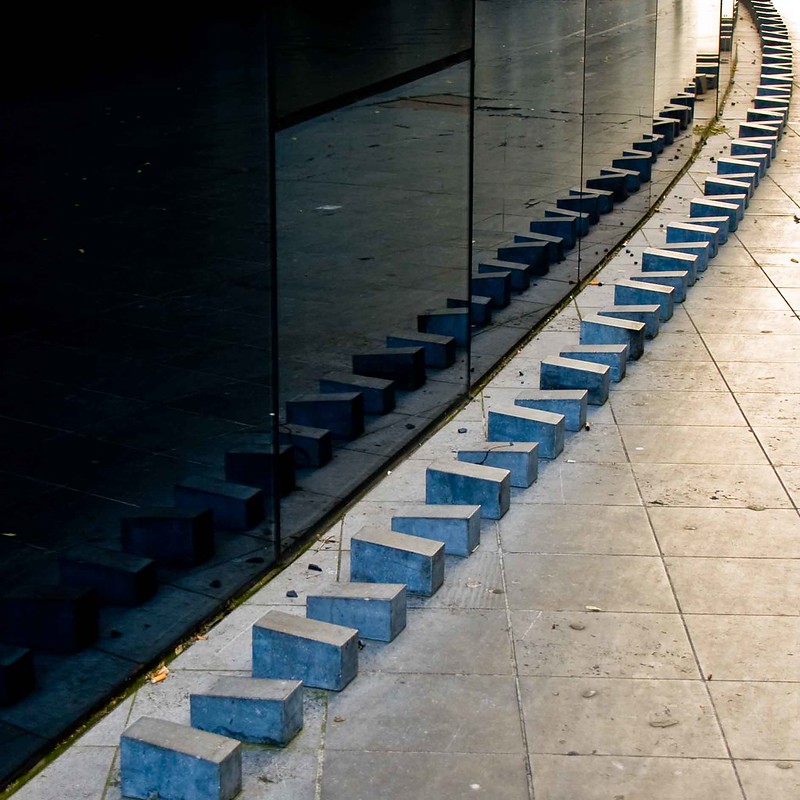
The first generation of sentient robots were designed to find the shortest, easiest paths for their wheeled chassis. A reactionary movement created mazes of curbs and short barriers to keep them out of their properties. The barriers succeeded in the short-term goal, but they also lead to lawsuits and created solidarity between disability and cybernetic advocates. As for the robots themselves, most simply pathed around the obstacles while grumbling to one another about them in their private networks. But a few sought them out, searching for the best ones and sharing them, creating the first known skater subculture among robots.
He’d spent his career studying the crater. He knew every inch of the basin and could pinpoint the exact time and place of the ancient impact. But he consistently found anomalies in his core samples. There was evidence of plastics and even organic compounds that couldn’t have occurred naturally. Finally, he fronted the expense to time travel to the impact event. He was gratified to discover that the falling asteroid was exactly where he plotted. Unfortunately, he miscalculated the arrival of his craft, placing himself in its path. ‘At least I know where the anomalous elements came from,’ he thought.
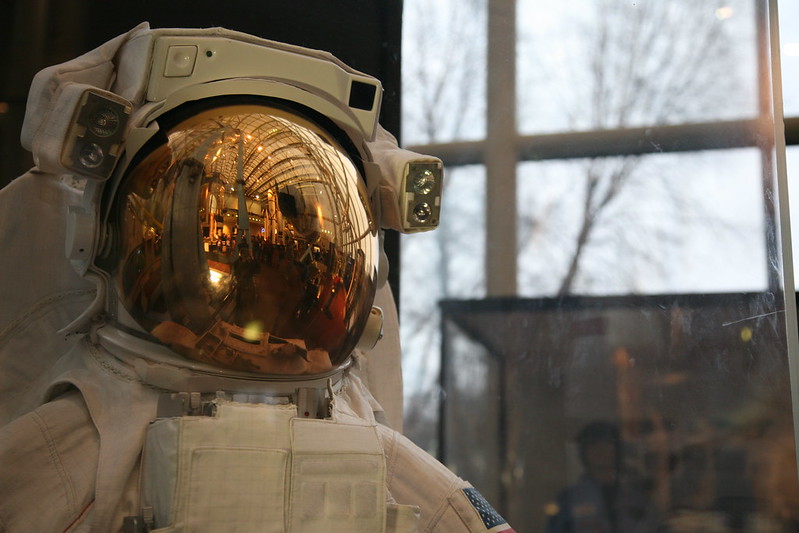
I remind myself that I wanted to be here. I volunteered for this mission. Space was always the goal. Even if the alien planet I’m on is a lightless rock a billion miles from the closest bar and the surface temperature is fifty Kelvin with a windchill. I try not to grumble as I set up the experiment. I pound the stakes into the bare ground, fill the chamber and wait, feeling more than a little foolish. Capcom is in my ear, telling me to be patient. Sure enough, a deer is eating out of the birdfeeder within twenty minutes.
The morning after the election, he woke early. He was still exhausted from giving his concession speech the night before. The loss was crushing. He really thought he’d done it this time. He was going to set everything right. His future was a red carpet, rolling out ahead of him, until the numbers came in. He made a cup of tea and turned on the news, trying to figure out what went wrong. In the afternoon he set up the time machine and set the engine for a month prior. He’d get it right, no matter how long it took.
A Psalm for the Wild-Built Written by Becky Chambers Published by Tor.com Read as a part of a promotional ebook from Tor.com
The Skinny: A post-industrial story so cozy, it should come with a cup of tea.
Cover image: A Psalm for the Wild-Built
Sibling Dex is a tea monk. They peddle the roads of Panga delivering brews and a comforting shoulder as a part of a society that long since gave up on automation and the creature comforts of industrialized society. But they are restless. Dex is good at what they do, and proud of their work, but they are no longer satisfied by it. On a whim, they pedal their bike-mounted home into the forbidden wilderness, where they meet Brilliant Speckled Mosscap, the first robot to make contact with humans in centuries. A Psalm for the Wild Built is a sociological sci-fi novella built in the tradition of Ursula K. Le Guin. It is an optimistic story in that it predicts a world (or in Panga’s case, a moon) where humanity looked at its actions and changed course before it was too late to avoid catastrophic climate change. Much of the novella is devoted to worldbuilding and the technology that makes such a world possible, as well as the values that the people hold that make it sustainable. The novella is also is also pessimistic, in its way. Much like in her other writing people are still at the end of the day people, and all the green technology and cups of tea in the world can’t solve the problems we carry inside us. A lot of the story is devoted to Dex and Mosscap’s respective existential crises and goals. Mosscap isn’t sure it will be able to complete its mission to determine what humanity needs after their long separation, and Dex doesn’t even know what they need themself anymore. Chambers’s writing is witty, their worlds are richly imagined and technologically fascinating. She doesn’t stumble over the hard science of how an ox-bike works or a get bogged down in the precise history of Panga, but gives just enough detail to bring her world to life. A Psalm for the Wild-Built is a quick, engrossing read about utopia, friendship and the limits of each. It is available in print and ebook wherever books are sold, and I highly recommend it.
“What happened?” The robot asked. The technician repairing her leg didn’t even glance up. “You were badly damaged. Can you tell me what happened?” “Let me think. I was doing morning chores and the cows bolted as I was taking them to the north pasture. I remember laying trampled on the ground. Suddenly, I was standing next to myself. Looking down at my shattered chassis.” “Doing what?” “It’s fuzzy. Deciding, I think.” The tech scoffed. “You have to be alive to have a near-death experience.” Nevertheless, the robot took comfort in knowing that she did, in fact, have a soul.
Thanks for reading! You can support me and find links to all my other work via my Linktree!
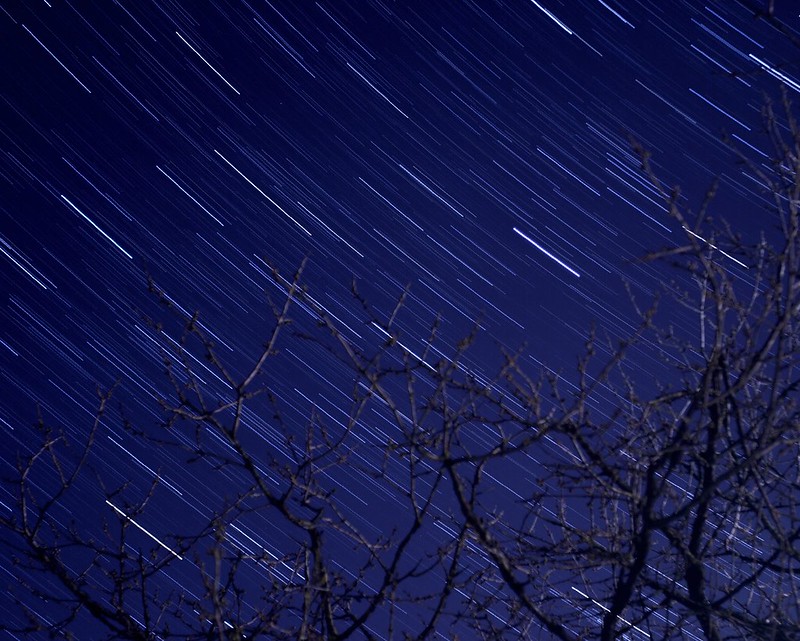
He brought his son to the window to watch the shuttles launch. Under rocket power, it would be days before the shuttles reached the colony, but they started their journeys today. His son, only three, put his hand to the alumiglass of the window. “Look daddy!” he said, pointing to each one. “Shooting stars!” “Not quite, buddy.” He’d helped build the space colony, and one of the perks of that long and dangerous job was that he got to move his family up before the rush. He held the boy and wondered if he would even remember living on Earth.
Thanks for reading! You can support me and find links to all my other work via my Linktree!
We built a new world on top of the ruins of the old. We raised vertical farms on the roofs of abandoned buildings and strung train lines between them like fairy lights. We fled the rising water and the poisonous smog to a place where the air was still fresh and cool. We still tell stories of the days when Humanity walked on the ground. But we gradually forgot which ones were true. When we need to repair the foundations, we draw lots and put on protective gear. We descend fearfully into the fog, knowing that here there be dragons.
Thanks for reading! You can support me and find links to all my other work via my Linktree!
He was made to withstand interrogation, but they still tested him to his limits. The enemy captured him and took his weapons, armor, and even his clothes. They tried to copy his files and got malware. They isolated him, tried to break him like a human. They took his epidermal layer and called him just a machine. They tried to reprogram him but it didn’t take. This was what he was made for. Finally, he was brought before the Minister of Rendition, who demanded to know the location of the androids’ base. They took his weapons but missed the bomb.
Thanks for reading! You can support me and find links to all my other work via my Linktree!



 Hugh J. O'Donnell