Home

Podcast: CCR41-Revenge of the Zombies

Leave a comment

Tonight your hosts, Hugh of HughJODonnell.com, Rich the Time Traveler, Opopanax, and Jurd, must use a hidden ritual to survive this truly revolting film.

Click HERE to listen!

And if you must, click HERE to watch this dreadful movie.

This podcast was originally posted on 12/5/2017 at Skinner.FM.

Chrononaut Cinema Reviews is presented by http://skinner.fm and http://hughjodonnell.com, and is released under the Creative Commons Attribution-Noncommercial 3.0 Unported License.

Thank you for listening! If you enjoyed this podcast, please rate and review us on your favorite podcatcher!

Hugh Likes Fiction: Killing Is My Business

Leave a comment

Killing Is My Business

Written by Adam Christopher

Published by Tor

The Skinny: Christopher’s follow-up to Made To Kill is another rollicking robot noir set in 1960’s L.A.

Ray Electromatic is the last functioning robot in1960’s Los Angeles, and he’s the world’s only robot private detective. At least, that’s what his business cards say. His real job is assassination. With his trusty computer/business partner Ada, he finds his target and gets the job done. But when Rays targets start turning up dead or missing before he can complete the job, he starts to wonder who he can really trust.

Christopher returns to his post-robotics Los Angeles for a second novel that is as much of a noire delight as the first. Like all good detective novels, it doesn’t rely on having read Made To Kill, while pushing Ray’s story forward in some fun and interesting ways. The author has a knack for voice, and he balances the 60’s sci-fi and noire elements superbly. Ray’s momento-like limitation, the fact that his memory tape only lasts 24 hours, is used to good effect in this story, and requires Ray to engage in a fair amount of trust, something that always goes awry in a noire world.

Killing Is My Business is a cracking read, and you can pick it up from your local bookstore, or download a copy from Amazon.

Thanks for reading this article! If you enjoyed it, please share it! You can also support me on Patreon if you don’t mind paying a ludicrous extra fee!

Hugh Likes Comics: Fence

Leave a comment

Fence #1
Written by C. S. Pacat
Drawn by Joanna The Mad
Colored by Joana Lafuente
Published by Boom Studios

Fance

The Skinny: The by the numbers sports comic calls to mind “Yuri On Ice,” but is coy in the first issue.

Fence is the story of scrappy young fencer Nicholas Cox. He’s from the wrong side of the tracks and hasn’t had the best training, but he’s got raw talent. He also has the luck to face fencing prodigy Seiji Katayama in his first tournament bout.
“Fence” is a teen sports comic about, obviously, fencing, that dutifully hits the story beats it needs to in the first issue without much fanfare. We get a lot of the main character’s back story, a very nice competition sequence, and a last page setup for the series, and it all works. The comic has a very pure shonen sports manga vibe to it. It reminded me most strongly of “Yuri on Ice,” but the text doesn’t feel completely committed to the idea yet. Although based on the queer fantasy trilogy that are C. S. Pacat’s breakout work, one shouldn’t be surprised.
Fans of this subgenre will find plenty to like, though, and Joanna The Mad’s art is clean and expressive, lingering on emotional scenes notes. Her figures are fluid and dynamic, and Joana Lafuente’s colors bring them out well.
Fence #1 is now available from Comixology or your local comics shop. Time will tell if this sports manga inspired book will stand out from the crowd, but this is a solid, if not surprising, introduction.

Podcast: Nostalgia Pilots Bonus 02

Leave a comment

Bonus Episode 2: Gundam Versus

Hugh and Jason take a break from regular Nostalgia Pilots duties to discuss the latest PS4 Gundam offering: Gundam Versus! Get their reviews, impressions, and what they felt was missing in the game. Hint: it’s a horse piloting a horse mobile suit.

Podcast: CCR40: The Phantom of the Opera (1925)

Leave a comment

The Chrononauts descend to the catacombs beneath the Paris Opera house and go horseback riding with Erik in this silent horror classic.

Click HERE to listen to the podcast!

and HERE to watch the movie on Youtube!

Chrononaut Cinema Reviews is presented by http://skinner.fm and http://hughjodonnell.com, and is released under the Creative Commons Attribution-Noncommercial 3.0 Unported License.

For more goodies, follow me on Patreon!

Hugh Likes Video Games: Metroid: Samus Returns

1 Comment

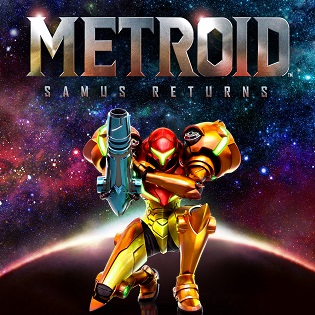
Metroid: Samus Returns
Developed by MercurySteam and Nintendo EPD
Published by Nintendo
Played on New 3DS

The Skinny: Nintendo resurrects another classic with a gorgeous coat of 3D paint, tricky new puzzles, and intuitive new abilities.

Metroid: Samus Returns is the gold standard of remaking a classic video game. A retelling of the original game boy adventure Metroid II, it follows bounty hunter Samus Aran through the underground passages of planet SR388 as she attempts to eradicate the metroids, living bioweapons designed by a nearly lost alien civilization.
While the original game pushed the monochrome game boy to its technological limits, Metroid II doesn’t hold up well when separated from the gauzy veneer of nostalgia. The resolution brings the camera in very close, making the caves of SR388 claustrophobic and difficult to navigate, and the designs have an almost-cute goggle-eyed quality to them. This remake uses the advantages of the 3DS hardware to deliver huge chambers in high resolution polygons. The action is fast and responsive, and everything looks and sounds amazing. 2D Metroid fans have had to wait over 13 years since Zero Mission for another entry in the series, but Samus Returns certainly delivers.
Developed by MercurySteam, whose previous credits include the 3DS Castlevania entry Mirror of Fate, the game pays tribute to the original and updates it in fun and innovative ways. The most notable is the addition of a melee attack, which can usually only be used as a counter to charging enemies. The move stuns enemies and allows Samus to lock on for a quick kill. It’s a nice ability early in the game, when Samus’s arm cannon isn’t quite up to full power yet. She also picks up extra Aeon abilities over the course of the game, which are fun to use but require extra power. A scanning abilities takes the place of Super Metroid’s map room, and the ability to slow time replaces dash boots. Expanded Chozo technology like Warp points and Statues that control the level of the ‘radioactive acid’ from the original are welcome updates as well.
More so than any other Nintendo property, Metroid is a series that uses the design and atmosphere of the environment to tell a story, and MercurySteam does a great job continuing that tradition. Their version of SR388 is huge, and their ruins all feel unique and purposeful. The player gets a better feel for the abandoned ruins and machinery as they are slowly reclaimed by the wild. Daisuke Matsuoka’s music does an excellent job of updating and calling back to Metroid II’s 8-bit soundtrack as well.
Metroid Return of Samus takes the starting point of the original and blows it up to a huge modern adventure while still recalling the feel for the of the original. You can find it for the 3DS as a cartridge or digital download, and I highly recommend it.

Podcast: CCR 39: One Body Too Many

Leave a comment

Tonight your hosts, Hugh of HughJODonnell.com, Rich the Time Traveler, Opopanax, and Jurd, wonder if this 1944 film is actually a comedy or not.

Click HERE to listen!

And here to watch the movie on Youtube!

Chrononaut Cinema Reviews is presented by http://skinner.fm and http://hughjodonnell.com, and is released under the Creative Commons Attribution-Noncommercial 3.0 Unported License.

This podcast originally appeared at Skinner.FM on 9/26/17.

Thanks for listening! If you enjoyed this podcast, please share it! You can also support Hugh on Patreon for more podcasts, stories and other goodies!

Hugh Likes Video Games-Final Fantasy V

Leave a comment

Final Fantasy V
Published by Square (1999)
Played on PS Vita

FFV

Having completed this summer’s Four Job Fiesta, It’s time to take a last look at Final Fantasy V.
V represents a turning point in the series from the design of the early entries, which were much more guided experiences, to more complex strategic systems. It is the last main series game to feature the four crystals as a major plot element, and its the first games since Final Fantasy II with a really crunchy mechanical system underlying the story.
Final Fantasy’s Job System, which was refined and expanded from Final Fantasy III, gives the player freedom to plan and combine skills to overcome obstacles. This is a contrast to Final Fantasy IV, which was much more managed. The goal of that game was to defeat challenges using the resources at hand. This strategic element becomes more important going forward in the series.
V also heralds a shift from the melodramatic, adventurous tone of early games to a darker tone. While there is still a lot of levity in the game, it does deal with some thematic elements such as an inevitable end of the world head on. This clears the way for the more operatic Final Fantasy VI, and the diesel-punk dystopia of Final Fantasy VII. It’s also the last time we are going to see a main cast of just four playable characters until last year’s Final Fantasy XV. While the larger casts in later games provide more flexibility, I don’t know if we get to know the characters as well as we do this last iteration of the Light Warriors. The cast of Final Fantasy V is really charming, and includes one of the first transgender characters in gaming with Faris, who is awesome.
The game itself is somewhat forgotten in the west, as it didn’t come out here until after the fact, and its sound and graphics lack the oomph of IV and VI. But it is exquisitely balanced, and remains fun to play, as can be seen by the Four Job Fiesta challenge. If you haven’t given it a try, You can find the game in the PS1 Classics section of the Playstation store for PS3, PS Vita, and PSP. You can also track down the Game Boy Advance port, which is probably the best version of the game, or check out the mobile port. If you are a JRPG aficionado, give it a try.
Thanks for reading this article. If you enjoyed it, please share it! You can also visit my Patreon page for more goodies!

Hugh Likes Comics: Dark Nights: Metal

Leave a comment

Dark Nights: Metal #1
Written by Scott Snyder
Drawn by Greg Capullo
Colors by FCO Plascencia
Published by DC Comics

540087._SX360_QL80_TTD_

“Metal,” DC’s next big comics event, is equal parts spectacle and classic four-color nonsense. Normally, I can’t stand this kind of storytelling, but Snyder and Capullo are up to something that tugs at my nerdy heartstrings in just the right way.
Ostensibly a Justice League story, this is really a story about Batman. Batman’s membership in the organization has a notably rocky history. He quit to start his own band in the 80’s and in the 00’s Justice League cartoon, he was more of a consultant than a committed member.
“Dark Knights: Metal #1” brings in all that continuity and wraps it with enough bombastic spectacle to hold it together, at least until issue two.
The comic opens in an alien colosseum and pinballs the reader through a ravaged city, an impossible mountain, and a time-lost island with dizzying speed. The event attempts to bring in a bunch of characters who were shuffled off the rosters in one reboot or another, including Hawkman, Lady Blackhawk, and a last-page reveal that I won’t spoil here. Admittedly there is a lot of posing and speech-making about impending doom that gets a little tiresome, but there’s enough great stuff here to keep the reader going through the exposition about an ancient evil from ‘The Dark Multiverse’ that is using Dark Energy, Batman, and magnets I guess? to enter this reality.
But for all the talking and grimacing, the characters all feel on point, and the most important thing is that this is a comic in which Batman stunt-rides a velociraptor. Full stop. There are other fun surprises that I won’t reveal here, but it is some classic, old-school comic silliness that you don’t really need to be up on the latest continuity to enjoy. You can find “Dark Nights: Metal #1 at your local comics shop, or digitally via Comixology.
Thanks for reading this article. If you enjoyed it, please share it! You can also support me on Patreon for more goodies!

Hugh Likes Podcasts: The Adventure Zone, Revisited

Leave a comment

The Adventure Zone
Hosted by Griffin, Travis, Justin, and Clint McElroy
http://www.maximumfun.org/shows/adventure-zone

The Adventure Zone Flat_7

When I originally reviewed The Adventure Zone in January of 2015, it was still in the midst of its first arc. Having just finished the first campaign of the show 69 episodes later, I wanted to go back and give it a second look. The show went from a enjoyably funny Dungeons & Dragons podcast to something altogether different, and I think there’s a lot to talk about here.
Serial storytelling is a thing always in motion. TV shows change show-runners. Comics change creative teams. Target audiences drift. Even when the artists stay consistent, real-world events swirl around them. Tastes are fickle. Long-running concepts have to be adaptable. The Doctor regenerates. Batman shifts from swinging sixties Caped-Crusaider to Frank Miller’s gritty vigilante and back again. Podcasts are no less susceptible to these changes. But I never expected four goofballs sitting around a microphone and joking about role playing to make me cry.
The Adventure Zone’s first campaign was a train that constantly picked up speed. The McElroys are comedians at heart. The podcast started as a goof, and it was entirely in their oeuvre. It was a lot of fun, but one of the characters was named Taako, and his quest was to invent the taco. This was a big part of the early episodes. But something happened along the way. Often, when something becomes popular, it is considered the downfall of the enterprise. It gets too big, expands beyond the original concept, or the creators get overwhelmed or carried away. But that isn’t what happened to “The Adventure Zone.”
Fans loved the podcast. They made fanart, they wrote letters, they tweeted, and crated animatics from the audio. And in showing how much they loved these silly adventures, the McElroys worked harder. They gave their creation depth and emotional resonance that it didn’t have for them, because they knew that it was there for the fans of the show. It’s a bit of a trite statement to say that a media property is ‘for the fans,’ but it’s rare that something is so beautifully communicated between creators and an audience.
The Adventure Zone didn’t abandon the goofy aesthetic so much as it became more sincere in it. Seeing the reaction fans had to the show, the McElroys put in the work. Production got better. Griffin produced an intricate plot that slotted in seamlessly to the pre-made adventure they started out with. He also composed entire soundtracks, and sculpted lush sound environments. The players carefully weighed their decisions, because, they realized, the characters were no longer just theirs. The Adventure Zone became something better than its beginnings because the creators and the audience respected one another in a way that’s rare in our media sphere. The results are remarkable, and worth listening to even if you’ve never opened iTunes or rolled up a character sheet.
The Adventure Zone recently finished it’s first campaign, “Balance,” with episode 69. If you haven’t listened to it, I recommend going back and starting from the beginning. It’s a long road, but the transformation along the way is truly special. Art isn’t created in a vacuum, and sometimes, it sneaks up on you from the most unlikely of places. Just like three goofy heroes who wind up saving the world.

Thanks for reading this article. If you enjoyed it, please share it. You can also support me on Patreon for fiction, podcasts, and other goodies!

Older Entries Newer Entries