October 11, 2017
hughjodonnell
Hugh Likes Video Games
3DS, HLV, Hugh Likes Video Games, Metroid, Nintendo, review
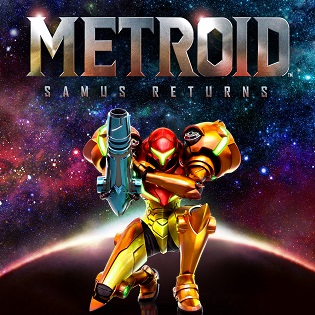
Metroid: Samus Returns
Developed by MercurySteam and Nintendo EPD
Published by Nintendo
Played on New 3DS
The Skinny: Nintendo resurrects another classic with a gorgeous coat of 3D paint, tricky new puzzles, and intuitive new abilities.
Metroid: Samus Returns is the gold standard of remaking a classic video game. A retelling of the original game boy adventure Metroid II, it follows bounty hunter Samus Aran through the underground passages of planet SR388 as she attempts to eradicate the metroids, living bioweapons designed by a nearly lost alien civilization.
While the original game pushed the monochrome game boy to its technological limits, Metroid II doesn’t hold up well when separated from the gauzy veneer of nostalgia. The resolution brings the camera in very close, making the caves of SR388 claustrophobic and difficult to navigate, and the designs have an almost-cute goggle-eyed quality to them. This remake uses the advantages of the 3DS hardware to deliver huge chambers in high resolution polygons. The action is fast and responsive, and everything looks and sounds amazing. 2D Metroid fans have had to wait over 13 years since Zero Mission for another entry in the series, but Samus Returns certainly delivers.
Developed by MercurySteam, whose previous credits include the 3DS Castlevania entry Mirror of Fate, the game pays tribute to the original and updates it in fun and innovative ways. The most notable is the addition of a melee attack, which can usually only be used as a counter to charging enemies. The move stuns enemies and allows Samus to lock on for a quick kill. It’s a nice ability early in the game, when Samus’s arm cannon isn’t quite up to full power yet. She also picks up extra Aeon abilities over the course of the game, which are fun to use but require extra power. A scanning abilities takes the place of Super Metroid’s map room, and the ability to slow time replaces dash boots. Expanded Chozo technology like Warp points and Statues that control the level of the ‘radioactive acid’ from the original are welcome updates as well.
More so than any other Nintendo property, Metroid is a series that uses the design and atmosphere of the environment to tell a story, and MercurySteam does a great job continuing that tradition. Their version of SR388 is huge, and their ruins all feel unique and purposeful. The player gets a better feel for the abandoned ruins and machinery as they are slowly reclaimed by the wild. Daisuke Matsuoka’s music does an excellent job of updating and calling back to Metroid II’s 8-bit soundtrack as well.
Metroid Return of Samus takes the starting point of the original and blows it up to a huge modern adventure while still recalling the feel for the of the original. You can find it for the 3DS as a cartridge or digital download, and I highly recommend it.
September 8, 2017
hughjodonnell
Hugh Likes Video Games
Final Fantasy, Final Fantasy V, Four Job Fiesta, HLV, Hugh Likes Video Games, review
Final Fantasy V
Published by Square (1999)
Played on PS Vita

Having completed this summer’s Four Job Fiesta, It’s time to take a last look at Final Fantasy V.
V represents a turning point in the series from the design of the early entries, which were much more guided experiences, to more complex strategic systems. It is the last main series game to feature the four crystals as a major plot element, and its the first games since Final Fantasy II with a really crunchy mechanical system underlying the story.
Final Fantasy’s Job System, which was refined and expanded from Final Fantasy III, gives the player freedom to plan and combine skills to overcome obstacles. This is a contrast to Final Fantasy IV, which was much more managed. The goal of that game was to defeat challenges using the resources at hand. This strategic element becomes more important going forward in the series.
V also heralds a shift from the melodramatic, adventurous tone of early games to a darker tone. While there is still a lot of levity in the game, it does deal with some thematic elements such as an inevitable end of the world head on. This clears the way for the more operatic Final Fantasy VI, and the diesel-punk dystopia of Final Fantasy VII. It’s also the last time we are going to see a main cast of just four playable characters until last year’s Final Fantasy XV. While the larger casts in later games provide more flexibility, I don’t know if we get to know the characters as well as we do this last iteration of the Light Warriors. The cast of Final Fantasy V is really charming, and includes one of the first transgender characters in gaming with Faris, who is awesome.
The game itself is somewhat forgotten in the west, as it didn’t come out here until after the fact, and its sound and graphics lack the oomph of IV and VI. But it is exquisitely balanced, and remains fun to play, as can be seen by the Four Job Fiesta challenge. If you haven’t given it a try, You can find the game in the PS1 Classics section of the Playstation store for PS3, PS Vita, and PSP. You can also track down the Game Boy Advance port, which is probably the best version of the game, or check out the mobile port. If you are a JRPG aficionado, give it a try.
Thanks for reading this article. If you enjoyed it, please share it! You can also visit my Patreon page for more goodies!
September 1, 2017
hughjodonnell
Hugh Likes Video Games, Review
anime, Fighting Games, Gundam Wing, HLV, Hugh Likes Video Games, Nostalgia Pilots, Super Nintendo
HLV-Gundam Wing Endless Duel
Bandai
Super Famicom

Invariably, Nostalgia Pilots’ deep dive into the series lead me back to the ephemera and tie-ins to Gundam Wing, including the Super Famicom fighting game. Bandai hasn’t had the best track record with Gundam games, but Gundam Wing Endless Duel turned out to be pretty great.
A late 16-bit era fighting game in the vein of Street Fighter II, “Gundam Wing Endless Duel” never made it to America. This is almost certainly because the anime it is based on wouldn’t be localized for another three years after it was released. But it’s also a shame, because it’s a great 2-player fighter, with tight controls, gorgeous pixel graphics, and a merciless difficulty curve.
Roughly following the plot of the show, the game features nine characters, plus a hidden playable boss. Each giant robot has a pair of light and heavy attacks, can rocket boost into the air, and fires machine guns from a distance. They also have a fuel meter, and all special and super attacks drain the gauge. Successfully blocking attacks or landing hits refills the gauge, but it doesn’t fill back up between rounds. This prevents a player from just leaning on special attacks for victory and provides some nice game balance.
The personality and capabilities of each pilot and robot are well displayed. Wing and Wing Zero have giant guns, their signature beam sabres, and can even transform into their jet modes to ram the enemy. Deathscythe is fast and excels at close-combat, Qatre has access to his army of bodyguards, etc. The stages are all pulled right from the show. Each one is incredibly detailed and downright beautiful. Heero fights inside a colony, Zechs’ stage is an Antarctic ice sheet, and Wu-Fei fights in the wilderness he spends most of the first half of the show moping in.
“Gundam Wing Endless Duel” looks and feels just right, but it isn’t a walk in the park. The computer A I is brutal and merciless. The challenge is further amped up by the fact that unlike other tournament fighters, players can hit their opponent when they’re down.
If you’re a serious fighting game player, and you need something to tide you over until the next big thing comes out, I recommend taking a look for this overlooked gem.
Thanks for reading this article. If you enjoyed it, please share it! You can also support me on Patreon for more articles, fiction, and other goodies!
August 7, 2017
hughjodonnell
Hugh Likes Video Games, Review
Downwell, Gun-Boots!, HLV, Hugh Likes Video Games, Indie Game, Playstation Plus
Downwell
Created by Ojiro Fumoto
Published by Devolver Digital
Played on PS Vita
Downwellgame.com
On the surface, “Downwell” is a very simple game. The Japanese indie shooter/platformer has very simple controls, a limited color palette, and low-resolution sprites. But there is something very charming about the mashup of ideas that comes together elegantly to make an experience that his easy to pick up, and extremely challenging.
The player controls a figure who jump into a well full of monsters with only his ‘gun-boots’ for protection. He can shoot monsters below him, and landing on ledges reloads. The randomly generated levels stretch down, with a few side caverns full of upgrades or shops to try and reach. Like in old-school shooters, the gun-boots can be upgraded to a number of different weapons, from spread-guns to shotguns, to lasers. Players also can snag upgrades like jetpacks and health refills between levels.
Even with these bonuses, the difficulty is very high, although not really cheap. Monsters such as bats and ghosts fill the well, and they all have their own patterns the player can learn. Sections are split into three levels each, but there isn’t really any save system, so players are booted back to the top with each death, which is a bit disappointing.
The player unlocks new palettes and slightly different game modes based on cumulative score, but most of these are just slight variations or aesthetic changes.
“Downwell” is a clever mashup that will certainly fill your time on the train, without sucking you in to a 100 hour adventure. But you may be surprised how long you think “Just one more run,” while playing. You can play it on Steam and a variety of platforms. It’s also available in Playstation Plus this month.
Thank you for reading this article. If you enjoyed it, please share it! You can also support me on Patreon for more goodies!
June 23, 2017
hughjodonnell
Hugh Likes Video Games, Review
Abzu, Giant Squid, HLV, Hugh Likes Video Games, Playstation 4, Shark Buddies, The Heart of the Ocean
Abzu
Giant Squid
Played on Playstation 4

Much like their breakthrough hit “Journey,” Giant Squid’s “Abzu” is an exquisite exploration game that delivers on wow and holds back on challenge.
Abzu is an enigmatic exploration game about the ocean. In Giant Squid’s signature style, the narrative is told without any dialog or language whatsoever. Players take on the role of a diver navigating undersea grottoes and sunken ruins. As with “Journey,” there are next to no hazards to distract from the sumptuous visuals, although there are some tense moments with a great white shark, and some menacing undersea mines to avoid.
Abzu is another gorgeous and enigmatic 3-D exploration game that is so squarely in the developer’s wheelhouse. Rather than focusing on fleeting connections with other players, this game encourages exploration and observation. It is filled with virtual fish that all move in intricately programmed schools and patterns. Meditation spots scattered throughout the game encourage you to sit and watch this fish as they swim through the scenery.
Also like Journey the game is quite short, clocking in at just a few hours for a play-through. There are a few things to collect along the way, such as hidden spots that release new fish into the environment, but these don’t add too much to the replay value. Beating the game unlocks an area select and lets you freely enter meditation mode. Unfortunately, even this short game feels a bit repetitive after a while. The temple assets are largely recycled, and there is far less direction on this voyage. Also, the 3D swimming controls are a bit tricky at times. I often found myself swimming in circles when I wanted to dive forward.
These few quibbles aside, “Abzu” is a beautiful and relaxing sea trip that is well worth the few moments you need to enjoy it. You can find it on Steam, the PSN Store, or at Abzugame.Com.
Thanks for reading this review. If you enjoyed it, please share it! Or, support me on Patreon for more goodies!
June 16, 2017
hughjodonnell
Hugh Likes Video Games, Review
Castlevania, Dracula Season, HLV, Hugh Likes Video Games
Super Castlevania IV
Konami
Played on New 3DS
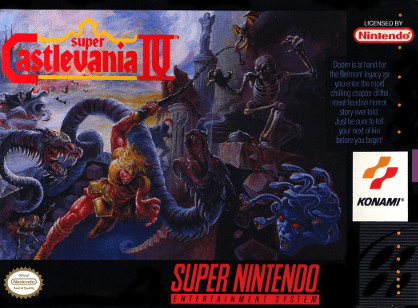
We’re hunting Draculas out of season! A classic from the early days of the Super Nintendo, I picked up Super Castlevania IV from the New 3DS eshop! And it’s just as thumb-breakingly difficult as I remember.
This game is hard, which is not to say that it is UNFAIR. For the most part, the game’s traps and enemies can be out-thought. This is a true old-school pattern memorization platformer, and it doesn’t mess around. But although I found myself dying over and over at the hands of Dracula’s minions and spikes of the castle’s many traps, it never feels like the game is cheating. Obstacles can be overcome with patience and reflexes, rather than luck. And this game throws a ton at you. The castle feels more malevolent in ways than later iterations of the game. The sprawling 2-D puzzle maps of Symphony of the Night and its ilk, generally referred to as “Metroid-vaia” style games, are all puzzles to be solved. You can go anywhere, and frequently, backtracking is require to uncover all of Castlevania’s juiciest secrets. Super Castlevania’s tightly designed levels are just the opposite. There is no going back. Every step feels like an unreconcilable choice. Drawbridges slam behind you, spike traps dog your heels, and platforms constantly shatter under your boots. Each jump feels like a commitment, creating a tension that builds through the entire game until you are whip-to-fang with Count Dracula himself.
Super Castlevania IV looks and sounds great on the New 3DS screen. The big sprites and sampled music were outstanding for the time, and they are perfectly preserved emulated on the handheld screen. The analog stick works well for the most part, although attacking and moving at angles is somewhat unreliable. You lose your momentum if the stick isn’t at just the right angle, which can be a problem when trying to climb collapsing staircases and clearing flying enemies in later stages.
Super Castlevania IV is a great pick up if you’re looking for some retro platforming on your New 3DS, or just want to kill time until the new Castlevania series drops on Netflix next month. You can find it in the New 3DS, Wii, and Wii U Virtual Console.
Thank you for reading this article. If you enjoyed it, please share it! You can also support me on Patreon for more goodies!
May 15, 2017
hughjodonnell
Hugh Likes Video Games
HLV, Hugh Likes Video Games, Indie Game, Playstation, PS Plus, PS Vita, review, Typography
Type:Rider, A Typographic Videogame
Created by: Cosmographik
Played on PS Vita
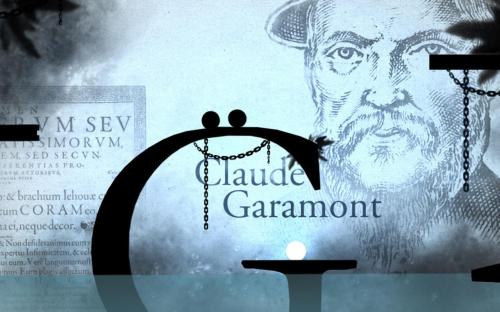
What if “Limbo” was about fonts? This is the premise of Type:Rider a combination documentary and puzzle-platformer from Cosmographik. Players take control of a humble colon as they roll through levels based on the history of typography, from cave paintings all the way to desktop publishing. The level architecture is made up of huge landscapes of letters.
Type:Rider isn’t particularly challenging, but it is very clever in its design choices. For the most part, your : handles like an implied motorcycle. You can move forward or back, and you can rotate clockwise or counterclockwise using the L and R triggers to navigate terrain. If either of your periods hits certain obstacles, usually shown in red, you die and have to start again, usually close by. For the most part, all of the collectable goodies are easy to spot and collect, although a few require some thought or dexterity, particularly the hidden ampersands. But this is a game that wants you to collect its secrets, and the main game is quite casual.
Each World is devoted to a different style of font, and collecting asterisks scattered throughout the levels unlocks short articles about notable figures or events in the development of print.
There is a “Speedrun” course for each level that is much more challenging once you complete each one for more skilled players. The music in each level is thematic, but the compositions are short and have a droning quality that gets annoying after a while. The only other downside is that the game is very Eurocentric. Outside a few short sections in the “Origins” chapter, the game focuses entirely on Roman characters. I would’ve loved to learn more about typography’s development in other languages.
Type:Rider isn’t a longterm commitment of a game, but it is quite clever and the subject matter is unexpected and interesting. Playstation Plus members can pick up this curiosity for free this month. It is also available on Steam and for mobile devices.
Thank you for reading this article. If you enjoyed it, please share it! You can also support me on Patreon for fiction, articles, podcasts, and more!
April 27, 2017
hughjodonnell
Hugh Likes Video Games, Review
Curses 'n Chaos, HLV, Hugh Likes Video Games, Playstation, review, Tribute Games
Curses ‘n Chaos
Tribute Games
Played on PS4 and PS Vita

Curses and Chaos is a single-screen brawler with old-school charm and difficulty to match. The 1-2 Player game stars Lea and Leo, a tiny pair of mach-punching, booty-shaking adventurers under a curse. They are constantly under attack by monsters, and even Death itself! Their only ally, is an alchemist. She can cure them with the Elixir of Life, but she’ll need the ingredients to make it. And there’s only one way to get them: Fight the horde of monsters on their tail!
The game is played out on a single screen in a series of waves. Players fight ten waves of monsters, then the boss to unlock the next stage. Enemies enter from the right or left side of the screen on the ground or in the air. Each enemy drops either money or items that can be saved to make new items using alchemy between levels. Players can only save one or two items, so the money collected in each stage can be used to buy more ingredients.
Curses and Chaos works because it rides the line between quarter-eating old-school challenge and modern free-play styles. Initially only one stage is unlocked, but once the player completes it they can choose any one to start from with three lives. And they will need them because this game is HARD. It isn’t unfair, though. Each enemy has consistent movement and item drops. They key to success is learning how they move and what they give you so that you can build a chain. The higher your chain, or luck, the better items and more money you get.
The pixel art in the game is gorgeous and detailed, if a bit blandly colored. This is good, because as a single-screen beat ’em up that relies on replaying levels over and over for more loot, you’ll be seeing a lot of them. The music is catchy and nostalgic 8-bit tunes that fit the game well.
Curses ‘n’ Chaos is a synthesis of old and new gameplay that will fit very well in your game library alongside games like ‘Shovel Knight.’ The gameplay is heart-pumping and addictive, often leaving you defeated, but ready to try one more time. PS Plus members can try it for Vita and PS 4 free until May 2nd. I highly recommend you do, but it is worth paying full price for.
Thanks for reading this article! If you enjoyed it, Please share it! You can also support me on Patreon for more content!
February 1, 2017
hughjodonnell
Hugh Likes Video Games
Casual Game, HLV, Hugh Likes Video Games, Letter Quest Remastered, PS Vita, Puzzle, RPG
Letter Quest: Grimm’s Journey Remastered
Bacon Bandit Games
Played on PS Vita

On the whole, I’ve never gotten into touchscreen games on the PS Vita. The functionality works for the most part, but feels imprecise and gimmicky when I have a suite of perfectly good buttons right there. Which is why I was pleasantly surprised by Letter Quest: Grimm’s Journey Remastered.
An enhanced port of a computer puzzle game, Letter Quest is a riff on the Puzzle Quest formula of mixing turn-based RPG and Puzzle Game mechanics. The twist is that the game in question is Boggle rather than Bejeweled. Players have a grid of fifteen letters to arrange into words using the touch screen, which works remarkably well here. Each letter scores points which the hero, a cute cartoon death named ‘Grimm’ turns into damage against an enemy. Each level has a few enemies that have different stats and abilities in addition to attacking the hero. For example, they can change the letters on you tiles or give your tiles nasty effects like poison or spikes for a few turns. Outside of combat, players can level up their abilities or tweak the design on their scythe or tile sets.
The puzzle combat is simple and addictive, as it should be. While the ability to level up attacks and boost particular word damage can allow children or limited wordsmiths to power through, the game has a long list of bonus objectives for completionists or players looking for a greater challenge.
As for the design, the monster and character designs are cute, and the remastered scores are pleasant but repetitive, but there isn’t much here in terms of plot. What story there is gets laid out through a set of comic panels players unlock as they progress. It’s all inconsequential and breezy, and seems almost as though these were assets left over from another project, but they all work well enough. The design doesn’t feel the need to justify itself, it’s just a pleasant background to try and rack up a ten-letter SAT word against. But that’s just fine for the price.
Letter Quest Remastered is a pleasant diversion for bibliophiles of all stripes. I played it as a part of Sony’s PS Plus collection, but it, or its slightly downgraded predecessor, is available on just about every console or mobile device store.
October 31, 2016
hughjodonnell
Review
Castlevania, Dracula Season, Halloween, HLV, Hugh Likes Video Games, review
Castlevania Dawn of Sorrow
Published by Konami
Nintendo DS, 2005

The sequel to 2003’s “Aria of Sorrow,” Castlevania Dawn of Sorrow” was the first installment of the series for the Nintendo DS. A savvy reader might point out that ‘Dawn’ isn’t the best name for a sequel, but since it appeared in the first year of the system, it was one of many games that glommed on to the ‘DS’ suffix.
The game once again follows teen reincarnation of the Lord of Darkness Soma Cruz to a maze-like castle in which he will again come to terms with and try to overcome his destiny. When he is confronted by a cult leader searching for the Lord of Darkness, Soma’s power of Dominance unexpectedly returns, forcing him to confront his past life once again.
On the whole, “Dawn of Sorrow” doesn’t bring much new from its GBA predecessors. The main game puts you back in the shoes of Soma, with the ability to Dominate and use the powers of various monsters to fight and to solve puzzles. You can also collect extra souls to power up your abilities and weapons, which is nice, but mostly this game is more Aria of Sorrow with prettier graphics. The game does have a ‘seal’ system, in which bosses have to be sealed away to be beaten. This involves drawing a symbol on the touch screen after the fight. It is a bit annoying, forcing players to keep a stylus tucked in their hand during the fight, but hardly the most egregious tacked on touch-screen gimmick of its day.
The game also features a return of the standard Castlevania extras such as unlockable characters and Boss Rush modes. The extra mode is a real treat in this version, as it allows the player to switch between characters in a fan-service nod to Castlevania III.
The game still holds up relatively well, with well-designed, highly detailed sprites. The castle feels nice and big, and it isn’t too hard to navigate with plenty of warp and save areas. The game had a little trouble running in my New 3DS, however. It would occasionally freeze or glitch, and the system wouldn’t be able to read the game card. This wasn’t enough of an issue to prevent normal play, however.
“Castlevania: Dawn of Sorrow” is an incremental but worthy installment in the Castlevania franchise, and is well worth your time if you’re looking to explore Dracula’s castle this Halloween. It doesn’t break a lot of ground, but it is a fun and challenging adventure. You should be able to find a used copy at your local game store.
Thank you for reading this article. If you enjoyed it, please share it. You can also follow me on Patreon! Visit today to check out a free short story for Halloween!
Older Entries
Newer Entries
 Hugh J. O'Donnell