Home

Hugh Likes Video Games: Grindstone

Leave a comment

Grindstone
Developed by Capybara Games

Published by Apple

Played on Mac via Apple Arcade

The Skinny: Rise and grind in this monster-hunting, loot-collecting puzzle adventure!

For some people, hunting monsters is an adventure, but for Jorj, it’s a nine to five.
Grindstone is a delightful mix of puzzle and RPG with a whimsical hand-drawn art style. Think of Puyo-Puyo but with more barbarians. Jorj is a Stonegrinder. He mines precious, magical grindstones from the hordes of monsters infesting Grindstone Mountain, hoping to someday save up enough to take his family on vacation somewhere warm. Monsters appear in a grid, and Jorj can chain through monsters of the same color. Long-enough chains generate grindstones, which land on the map and allow Jorj to change colors, thus extending his chain and generating more grindstones. It’s a fun and addictive loop, and after each level, Jorj can return to the inn at the base of the mountain to refill his hearts, or use the grindstones and other loot that he gathers to upgrade gear such as swords, armor, and potions, which provide buffs or bonuses during levels.
The game is structured into well over 200 different levels, with side areas, and different sections of the mountain with their own unique enemies, hazards, and puzzle elements. There are also a variety of daily challenge modes. There’s plenty to do, and the loop of playing a few levels, returning to the inn to stock back up or unlock new gear, and head back out is effective and addicting. The game’s vapor-wave soundtrack is surprisingly relaxing, as well. I played the game on my Mac via Apple arcade and found that the touch controls using the trackpad were intuitive, and the game also had simple keyboard shortcuts. Grindstone also has controller support, but I found it to be less precise. Grindstone feels best with touch controls.
I played Grindstone on my Mac Pro as a part of Apple Arcade, and that version is also available for iPad and iPhone. The game is also available for purchase from the Steam and Epic stores, as well as consoles. This is one grind that is worth the time.

Hugh Likes Non-Fiction: Cocktails and Consoles

Leave a comment

Cocktails and Consoles

Written by Elias Eells

Illustrated by Solji Lee

Published by Running Press

The Skinny: A guide for gamers looking to expand their palates and mixologists looking for new inspiration.

Cocktails and Consoles is neither a definitive guide to mixology nor gaming, but it is a mixture of the two hobbies into a whole that is both satisfying and enjoyable, embracing whimsey from both ends of the spectrum. Written by Elias Eells, host of Youtube Channel Bar Cart Book Shelf, this collection of seventy-five cocktails and mocktails inspired by video games of all different vintages and genres shows a passionate love for both the shaker and the controller.
But what is notable about this collection is the love of craft that is evident in its creation. An assembly of cocktail recipes inspired by video games could on its surface be a slam-dunk low effort product, quickly churned out and just as quickly forgotten. But Eells’ passion for mixology and gaming shines through, and he takes the reader through the subject with thoughtfulness and care, taking nothing for granted about the reader’s level of comfort for either drink or gaming. 
The recipes in the book vary from simple to complex, with a section at the front detailing the tools you’ll need as well as some of the more exotic ingredients. It even comes with recipes to makes some of the more complex mixers, from simple syrup all the way to your own orgeat.
Each recipe is inspired by a different game, from Pong all the way up to 2023’s Elden Ring. There is a single paragraph for each game, and a few illustrations and side bars provide context for the recipes. The drinks match well with the games, either with color and style, as with the Mariogarita, or by being based on in-game drinks, such as the Final Fantasy XIV ether.
Souji Lee’s illustrations and designs are eye-catching and iconic. They add color and a little extra something to the page. The layouts are colorful and flow easily, from the description of the game, to the drink, the the recipe, with extra boxes scattered for additional tips and information.
But the book itself is only half of the equation. With Cockails and Consoles as my guide I visited my local liquor and specialty grocery and stocked up on tools and supplies to make some of the drinks from the book.
I started with the Mariogarita, which was a tart and bright delightful take on the margarita. The campari added something that did more than just give the drink Mario’s signature bright red color. The Ring Drop, inspired by Sonic the Hedgehog, was bright blue from curaçao, and with two ounces of vodka, definitely goes fast.
Cocktails and Consoles is a welcome edition to the library for the gamer or armchair mixologist, and makes a great gift. You can find it wherever you buy books. And also follow Ellis Eells’ YouTube channel, Bar Cart Bookshelf, where he pairs cocktails with reviews of new Fantasy and Science Fiction books.

Hugh Likes Video Games: Balatro

Leave a comment

Balatro
Developed by LocalThunk

Published by Playstack

Played on Nintendo Switch

The Skinny: The House always wins. But let’s do another run, just to be sure.

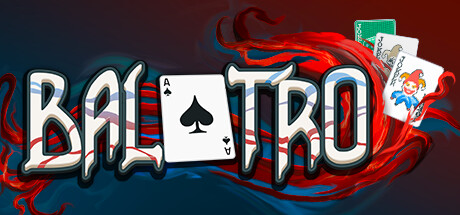
Balatro is a deck-building rogue-like based around poker. But rather than present you with a simulation of opponents, the presentation is simplified down to core elements. The player presented with a hand of cards floating in a void, and are challenged to beat an escalating series of score challenges. But while Balatro uses the structure and hands of a poker deck, it feels a lot more like Fluxx.
While you are building poker hands to survive each round, the real goal of the game is to change the rules to suit your strategy. Between rounds, players go to a Scorched Earth-style shop screen, where they are offered a rotating selection of different options to change the rules and contents of their deck. Planet cards make poker hands more valuable, while Tarot and Celestial cards have a number of different wild effects. You can also add new cards with special abilities such as giving players bonus money or points. But the most important cards for sale are the Jokers. Jokers sit outside of the player’s deck and add different ongoing rules. They might buff the scores of certain suits or change the rules to allow players to skip cards when making straights, for example. There are over a hundred Jokers, and players unlock new ones by completing hidden objectives in each run.
Optimization is the core of the gameplay, by removing the opponent and focusing on making the best hand possible with the best rules possible, Balatro takes the core gameplay of deck-builders like Slay the Spire and distills them down to a potent core loop. By removing the action and exploration elements from games like Hades, the challenge changes from reaching a goal to making the numbers go up. And the thrill of watching those numbers rise as you struggle to stay ahead of the challenge curve is the beating heart of the game. The house might always win, but watching a successful combo turn a lowly pair into an unstoppable juggernaut is a pure hit of dopamine.


Balatro’s simple, pixel-based aesthetic reinforces the focused premise. You aren’t sitting at a perfectly recreated poker table with 4K graphics to discern between every fiber of the felt surface. There aren’t any lovingly modeled clay chips that clink realistically as you bet. The cards are all pixel graphics, floating in a multicolor void that looks like an old MP3 player visualizer. There’s even a faux-CRT line grid over the whole thing, selling the simplicity of the game. The music and sound effects get the job done and are agreeable enough, though the game almost expects you to play with a podcast or audiobook in your ear.
I played on the Nintendo Switch, and while the handheld version had some disability accommodations, such as high-contrast card mode, it doesn’t quite go far enough, and after even a short session, I felt a bit of eye strain. The text in the game is quite small, and there isn’t an option to enlarge it or change the font, making it difficult to read at times. This is so far a minor nitpick in an otherwise engaging and engrossing pick up and play game.


Balatro is available on PC, Nintendo Switch, Xbox and Playstation consoles. It’s a tasty little gem, that might eat up more of your time than you expect. But what’s the harm in just one more run?

Random RPG Creativity: Wardle’s Wondrous Weapon

Leave a comment

Inspired by THIS Comic, please enjoy the following item, to add to your fantasy TTRPG of choice.

Wardle’s Wondrous Weapon – Wondrous Item, Rare

These popular magic items, created by a slightly mad wizard with a penchant for puzzles, resemble a sword hilt with a row of five dials on the front. The dials correspond to letters, and once per day, the wielder of the weapon may attempt to guess a word, with up to six attempts. A correctly guessed letter glows green, and a letter that is in the word but in the incorrect spot glows yellow. If they manage to guess the word, a weapon will spring forth from the hilt, with those magical properties. For example, “KNIFE” might create a +1 Dagger, while “FROST” might create a sword that deals cold damage.The word is different every day, and each Weapon contains its own list that it draws from. Some are very powerful, while others are mere curiosities. The new weapon lasts until midnight, at which time the blade resets.
The GM should choose the word for the day, and its effects.

This content was created in accordance with the Open Game License. Wordle created by Josh Wardle. All other material copyright Hatching Phoenix Productions, C. 2022.

Hugh Likes Video Games: Merchant of the Skies

Leave a comment

Merchant of the Skies
Published by AbsoDev
Deveolped by Coldwild Games

Played on Nintendo Switch

gamelogo

The Skinny: Come take a trip on this airship!

Merchant of the Skies is a resource trading and management game that puts you in the captain’s seat of a trading vessel plying the skies between floating islands. The Campaign mode sets you up as the scion of a trading family, just starting out with their own boat. You buy low, sell high, do a few favors for your Uncle who is trying to set up a postal system, and gradually discover the secrets and history of the area. As you gain income, you can buy bigger ships, purchase island, and eventually set up caravan routes for complex manufacturing and delivery. There’s no combat, and the only lose condition is running out of money. Once you complete the campaign, the game opens up a sandbox mode that lets you set the goal, or just lets you tool around in your majestic airship
The game’s pixel graphics steampunk fantasy worlds are beautiful and nostalgic. The region is presented as a filled with floating island and other sights, and you travel from one to the other Indiana Jones-style. When you visit an island, it switches to a side-on perspective with pixel sprite buildings and wee figures dashing about. This mode mostly uses menus to navigate, so you don’t have to worry about keeping track of your captain as they visit the trading posts.
The game does get a little laggy towards the endgame, when you have resource gathering and processing happening all over the map. The game auto-aves each time you leave an island, so as the game goes on, be prepared to spend a bit too long waiting towards the end of the game. Also, most of the endgame content requires resources rather than money, so eventually you’ll be raking in cash with nothing to spend it on.
Merchant of the Skies is an engrossing, low-stress management game with charming visuals and strategic thinking. It’s the perfect game for anyone looking for something on the Switch to chill out with.

The Year of Final Fantasy

Leave a comment

Final_Fantasy_logo

I’ve been thinking a lot lately about THIS ARTICLE by Aidan Moher. I think it resonates with me because it echoes my own path into nerd-dom and ultimately to becoming a writer.
I didn’t read much of the Canon sci-fi and fantasy growing up. I loved Fantasy and Science Fiction movies and TV, but by the time I could pick my own books from the library, I was already reading thrillers and bestsellers. Once I reached high school I started really getting into anime, and my real nerdy gateway drug: JRPGs.
I didn’t have much of a game collection as a kid. We had an NES, and a much-loved game boy. What I did have was a burning jealousy of my friends’ adventures, starting from Dragon Quest and moving straight through Final Fantasy VII. I would hang out with them as they traversed huge worlds and fought monsters and robots in weird, strategy combat that seemed strange and wonderful to me.
So When my family got a computer, a friend gave me a floppy disc full of NES roms. I knew just where I wanted to start: With the original NES Final Fantasy and its two Japan-only sequels. True, the graphics weren’t as sharp as a PS1’s, and there wasn’t anything so eye-popping as watching Sephiroth descend from the sky to assassinate Aerith, (spoiler alert!) but the illicit glee of knowing that these were lost relics. These were a pair of games that had never (at the time) reached American shores, been digitally smuggled out and translated in the dark corners of the internet. It started an obsession, and I had to play more of them. I burned through the NES library of Dragon Warrior games, and played through Final Fantasy Legend and Pokemon on Game Boy. I sought out roms of stranger provience, and as the technology improved, upgraded from Nesticle, the most Nineties name for an emulator, to SNES9x. I burned through Final Fantasy IV: Hardtype like it was a fever, and got every ending in Chrono Trigger. I fought the Sinestriasl in Lufia and remade the world in Actraiser. I was full-on obsessed.
And that obsession pushed me to seek out other avenues to explore my geekery. Dungeons and Dragons, and other table top games, cheesy 80’s fantasy movies, and thick tomes of epic fantasy, both classic, and best forgotten. It was all great, but there was irritation there, things I saw on the page and screen that didn’t quite match the things I loved about the digital versions. Eventually, I picked up my pen and started writing my own stories, borne out of my own need to fill in the gaps.
It’s the distant future year 2020. And it’s a good time to look back as well as forward. So this year, I’ve decided to go back and play as much Final Fantasy as my time allows, and to write about it here. I’ve reviewed and written about a few of these games on my blog before, but this is something a bit deeper. I’m not sure what the final forms will be, probably a mixture of critical essays, reviews, creative non-fiction, and other strange beasts. Will my love of these early games still be there? Do these games hold up in 2020? Have things gotten better, or will I simply become an old fogey, complaining that these blasted kids with their three-dee graphics and full voice acting won’t get off my dang lawn? Will I discover hidden truths, or just some misplaced nostalgia that doesn’t bear anything to who I am as a writer today? Let’s find out.
As ever, the Crystals shed their light silently, waiting for us to embark on our adventure.

Support Me on Ko-fi

Hugh Likes Video Games: Wargroove

Leave a comment

Wargroove
Developed and Published by Chucklefish
Played on Nintendo Switch
https://wargroove.com
Fog-of-War.jpg

The Skinny: A turn-based strategy game with retro style and retro difficulty to match, but with some interesting innovations under the hood.

Wargroove is a strategy game with old school charm, and gameplay to match. On the surface, it takes most of its design and style from Nintendo’s ‘Wars’ series of games. These only came to the US as the Advance Wars titles, and have been absent for a decade, but they made a big impression on developer Chucklefish. If that name is familiar, they also published ConcernedApe’s well-loved Harvest Moon update, Stardew Valley.
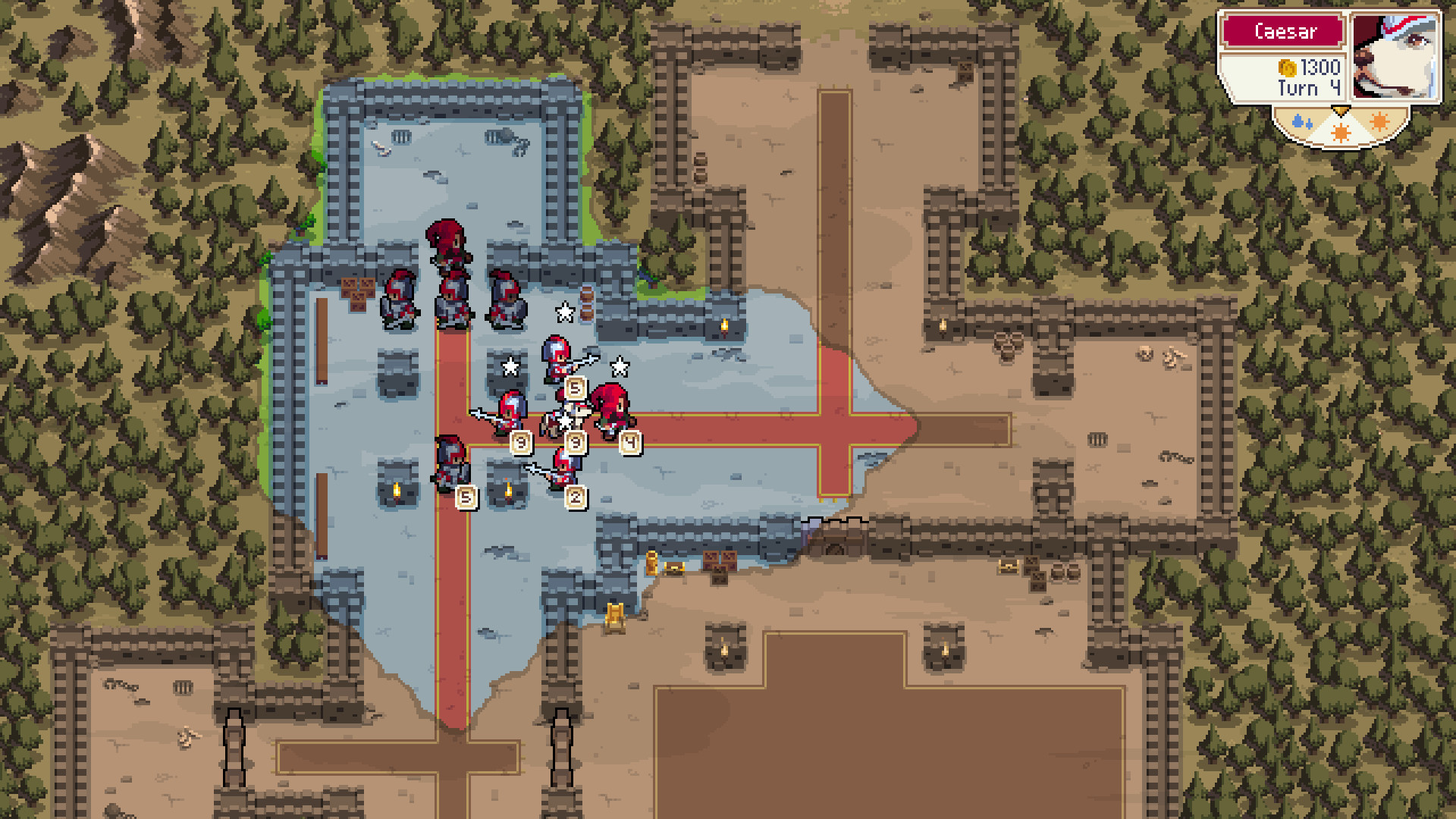
Gameplay works like Advance Wars. Players take turns moving their units and capturing buildings to provide income, which lets them buy new units. The goal of each match is to either the enemy stronghold or defeat the enemy Commander, powerful units that each has a unique special ability, called a ‘groove.’ These each do something a bit different, from healing allies in a range, to creating new units, to attacks that do extra damage. They are a fun addition to the Wars formula, and are one of the ways the game really stands out. Also, one of the commanders is an adorable golden retriever, who is a very good boy.
The other way Wargroove differentiates itself is in its plethora of content and game modes. In addition to the standard single-player Campaign and multiplayer battles, the game offers an Arcade mode in which you can take each Commander through a series of five quick battles, a Puzzle mode, and even an impressive set of creation tools. The game lets players not just create maps, but also entire campaigns and cutscenes, and trade them freely through the game’s online modes. I haven’t been able to dive too deeply into it yet, but it is very cool and is supporting a new creative community.
Wargroove faithfully recreates the best of the turn-based strategy genre, but it also has the same flaws. Matches are long, and with two armies starting at opposite ends of a map and slowly building, they can take a while to get going. Also, this game is difficult. Updates have created more options for novice players, but you can still sink a lot of time into a map only to have to start all over again when the last wave of enemies gets a shot in on your Commander.
Wargroove is a charming and occasionally frustrating strategy game with old school feel and old school difficulty. If you’re up for the challenge, you can snag a copy from Steam or your choice of major console eshops.
Buy Me a Coffee at ko-fi.com

DDoP18: The Gamer’s Guide to Writing – Super Mario Bros.

Leave a comment

Super_Mario_Bros._box.png

Hello and welcome to part one of The Gamer’s Guide to Writing, in which I look at some of my favorite video games and talk about how they impacted my life and what storytelling lessons I learned from them. We’re starting with Super Mario Bros! In addition to being the platonic idea of the classic platformer, this game taught me the importance of a beginning that hooks your audience and teaches them about what is to come without overwhelming them.

Click HERE to listen!

For more on the design of World 1-1, watch This Design Club Video!

Music in today’s episode is Dance Hall Raga by remixer MKVaff, presented under a Creative Commons license from OCRemix.org!

Podcast: CCRC27-Dungeons & Dragons S1E2

Leave a comment

Watch along with the Chrononauts as we watch to the Dungeons & Dragons cartoon!

Click HERE to listen!

and HERE to watch the cartoon via YouTube!

Four Job Fiesta Part Two: Ahead on our Way

Leave a comment

I’ve been playing “Final Fantasy V” as a part of this year’s Four Job Fiesta, an online challenge that benefits Child’s Play. I wrote about approaching the challenge here, and now that I’m a bit farther in the game, here are some things that I’ve learned.
Final Fantasy V is amazingly well designed. Over the course of the game, I received my full roster of classes: Thief, Time Mage, Ranger, and Chemist. While these aren’t impossible classes to play with, they’re hardly powerhouses. Ranger gets a very good ability, Rapid Fire, if you level them for a while, and Chemist can combine items to exploit some enemy weaknesses, but they require using up rare items. But while this team is challenging, it is hardly impossible. The Four Job Fiesta works with FFV because the game can be navigated with any classes as long as you’re patient and think strategically. There aren’t any choke points that require a certain party to proceed.
The game itself feels like a farewell to the style of the early games. The crystals themselves shatter to give you your jobs. Although the franchise would return to the job system in spin-offs like Final Fantasy Tactics and the crystals would come back in later games like Bravely Default, Final Fantasy V feels like a sea change for the series. The next game in the series in Final Fantasy VI, which took the games in a very different direction. Even though it was only much later released in the United States, it still feels somewhat nostalgic.
But for now the Fiesta continues as I make my way through the middle of the game with my motley crew of back row hooligans. You have until the end of August to sign up for your run, or to support Child’s Play!

Older Entries