Home

Hugh Likes Video Games: Pokemon Red

Leave a comment

Pokemon Red Version
Nintendo
Nintendo 3DS/Game Boy
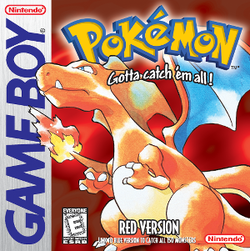
Pokémon_box_art_-_Red_Version
2016 is Pokemon’s 20th anniversary.  As such, Nintendo is pulling out all the stops for a year full of new games, giveaways, and other special events.  One of the first is a rerelease of the original gameboy Pokemon titles as downloads for the 3DS.
I played the original Pokemon Yellow as a teenager when it was originally released, admiring the rather deep strategic RPG gameplay beneath the cartoonish aesthetic.  This new version retains the style and the feel of the original on 3DS.  Like other Virtual Console releases, this is a pixel-perfect rendition, and the game looks great on the New 3DS XL screen.  Unlike other game boy rereleases, Pokemon retains its multiplayer capabilities.  Players can trade monsters and fight with their friends using local wireless in place of the Game Boy link cable.  This system is limited to players in the same room, and is functionally identical to its 90’s link-cable counterpart.
Pokemon is an early and easily the most popular entry in the ‘collectable monster’ sub-genre of RPGs.  Players take the role of a boy traveling across a large island to collect and raise Pokemon, monstrous animals that can be trained to fight.  Along the way, they assist a scientist working to classify the creatures, constantly foil a criminal organization, and battle all comers in hopes of being the best there ever was.
The strategic aspect of the game is basically a more complicated version of rock papers scissors.  Each monster has an elemental type, and its attacks are weaker or stronger against other types.  Fire is strong against Grass and weak against Water, for example.  Player raise their monsters with a fairly simple leveling system, but can teach certain moves to their team members to give them an advantage.  The game strikes a nice balance of being simple enough for a child to learn with deeper enough strategy for more experienced players.
Pokemon Red, Blue, and Yellow are currently available for 3DS from the Nintendo eshop.  While they don’t boast the dazzling 3D graphics of more recent entries, they are sure to delight nostalgic fans.

Thank you for reading this article.  If you enjoyed it, please share it.  You can also find more exclusive content on my Patreon feed!

Hugh Likes Video Games: Dragon Quest

1 Comment

Dragon Quest I for Android
Created by Yuji Horii
Published by Square Enix
dq1andios_011
Square Enix is not a company that is shy about porting its classic games to new platforms.  WIth three of the most beloved Japanese Role Playing Game brands in their stable, it’s easy to see why.  And with the ubiquity of mobile gaming, it is only good business for them to move into the tablet and phone market.  But while many of these ports have been based on early updates such as the DS or PSP ports of early Final Fantasy games, the mobile port of Dragon Quest seems to be developed for the phone.
Dragon Quest, which was called “Dragon Warrior” when it was released in North America, was a full-on phenomenon in Japan but never quite took off in the United States.  The U.S. never even saw the two Super Famicom itterations of the series until they were released for the Nintendo DS in 2009 and 2011.
The mobile version of Dragon Quest is a bit to get used to but retains all the charm of the original.  The first surprise is that it runs in portrait rather than landscape orientation.  I was put off at first, but it actually works with the game’s graphical style quite well.  DQ is arguably the first true Japanese Role Playing Game, and a lot of the tropes of the subgenre start here.  Like the original, battles take place in windows that pop up on the map rather than transitioning to their own screen.  This actually works really well in portrait mode once you get used to it.  The sprites seem to come from one of the 16-bit versions of the game, and look great, but remain simple.  The soundtrack is a gorgeous, high fidelity version that sounds great, even out of the rear speaker on my Galaxy S5.  The english translation is based on Dragon Warrior’s psuedo-Shakespearian script, which is fine, but reads oddly printed in an arial font.  Windows have the original black bubble quality, but commands are on phone buttons that look a little off.  These all felt a little distracting, but don’t get in the way of the experience.
The gameplay itself, aside from a few shortcuts from the menu, remains unchanged.  This is great, but as the origin of the JRPG, it still has some rough edges.  Be ready to spend a lot of time leveling up, and accept that sometimes the game will kill you and there will have been nothing you could have done to prevent it.  Also be prepared to wander a bit.  It’s still a fun and entertaining experience, but this game doesn’t hold your hand.
If you’re looking for a bit of a gaming history lesson, or if you’re an older gamer looking for a nostalgic refresher, Dragon Quest I for mobile platforms is a bit to get used to, but does an excellent job delivering a classic game.  You can download it from your preferred app store.
If you enjoyed this article, please share it, or support me on Patreon for more content!

Hugh Likes Video Games: Castlevania Aria of Sorrow

Leave a comment

Hugh Likes Video Games: Castlevania: Aria of Sorrow
Castlevania: Aria of Sorrow
Konami
Game Boy Advance, 2003
250px-AriaofSorrowCover hqdefault
Today we’re skipping ahead a few years to look at “Aria of Sorrow,” the last of the ‘Metrovania’-style Castlevania games for the Game Boy Advance.  This means that rather than consisting of numbered platforming stages that the player must complete in order, the game is instead one large 2-D map, with the player gaining access to new areas through the use of special abilities.  For example, once the player gets the ability jump in mid-air, they can reach higher platforms and thus reach corridors they couldn’t previously.  In the Castlevania series, this format started properly in Symphony of the Night for the Sega Saturn and Sony Playstaion.
Aria of Sorrow breaks with tradition in that rather than being set in the middle ages or 19th Century, this game takes place in the future.  The game is set in 2035, but the future date doesn’t play much into it, except that you can score a sweet laser rifle later in the game.  But at that point, your other options include powerful holy weapons, so it’s not really an upgrade.  No cybernetic werewolves or anything.
The main character is Soma Cruz, an American teenager living in Japan.  When he goes to watch a solar eclipse at a shrine operated by a childhood friend, he passes out.  When he wakes up, he finds himself in Dracula’s Castle, and in possession of inexplicable power.  As Soma makes his way through the castle in search of answers, he meets sinister missionaries, amnesiac exorcists, and other mysterious people.
Aria of Sorrow pushes the GBA to its limit with absolutely gorgeous graphics and a sprawling castle filled with monsters.  Soma’s powers are a neat twist of the Castlevania formula, and encourage exploration in search of new souls to win and try out.  It would be nice if they weren’t quite so rare, and packed a bit more of a punch, though.  Especially early in the game, they don’t have the same heft to them as the classic subweapons.  While this does give a sense of progress to the game as the player collects stronger and stronger abilities, it can be a grind to collect them.
Overall, “Aria of Sorrow” is a definite hit in the Castlevania score sheet, and not to be missed.  If you can’t find a used copy of the cartridge, it is also available as a download from the WiiU store.

If you enjoyed this article, please share it, or support me on Patreon for early and exclusive podcasts and articles.

Hugh Likes Video Games: Castlevania

Leave a comment

Castlevania
Konami
Nintendo Entertainment System
250px-Castlevania_NES_box_art
October is Dracula Season here in the Hugh Likes… HQ, and for my money there is no better modern representation of the character than the Castlevania franchise.  The original, produced by Konami in 1987, is a classic example of the old-school challenge of the NES.  Tough but never entirely unfair, the player controls Simon Belmont as he fights his way through Dracula’s castle to his showdown with the King of Vampire himself.
The original game has a fun, almost campy sense of atmosphere as Belmont fights his way through a laundry list of B-movie monsters.  Famously difficult, the game really conveys the feeling of the environment itself as an adversary.  This is a difficult balance to achieve, because it can more often feel like the player is fighting the programmers rather than the game.  Like Nintendo’s flagship Super Mario Bros, Castlevania is a sprawling environment that relies on careful exploration, precise timing, and sharp reflexes.  Belmont is armed with an upgradable whip and a variety of subweapons that he finds in the castle.  While blindly rushing ahead and collecting every subweapon as it drops can result in a series of deaths, a careful strategy, admittedly formed through trial and error, guides the player through each level.  A very generous continue system for the time lets the player keep trying for as long as they like.
With the sad news that Konami is scaling back its production to focus on the mobile phone market, we may not see anything new from the series for a while.  What better time to dust of a control pad and take your journey through Dracula’s Castle?
Castlevania was originally released for the Nintendo Entertainment System as well as other 8-bit consoles and arcades.  It is also available digitally for the Nintendo Virtual Console on Wii, Wii U, and 3DS.

Enjoy Hugh Likes Video Games?  Please consider joining my Patreon for more content!

Hugh Likes Video Games: Xeodrifter

Leave a comment

Xeodrifter
Renegade Kid
PC, PS4, Vita, 3DS, WiiU

xeo_screen_01

Inspired by Metroid, Xeoodrifter is an shooter/platformer/exploration game in the classic style. The player guides their space-suited explorer through the interiors of four maze-like planets while collecting power ups that let him go further. Presented in a “pixel art” style, this Metroid-clone actually has a lot to offer, with deep exploration mechanics, and fun abilities like turning into a rocket or submersible.
This game is a colorful but short Metroid clone. The gained abilities are all fun and challenging without being too complicated, but the boss fights would have benefitted from more variety rather than having the same recolored sprite with slightly upgraded powers and health. The four worlds each have their own unique look, but all feel very similar. The game hints at depth but never really delivers beyond a few hours of gameplay. It is a free game in the Playstation Plus program, though, so it is well worth checking out if you are a member.
Xeodrifter is a fun little explorer that will charm old school gamers for a short time, but leaves nothing behind after the credits roll.

Hugh Likes Video Games: Final Fantasy Adventure

1 Comment

Final Fantasy Adventure

Game Boy

Square/Sun Soft

Final_Fantasy_Adventure_Front_CoverFinal Fantasy Adventure 3

Today we’re traveling back in time for a classic edition of Hugh Likes Video Games.  Final Fantasy Adventure is a action RPG originally released for the Game Boy by Square.  Released in Japan as Seiken Densetsu, western fans may be more familiar with its blockbuster sequel, Super Nintendo’s “Secret of Mana.”  The game follows a escaped gladiatorial slave as he fights against the forces of the evil Glaive empire to protect a mysterious girl who may be the key to an ancient power.

A top-down action role playing game, Final Fantasy Adventure feels more like the Legend of Zelda than its command-based namesake.  In fact, the name was changed for the U.S. market to tie-in to the popular NES and SNES titles.  Over the course of the game, the hero, who the player names themselves, equips a variety of weapons, armor and magic, travels through a world that is surprisingly vast for the little handheld, and befriends a number of allies to help in his adventure.

Having recently replayed Final Fantasy Adventure, I can say that it holds up in some ways and not others.  The combat is solid fun, and the story is spare but enjoyable.  The repetitive dungeons and occasionally frustrating puzzles, which occasionally rely on luck rather than skill, are not.  Also aggravating are the town NPCs, who have completely idiotic pathfinding, and give long speeches whenever you touch them.  Getting out of town can occasionally be more of a hassle than the dungeon you just left.

Despite the antiquated elements of the game, Final Fantasy Adventure remains a hidden gem from the dawn of handheld gaming.  It is not yet available in the Nintendo Virtual Console store, but there was a rather bland remake for the game boy color called “Sword of Mana.”  Unfortunately, it didn’t hold up to the original.  If you have an old Game Boy or GBA laying around, pick up this one if you get the chance.

Hugh Likes Video Games: Steamworld Dig

Leave a comment

SteamWorld Dig
Image and Form Games
Played on PS Vita
SteamWorldDig
SteamWorld Dig: A Fistful of Dirt is a quirky indie platformer.  You play as Rusty, a young steam-powered robot called to a tiny frontier town by his miner uncle. The first thing he has to do, however, is solve his mysterious death.  He left Rusty his mine, so the plan is to dig it out, look for clues, and get upgrades from helpful towns-bots on the surface.
SWD is a fun and colorful game with controls that are very easy to pick up.  As you mine valuables and delve deeper, you come across tougher materials and enemies, but gain access to upgrades and better tools.  The balance is nicely tuned to provide a gently sloping difficulty curve.  There are also plenty of hidden areas and secrets to reach once you upgrade your abilities.
The designs are appealing and fun as well.  The post-human wild west setting is delightful and slightly off-putting at the same time, especially when you start running into irradiated survivors in the underground caves.The only major downside to the game is that it is rather short, even for a puzzle-platformer, and the physics puzzles themselves aren’t too taxing.  With only three main sections, The game can be fully cleared in only a few hours.  There have been further games teased in the “Steamworld” line, so hopefully this will only be a teaser of greater things to come.  As it is, “SteamWorld Dig: A fistful of Dirt” is a fantastic platformer for younger gamers, or a worthwhile afternoon distraction for veterans.

Hugh Likes Video Games: Geometry Wars 3: Dimensions Evolved

Leave a comment

Hugh Likes Video Games
Geometry Wars 3: Dimensions Evolved
Played on PS Vita
Geometrywars3
The Geometry Wars series has a simple concept.  A little ship flies through a 2D grid and shoots enemies for points.  It also has an elegant, pseudo-vector graphics visual style.  So how do you improve on a classic formula whose visual flair is so immediately iconic?  Any change to the gameplay or graphics would be too drastic with so simple a concept.  Rather than just retreading the same formula or completely retooling it, “Geometry Wars 3” does something both unexpected and completely unique.
Geometry Wars 3 Dimensions Evolved is not a 3D shooter.  It is a 2D shooter mapped to a 3D object.  A tradition 3D shooter lets you maneuver thought a vast environment of empty space filled with enemies and objects.  Geometry Wars 3’s environment is a 2D grid, but presented as a variety of 3D solids, like globes, hemispheres, cylinders and cubes.  Projectiles, enemies, and obstacles are likewise set on these objects, making movement surprising, innovative, and just as addictive as previous incarnations.  For example, your projectiles move very differently on a capsule-shaped surface than they do on a disc.  These shaped playing fields put interesting spin on gameplay.
There are plenty of other additions as well.  A variety of level types and gameplay modes keep the experience fresh, and a lengthy first player Adventure mode does a good job of introducing them to the player.  Players also get a variety of computer controlled drones that assist in a number of ways, from collecting shards to increase your score modifier, to ramming opponents or firing highly accurate, sniper rounds.  Drones also have customizable special attacks that further increase their novelty.
The only major flaw of the game is that the soundtrack is rather forgettable techno-pop that soon grates.  Overall, Geometry Wars 3 is a winner.  Its addictive but varied gameplay will keep shooter aficionados trying for one more high score for a long time.

Hugh Likes Video Games: Rogue Legacy

Leave a comment

Hugh Likes Video Games: Rogue Legacy
Cellar Door Games
Available for Steam and the Playstation Network
Rogue Legacy
“Rogue Legacy” is one of those indie games that feels both nostalgically familiar and refreshingly novel at the same time.  A platform game set in a randomly generated castle, “Rogue Legacy” put me equally in the mind of the old school turn-based dungeon explorers and punishingly difficult 8-bit platformers like “Castlevania” and “Ninja Gaiden.”
The player controls not just one character, but a family of adventurers.  You navigate the castle in one of eight classes, fighting monsters and collecting treasure.  When you lose a life, you choose an heir, who inherits your gear and spoils.  You can use them to improve your stats, buy new gear, or equip magical runes. These give the player special abilities such as air dashes, double jumps, or steal health from monsters.  Each heir has their own class and physical characteristics which subtly change gameplay.  Barbarians have better health but weaker attacks while Shinobi are fast but can’t land critical hits.  Individual characteristics such as an Eidetic Memory or Dwarfism affect gameplay while baldness or colorblindness change the graphics.  There are a variety of different effects that change up the game without being too distracting.
Each castle is randomly generated, but the gameplay and layout will seem very familiar to players of games like “Castlevania: Symphony of the Night.”  The player explores rooms in 2-D, fighting a vast horde of enemies and leaping over traps.
While you can improve your abilities, players will still die quite often, because the game is quite difficult.  Enemies fill the screen with projectiles and attacks, which can be extremely difficult to avoid.  I’ve had enough generations go through this castle that they should have jetpacks and phasers instead of swords and armor by the end.
In spite of the extreme difficulty of some of the layouts, the game rarely feels frustrating, and the generation mechanic ensures that each run-through feels different.  It’s an easy game to pick up intending to play for only a few minutes, and find that hours have passed, saying ‘I’ll just do one more run.’
“Rogue Legacy” is a charming game for old-school platforming fans looking for a modern twist, with gameplay that can be picked up on the go.  It is available for Mac, PC, and Playstation consoles.

Hugh Likes Video Games: Velocity 2X

Leave a comment

Hugh Likes Video Games
Velocity 2X
Published by FuturLab
Playstation 4/Playstation Vita
Velocity2X
“Velocity 2X” is a neat little indie game that defies classification.  The sequel to “Velocity Ultra,” it follows the adventures of ace pilot Kai Tana and her prototype teleporting space fighter the Qwarp jet as she fights an evil alien empire and searches for a way home.
Mashing up a traditional shooter with tricky teleportation puzzles, “Velocity Ultra” was a blast to play.  The sequel expands on it just about everywhere, with touched-up graphics, a delightful story, more bonus content, and platforming sections.  I expected the latter additions to break the flow of gameplay, but they are just as fun and challenging as the flying.  The controls and abilities used on foot cleverly echo what you do in the cockpit, and feel very organic.  Thanks to excellent level design, these sections feel like an enhancement rather than a disruption.
The other main enhancement in the sequel is a much beefed-up story.  Kai’s one-woman assault on a stock empire of war-like aliens feels like both a trope and an inversion.  She is hardly the first lone fighter pilot to go up against a fleet of aliens, but having her invade them, backed up by a slowly forming revolt of enslaved pacifist scientists, feels perfect.  Kai is an outstanding character of the mold we see too rarely in games.  She’s equal parts sass-mouthed and kind-hearted, and she’s a big enough bad-ass to back it up.  She’s got Samus Aran and Lara Croft in her DNA, and she is a one-woman army, not a sex object.
The gameplay remains strong overall, and the challenge ramps up at a nice curve for new players.  By the end of the game, you’ll be straining both your reflexes and your puzzle-solving skills to complete the labyrinthine mazes of each level.
Velocity 2X is a fun, challenging indie shooter that defies both genre and convention.  It is available for PS4 and Vita as a download from the Playstation store.
Patreon

Older Entries Newer Entries