Home

Hugh Likes Comics: X-Men: The Dark Phoenix Saga

Leave a comment

Uncanny X-Men 129-137
Written by Chris Claremont
Drawn by John Byrne
Published by Marvel Comics
Fire, life incarnate, etc.
If there is one X-Men story you should read to try and understand anything that came afterwards, The Dark Phoenix Saga is it.  There is a lot of hype in superhero comics.  But in an industry where the status quo is king, this is a story whose repercussions have lasted for almost thirty-five years.  It’s important.  This is the story that introduced Kitty Pride.  It introduced Emma Frost and the Hellfire Club, a central antagonist.  This was the story where Wolverine finally came into his own as a character, shifting in one issue from whiny creep to the premier mysterious badass anti-hero of the Marvel Universe.  This is the story where the X-Men stop being just another team of super-heroes and became something greater.  Fortunately, it’s also one of the best stories Marvel has ever produced.
The story is actually a good jumping-on point, too.  It opens with the X-Men reunited for the first time after a fight with Magneto left them separated, and assuming that each other were dead.  Jean Grey has been having strange visions, which she assumes come from her semi-possession by The Phoenix, an energy being of incredible psychic power.  She is in fact being manipulated by Jason Windgarde, a mutant and member of the Hellfire Club, who wants to manipulate her for his own ends.  The Hellfire Club is a society of the elite, but their Inner Circle are a secret society of rich and powerful mutants seeking more.  And they attempt to control the Phoenix to do it.  I won’t spoil any further, except to say that the saga ends with a epic battle on the mood between the X-Men and three space empires for the fate of Jean Grey, and the Universe itself.
Claremont and Byrne are at the top of their game here, and their work here echoes through the Marvel Universe to this day.  In reading through this collection, I was surprised at how familiar some of the art and story seemed, because it has been referenced so heavily.  And not without good reason.  From the point he came onto the series as writer, Claremont built to something more for these characters than ‘Teenagers sworn to protect a world that hates and fears them!’ from the original run.  This is what he builds to.  The Dark Phoenix Saga is an examination of the uses of privilege and power.  The Hellfire Club use their power against others, especially other mutants, because they expect that they are above repercussions.  Shaw, the Black King of the Hellfire Club’s Inner Circle, actually builds Sentinel robots, never even thinking he’d ever be hunted by one.  At the end of the series, the X-Men, and specifically Jean are left with a choice between the embrace of god-like power and their humanity.  The choice they make is subtle and intriguing.  And while the impact of that decision has been undone many times since, (most recently in the mega-crossover Avengers vs. X-Men) The Dark Phoenix Saga is still required reading for long-time and new comics readers alike.

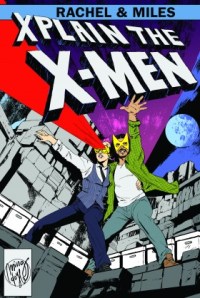
In addition to the graphic novel, the podcast Rachel and Miles X-plain the X-Men was an invaluable resource for this review.  Check out their excellent weekly show HERE!

Hugh Likes Podcasts: Flash Pulp

1 Comment

Flash Pulp is the work of Skinner Co, a three-person team of Canadians, and just about the most friendly bunch of podcasters you’d ever want to meet.  With an impressive catalog of episodes already online, Flash Pulp presents short pulp fiction with a more modern slant than Howard and Boroughs.  The universe is a massive web of stories, featuring a variety of characters across different times.  There’s Frontier Occultist Blackhall, and his modern counterpart Will Coffin, private detective Mulligan Smith, and zombie outbreak survivor Ruby.  And at the center, at the end of all things, is Kar’Wick, the Cthulhu-like spider-god.  These stories all bend and twist around one another in interesting and unexpected ways, leading listeners deeper into the over-all story of Skinner Co’s universe.
Flash Pulp is a perfect example of serialized storytelling done right.  Every story is a jumping-on point for new listeners, while at the same time rewarding fans who have heard all of them.  It’s a tricky maneuver to pull off, but Skinner Co does it with skill.
Their process is also worth nothing.  JRD writes the stories.  Opopinax narrates them and creates episode art.  Jessica-May records and edits them.  The shared workload keeps everything moving smoothly, and prevents the prolonged delays and pod-fading that plagues the medium.
The other very cool thing about Flash Pulp is The Mob.  Flash Pulp’s loyal and very cool fan community, of which I am a part.  The Skinners work very hard to cultivate the Mob, and stay connected with them.  It’s not a fandom.  It’s a network of friends, and also a fictional evil corporation, but that’s neither here nor there.  The podcast also has a (nearly) weekly Flash Cast episode, where the three  hosts catch up, read from the mail bag, and share segments recorded by members of the Mob.
If you have any interest in podcast story telling, check out the Flash Pulp podcast, and get to know these classic characters and their creators.

Visit Skinner.fm to listen for yourself!

Sign up for my mailing list!

gauntletcover-Cyanfinal2

Welcome Back to Mario Kart!

Leave a comment

Although I’ve had a Wii U console since February, I haven’t seen a game that made me keep the system powered until now. After a soft launch, and a library of ports like “The Legend of Zelda: Wind Waker HD” and sequels like New Super Mario Bros. U, I’ve been ignoring it. Mario Kart 8 is the game my Wii U has been waiting for, though.

To be fair, MK8 is as familiar as Nintendo’s other offerings. It is the next iteration in the beloved kart racer with a few new innovations and enhanced graphics. But man, what polish that enhancement brings.

MK8 returns with a lot of the improvements from Mario Kart Wii and Mario Kart 7 intact. Players still race for coins, can control their characters with a variety of control schemes from the Wii U classic controller to the Wiimote racing wheel. Flying and underwater track sections also return, and have never looked or played better.

If there is anything I find disheartening about Mario Kart 8, is that it signifies the final nail in the coffin of the F-Zero series. In the Super Nintendo era, F-Zero was that fast, spectacular racing game, while Mario Kart focused on lower speed, cartoonish battle races. While MK8 still maintains the series’ whimsy, upped its game for spectacle to new heights.

This game is fast! Between the flight sections and the new ability to drive along walls and vertical surfaces, there is a real sense of speed this time around. Even the process for falling off the track has been streamlined. Instead of a lengthy sequence that robs you of precious seconds, Lakitu just takes three coins from your reserve.

The graphics this time around are this most highly polished yet. HD polish agrees with Mario Kart. One of the classic tracks, “Moomoo Meadows,” really showcases the difference between the Wii and the Wii U. The new tracks look great as well, and are filled with dazzling moments, from driving up a waterfall to a track inside of a Mushroom Kingdom Disco.

There are a few nitpicks in all the polish, though. There are fewer customization options for setup, including split-screen multiplayer that is only vertical. Annoying, but not a deal breaker. Also, rather than being set in closed arenas, battles now take place on the racing tracks, which are too big to accommodate a two player match.

Mario Kart 8 is both a return to form and a surprising elevation of the familiar racing franchise. For a console that has been languishing, this is a much-needed “must have’ game.


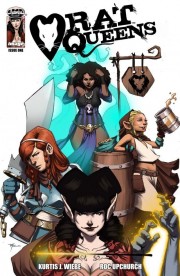
Hugh Likes Comics: Rat Queens

Leave a comment

ratqueens

Written by Kurtis J. Wiebe

Drawn by Roc Upchurch

Published by Image Shadowline

Perhaps I wanted to like “Rat Queens” a bit more than I did. It’s a very good book, make no mistake. The art is gorgeous in an ultra-violent sort of way, the characters are interesting, diverse, and well-used, and the action is intense. But there’s just something about this comic that didn’t impress me as much as I hoped it would.

It sounds like I’m damning this book with faint praise, and I suppose I am. It is a gory, snarky ‘Swords and Sassery’ comic in the exact same vein as Jim Zubb and Edwin Huang’s ‘Skull Kickers.” Unfortunately, it doesn’t quite hit its beats as well.

The eponymous Rat Queens are a quartet of adventuring ladies in the familiar mold: Dwarf Fighter, Human Cleric, Elf Wizard, and Smidgen (I E Halfling) Rogue. They, and the rest of the adventuring parties, are causing a problem for the town of Palisade. All they do is drink and fight, and it’s hurting property values. When the local Captain sends them all out on quests to get them out of his hair, the Rat Queens soon discover that they’ve been set up, and assassins are on their trail.

The dialogue is snappy, filthy, and funny, but the plot is pretty bare-bones. It feels a bit too caught up in the conventions of a certain unnamed table-top Role Playing Game. While the comic starts out as a parody there comes a point where you’re not lamp-shading tropes, you’re just using them. I think that’s what disappoints me about this comic. It’s so gamey that it doesn’t have much weight to it, even when extras are being cut in half and stabbed in the eye. There’s not any real conflict in all this slaughter. I’d have liked the Rat Queens to have come up against something a bit more epic. This first volume is all random encounters.

I do like the fact that Wiebe and Upchurch really put some thought into the design and structure of the world, giving it a real multicultural feel without seeming as forced as the other aspects. The all-female team of adventurers is not presented as strange or even particularly transgressive in the world of the comic. This doesn’t just apply to gender roles, either. Race in Palisade means a bit more than white with pointed ears or white with a beard and a highlands accent. “Rat Queens” presents modern fantasy pulp perfectly by including modern gender and racial equality, and never even calling attention to itself for it. Diversity can be a touchy subject in science fiction and fantasy, with a small but vocal minority demanding the ‘authenticity’ of confirming a bias towards Straight, White and Male. The Rat Queens are here to kick ass and quaff ale, and they don’t care how much blood gets on their outfits. That’s really refreshing, if messy.

“Rat Queens” is a style-over-substance battlefield romp with four lady mercenaries who say ‘fuck.’ Quite a lot, actually. It’s not for kids, but it is an entertaining but character-sheet thin comic for adults. If you’re caught up on “Skull Kickers” and nostalgic for your multi-sided dice, “Rat Queens” might be the comic you’re looking for.


Hugh Likes Comics-“Down, Set, Fight!”

Leave a comment

Written by Chad Bowers and Chris Sims

Drawn by Scott Kowalchuk

Published by Oni Press

One punch can change your life forever. Chuck “Fearless” Fairlane was a rising football star, set on his life path by his inveterate gambler father from an early age. That is, until he punched out an opposing team’s mascot, then the opposing team. Then HIS OWN Team. Then the coaches. His brawl went in League history, but he retired rather than blame the mascot for his outburst.

Ten years after leaving pro football, Chuck is working as a football coach for Darius Rucker High School (Home of the FIghting Blowfish.) One day, a man in an elephant costume appears and picks a fight with him . Soon he finds himself in search of his father, pursued by a bear, and a shark, and a tiger, and just about every other mascot in the U.S. Plus, one determined FBI agent.

While this comic is on the surface a story about a dude beating up hordes of mascots, there was surprising depth in the relationships Chuck has with his father, as well as agent Harrison. Ostensibly a fight comic with a good dose of humor, “Down, Set, Fight!” turns out to be an unexpectedly effective character study.

The art has quite a 70’s grind house feel to it, and is very detailed. Kowalchuk brings the steadily escalating fight scenes, which ramp up exponentially as the series progresses, to the page with economy and skill. The colors have a muted, washed out feel as well. This reinforces the exploitation style, but it doesn’t show off the colorful mascot costumes as well as it could have.

“Down, Set, Fight!” was not my usual sort of comic, but I enjoy the creators’ other works and was glad that I took a shot on it. Much like Oni’s smash-hit “Scott Pilgrim,” this is a fight comic with hidden depths. For full disclosure, I recently interviewed all three of them on the Way of the Buffalo, so I might be a bit biased on this one, but I’m giving it a recommendation.

“Down, Set, Fight!” is available in print as a Graphic Novel, or as digital issues from Comixology.

Bang! Biff! Pow! Justice League: War isn’t just for um, well, actually, who is this movie for? (Review)

Leave a comment

Let me begin by confessing that I have not read a single page of Justice League comics in the DC New 52. So I have no idea how accurate or off base “Justice League: War,” the new animated adaptation of the first arc is. Initial previews and reviews led me to believe that DC’s new direction just wasn’t my thing, and this movie did nothing to convince me to give them a second look.

The plot is rather thin and familiar. A group of well-known superheroes who don’t know each other discover something bad is about to happen. They slowly begin to gather to address the threat and do so just in time for an unstoppable alien army to jump through some portals in an American city. Towards the end of the film, their big bad leader shows up and they gang up on him. They find a way to close the portals and then the threat is suddenly over. The end.

It may not be fair to compare the film to the blockbuster live-action “Avengers,” since the comic “War” is based on appeared close to a year before that film was released, but the similarities are unavoidable. I just wish that “War” had borrowed a little bit of “Avengers” wit and charm.

The movie’s not all bad. The action is well animated, and although it can’t fully carry the ball, there are plenty of neat super-powered displays. I was actually shocked by the level of violence and profanity in this cartoon. The Justice League prevents Darkseid from using his Omega Beams by literally stabbing out his eyes. ‘Just like Oedipus!’ Wonder Woman exclaims when they hatch the plan. It’s the one smart bit of dialogue in a film that portrays these iconic characters as vulgar, petty jerks.

The depiction of characters is where this movie really falls flat. This movie has a cynical edge that it perhaps shares with ‘Man of Steel,’ portraying the public as distrustful ingrates and the heroes as the worst versions of themselves. The writers were going for more extreme, gritty versions, but unheroic, downright stupid, superheroes just leave a bad taste in my mouth. The dialog eschews cleverness for playground vulgarity, but if you really wanted to hear Green Lantern call Batman a douche bag, this is the animated film for you.

The film ends with the characters not having really learned anything, just left a pile of destruction in their wake. It left me with the question of who this adaptation was for? Fans of the New 52, presumably, but with such a high level of violence and vulgarity, it seems inappropriate for younger fans. Older fans like myself will find the thin story and unpleasant characterizations a pale shadow of the Bruce Timm and Dwayne McDuffie eras of DC Animation. I can’t recommend this movie.

The Legend of Zelda: A Link Between Worlds

Leave a comment

The Legend of Zelda: A Link Between Worlds


It has been said that Nintendo is a company stuck in the past. That they retread old ideas and characters, plying on nostalgia rather than innovation. And while there’s truth there, when they get it right, OH MAN do they get it right.

“The Legend of Zelda: A Link Between Worlds” is a 3DS sequel to the Super Nintendo’s “A Link to the Past.” Old School fans of the series will find the maps, designs and plot familiar. Mysterious figure arrives in Hyrule, is immediately revealed to be a bad guy, Link has to collect three pendants and the Master Sword to follow him to the other half of the game.

While it looks like “A Link to the Past’s” Dark World, the other section of the game takes place in Lorule, a more developed mirror kingdom complete with its own Princess and villagers. And Lorule is, for reasons that remain unclear until the end of the game, being torn apart.

Link can travel between the two dimensions using the game’s key new ability. Thanks to a magical bracelet he acquires early in the adventure, Link can change himself into a painting, and walk along walls. It’s a strange ability, and not particularly intuitive at first, but it is masterfully executed in the game, and provides a whole new set of puzzles to solve.

The other major change is that Link’s tools lack ammunition. Instead, Link has a stamina bar that slowly refills, and is shared by all of his rods, bombs, and ranged weapons. Link has access to most of his standard equipment very early in the game as well. This makes “A Link Between Worlds” a much less linear affair than previous games. Link has the ability to tackle dungeons in any order he likes.

The design of the dungeons is quite good, although some of the puzzle solutions felt a bit easy. Since the player has to do a lot less hunting for rupees and equipment, the game seems a bit short.

The artistic elements are reminiscent of the super nintendo, but trades sprites for nicely rendered 3d models. Although most of the game is seen from the top down, a few cut scenes switch to a perspective closer to the ground, and show off the 3DS’s horsepower. The actual 3d is possibly the best I’ve seen on the system. The terrain of Hyrule sinks into the screen, and enemies leap out. This is the first game where I honestly preferred to keep the 3d turned up the whole time.

“A Link Between Worlds” is a great game for players who are new to Zelda, and it rewards fans of the series with plenty of easter eggs, like Majora’s Mask, which can be found on the wall of Link’s House, but unfortunately, can’t be worn.

The game is a wonderful update on a classic, with an amazing twist ending. I highly recommend it.

Hugh Likes Comics: The Top 5 of 2013

Leave a comment

Image

#5: Batman ’66: I like stories that go all-in. No pussy-footing around, not Super-Heroes-but-no-tights, which seems to be de-reguer, particularly at “The Big Two.” That’s why I was pleasantly surprised by this outing from writer Jeff Parker and artist Jonathan Case. They’ve returned to the source material of the ’60’s Batman TV show, complete with dancing and giant sound effect bubbles. The digital versions have a few more tricks up their sleeves to evoke the classic series. Batman ’66 embraces everything the New 52 disdains, and soars because of it.

Image

#4: Saga: Vaughan and Staples continued to knock it out of the park this year with Saga. The story of an ancient interstellar war cut with family drama, mercenaries, and the ways art can change a person make for a heady mix. The art remains evocative and controversial. Saga doesn’t pull its punches, but it isn’t crass, either.

DIG008301_2

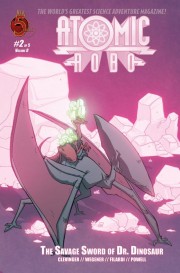
#3: Atomic Robo: The Savage Sword of Dr. Dinosaur: There was little chance for Clevenger and Wegener to escape this list as well, with this nail-biting installment that puts Atomic Robo at the site of an impossible underground city, with shadow military agents storming his headquarters, and completely unstable velociraptor mad scientist Dr. Dinosaur sitting on a stockpile of stolen nuclear warheads. Atomic Robo remains funnier and smarter than it has a right to be.

DIG010027_2

#2: Sandman Overture: We only got one issue of Neil Gaiman’s return to his seminal Byronic Dream King, but oh boy, was it ever a doozy. Filled with all of the gothic-horror elements that made Sandman great, and with exceptional art by G H Williams III, This comic is a rare treat for Morpheus fans. Hopefully, we’ll get to see it a bit more frequently in 2014.

DIG013410_1

#1: Young Avengers: Sadly ending in early 2014, Young Avengers is a comic that knows exactly what it wants and goes right for it. Under the direction of comics super-team Keiran Gillen and Jamie McKelvie, the Young Avengers bring a little bit of their indie hit “Phonogram” into the Marvel Universe. “Young Avengers” pits focuses less on what it means or takes to be a superhero than it does the trials and tribulations of modern teenagers. After a poorly planned bit of magic use, a group of teens find themselves fighting against an magical parasite that draws power from how parents don’t understand teenagers. It is a fantastic high-concept very well executed. Unfortunately, for a teen book, there is a lot of backstory for these characters that just isn’t given. I’ve felt in over my head a few times, but I’ve loved the ride. Another plus in this comic’s favor is that it has possibly the highest collection of LGBTQ characters anywhere in ‘the big two,’ and handles them with then same excellent touch as earlier Young Avengers installments.

2013 No-Prize: Dan Didio continues to be comics’ greatest super-villain. He spent the year making sure no DC Comics characters have any fun on his watch. After denying the upcoming marriage of Batwoman Kate Kane, he went on to say that none of DC’s heroes should have a stable home life, and seems to be making certain of it. His crowning achievement this year: Creating an art contest for Harley Quinn #0 which included drawing the beloved children’s TV character naked, despairing, and about to commit suicide. After much outcry, the panel did not appear in the final version.

Honorable mentions:

X-Men: Teenage Mom Jubilee, enough time-travelers to stage a production of “Les Mis” and other crazy nonsense. Marvel seemed to focus on their movie-friendly characters like the Avengers in 2013, but there was still a ton of mutants out there, including an all-female team!

Edison Rex: Artist Dennis Culver gets the nod for designing not just a new set of comics characters, but an entire major publisher’s line-up of heroes and villains. My personal favorite: ROFL, an omnipotent extra-dimensional being using the form of a muppet Grant Morrison.

Subatomic Party Girls: Simms and Bowers had the stones to use the line ‘Do you realize we’re floating in space’ unironically. Props.


Megaman I: Elegance in Design

Leave a comment

System: Nintendo NES/Famicom

Release Date: 1987

Megaman’s creator, Keiji Inafune recently funded a kickstarter for his new independent project, Mighty Number 9. Inspired by the buzz surrounding the new project, I went back and looked at the Blue Bomber’s original adventure with new eyes.

I didn’t have “Megaman” for my NES, but lots of my friends did, and I remember the games fondly from the early nineties. I also recall them being controller-threateningly difficult. I was curious to see how the first outing would stack up to my memories.

First of all, it is worth noting that the first game lacks the graphical and musical polish of the sequels. There are only six stages, and once the player determines the proper order for playing them, they fall rather quickly. Especially if you use the well-known ‘pause trick.’ Likewise, there’s not much of a story besides ‘You’re a good robot, they’re evil robots, go fight them.’ It’s the sort of fare from the era that is simple, but has been expanded upon greatly in the years since. For example, in the much-praised Megaman comic, put out by Archie Comics.

While I will agree that Megaman is hard, it was not quite so bad as I remember. Aside from a few of the end stage bosses, (and I am looking squarely at you, one-eyed rock monster) the deaths don’t feel cheap. Unlike other 8-bit era platformers, there is no countdown clock. The game gives you plenty of time to observe and experiment. Megaman really is the start of what later-generation indie developers would call ‘puzzle platformers.’ Most of the game can be best progressed by observing the challenge and discovering the pattern, or choosing the best Robot Master’s subweapon for the situation. For example, the flying torpedo enemies can often knock you into a pit when they explode, but freezing them rather than shooting them with your regular gun solves the dilemma. Most of the jumping puzzles can likewise be bypassed with the Magnet Beam.

This creates an odd challenge curve as the game actually gets EASIER as you gain new powers. The game’s non-linear nature lets you play the stages in any order, but the real challenge is figuring out an optimal path. each Robot Master has a weakness, and some levels, such as Fire Man’s stage, are practically impassable without the right weapon.

All in all, Megaman I is a solid entry in the NES’s roster of games. While its sprites and textures are a little less eye-popping than its successors, it is at the very least noteworthy for being the progenitor of something great, and a whole lot of fun. You don’t need to play it to get into the series, as there isn’t much of a story aside from the window-dressing standard to that generation, but it is certainly worth your time. Just watch out for those disappearing block puzzles.

Hugh Likes Comics: Wolverine and the X-Men # 19

Leave a comment

Wolverine and the X-Men #19, Written by Jason Aaron, Penciled by Nick Bradshaw. Available from Comixology or YOUR LOCAL COMICS SHOP!

After tearing “Avengers vs. X-Men” a new one in the last entry, I’m glad to be able to recommend something from the House of Ideas, and if there is anything this comic is full of, it is wonderful, crazy, hilarious ideas. The issue opens with an assault by a second rate super-villain made of ‘nazi bees’ and ends with a reveal so great that I’m not going to spoil it here, although I may have already spilled the beans on my twitter feed.

Wolverine and the X-Men is the story of the Jean Grey School for Gifted Youngsters, and it is just fantastic. This issue is a wrap-up point after the big crossover, and the start of a new semester. This may or may not be the best place for new readers to jump on, but it gives a good cross section of the kinds of stories that this book has at its heart.

In a previous issue, one of the students was shot, and is at death’s door. While the rest of his classmates are on another world volunteering at a shelter for aliens displaced by the Phoenix, Wolverine is out looking for the assailants. Meanwhile, Beast has shrunk himself down “Fantastic Voyage” style and conducts hands-on brain surgery. He grows back to normal size and consults with a panel of Marvel’s smartest scientists: Mr. Fantastic, Iron Man, and Spider-man, all of whom have Skyped in to lend assistance. The rest of the issue is some comic relief: Shadowcat is interviewing replacement teachers, and a host of unlikely but hilarious candidates, including Blade and Ghost Rider, have turned up to apply.

The issue is by turns goofy, chilling, and heart-wrenching. But most importantly, it is fun and authentic. With a huge cast and divergent storylines, Aaron does an amazing job keeping all the plates he has going spinning, and giving us a ride that is enjoyable and surprising. And in spite of all the big ideas, the super-hero schools and the size-changing brain surgery, it is the characters that shine through. These aren’t simply mannequins equipped with wish-fulfillment powers and one-liners. His students feel like teenagers. Moreover, he gets what it is to be a mutant teenager better than any x-writer I’ve seen in a long time: Not merely the terror of being different in a world where being different is BAD, but also the swagger of having power, but not the wisdom to restrain it. He frames the adults perfectly as well: They are there to protect these kids, not simply train them. I can’t recommend this comic highly enough. Go check it out.

Older Entries Newer Entries