Home

Hugh Likes Comics: What Did You Eat Yesterday?

Leave a comment

What Did You Eat Yesterday?

Written and Drawn by Fumi Yoshinaga

Published by Vertical, Inc.

The Skinny: A Gay slice-of-life cooking manga that has more romaine than romance.

Shiro and Kenji are a Gay couple in their 40s living together in Tokyo. Closeted lawyer Shiro fends off the questions about his girlfriend, while boisterous barber Kenji is much more relaxed and free-spirited. But every day Shiro cooks an amazing meal for his partner at the end of the day.

Equal parts slice-of-life and cooking manga, What Did You Eat Yesterday? has very little plot to speak of, just the day to day lives of the protagonists and their emotions. Shiro is a fussy and vain, but he demonstrates the depths of his emotions in his cooking for Kenji, who can be jealous. I wish the book were a bit more, well, it has all the spice level of a cup of milk, to be frank. But for as little physical affection as the characters show, the book is a look into the daily lives of people who usually don’t get a spotlight in either manga or western comics.

Yoshinaga’s art style is easy to read and balances a fashion plate-like style for the characters with gorgeous, detailed renderings for the food. It also includes clear recipes that, while being originally intended for the Japanese market, are easy to follow and recreate in the kitchen of a Western reader. The comic follows Shiro from the grocery store to plating and serving the dish for Kenji, often involving the math and planning stages, interwoven into the story. Do I wish that Shiro’s parents were more open and accepting of their son, yes. But did you see that amazing drawing of fried tofu?

What Did You Eat Yesterday? also received its own live-action television series, consisting of two seasons and a movie. It also has its own accompanying fan-fiction series, which includes all of the adult content the comic doesn’t cover. I am glad that the translation includes the frank discussion of everyday life of these characters and their relationships, something that we haven’t always gotten, particularly for queer characters in larger franchises. Stares in ‘They’re Cousins’ This is a serious manga for adults, but if you are looking for spice, you’re going to find more on the plate than in the sheets.

What Did You Eat Yesterday? is available in print and digital editions from the usual online retailers, or in print from your local bookstore or comics shop. You may be able to find it or ask for it at your local library!

Hugh Likes Comics: The Drops of God

Leave a comment

The Drops of God Vol. 1

Written by Tadashi Agi

Drawn by Shu Okimoto

Translation by Vertical, Inc.

Published by Kodansha Comics

The Skinny: A Martial Arts Manga about Wine Tasting.

When legendary wine critic Yutaka Kanzaki dies, he leaves only his estranged son Shizuku to inherit his estate and his priceless cellars. Due to his demanding upbringing, Shizuku has no interest in wine, and still resents that his father spent years training him. In fact, he has never even drank wine, out of resentment to his father. But shortly after his death, a second heir appears.
A week before his death, Kanzaki formally adopts young, talented wine critic Issei Tomine and creates a new will. The two will have to compete in tasting a dozen different wines, as well as identify one mythical bottle, the so-called ‘Drops of God’ in a winner-take-all competition for Kanzaki’s estate and collection.
Even with his latent skills developed by his father’s rigorous training, Shizuku will need help to figure out a path to gain control of his father’s estate. His only hope is apprentice sommelier Miyabi, who agrees to help him beat the unstoppable critic.
With drama like a martial-arts manga, The Drops of God is a unique comic that mixes the aesthetics and over-the-top posture of manga and anime with a deep understanding of wine making and tasting. It is a more grown-up taste for fans that have grown up on One Piece and Dragonball. This risky mix that doesn’t always work, but the terroir of serious adult drama and stakes with shonen sensibility is a delightful romp. Watching our heroic couple (even if they don’t know it yet) hunt through Ginza for a hidden wine that can match a hundred-thousand dollar vintage is a delight. Meanwhile his nefarious rival completes trains by tasting row after row of wine, and pours strange, black-hued vintages down the naked back of a corporate executive who looks like the model from the cover of Duran Duran’s Rio.
The characters are both archetypal and over-the-top and also grounded in a way that is interesting. The art is clear and solid, with more grown-up visual style, although cuter aesthetic touches surface here and there.
The Drops of God is a mature vintage of manga for a discerning palate. It is available in print and digitally from online and other retailers.

Hugh Likes Comics: Frieren – Beyond Journey’s End

Leave a comment

Frieren: Beyond Journey’s End Vol. 1
Written by: Kanehito Yamada

Drawn by: Tsukasa Abe

Published by: VIZ Media LLC

The Skinny: Fantasy manga grows up.

Frieren: Beyond Journey’s End is part of a new sub-genre of manga and anime that doesn’t merely adopt Western Fantasy tropes, but expands then into a deep examination of the characters and settings. After defeating The Demon King and restoring peace to the land, four adventurers go their separate ways. Elven mage Frieren goes back to her old life of wandering alone without much thought for her companions. When they meet again fifty years later, she finds that her companions have all aged, while she hasn’t changed at all. After their leader Himmel passes away, she realizes that she hardly knew anything about him, and goes on a journey both to learn more about her companions and herself.
With such a long-lived central character, author Yamada and artist Abe are able to explore the themes in unique and interesting ways. They transform what appears to be a standard heroic fantasy story into a poignant examination of loss, regret, and the passage of time. The creators are able to play with the pacing of the story in interesting ways, having months or even years pass between chapters. The manga is filled with page sequences where months pass like days. Rather than feeling rushed, however, these sections evoke a sense of stillness and calm.
The story also flashes back between the party’s original adventures and the current journey to great effect. Frieren often interacts with people she met in her travels who were children during their quest, and are now elderly. In one particularly interesting chapter, she visits a village where they sealed a demon, knowing that it will soon break free. This is somewhat of a one-off story, but the creators give a lot of insight into the world building and magic system of the setting. The demon was too powerful to defeat outright eighty years ago, but the development of magic has continued apace since he was sealed, in large part as part of an arms race to discover a defense for a particularly dangerous killing spell that the demon developed. Frieren unseals the demon, tells him that his king is dead, and after a short battle, kills him with his own spell. While he was sealed, the world, and the study of magic, had passed him by. His powerful magic became ordinary.
Frieren: Beyond Journey’s End is a melancholiac, thought-provoking, and beautiful examination of how we view the passage of time and our connections to others. It is available in print from your local comics shop or digitally from Comixology. There is also a new anime adaptation available through Crunchyroll!

Hugh Likes Comics: Sand Land

Leave a comment

Sand Land
Written and Drawn by Akira Toriyama
Published by Viz
Read in digital format on Amazon Kindle

The Skinny: Akira Toriyama’s “Mad Max”

With a major adaptation of Akira Toriyama’s short manga Sand Land set to be adapted into a video game this spring, I finally decided to fill a hole in my collection of the great manga artist, and I’m glad I did. This single-volume adventure is a charming delight. Originally published in 2001, the single volume is set in a post-apocalyptic Earth where the remaining survivors live in a desert ruled over by a despotic king with control over the dwindling water supply.
When the elderly Sheriff Rao embarks on a dangerous journey across the desert, he makes a deal with the demons for help, promising them not his soul, but a rare Playstation 6 video game console. Beelzebub, an apparently adolescent prince of the demons agrees to accompany him along with his servant, Thief.
The resulting adventures is a little bit ‘Fist ‘of the North Star,’ a little bit ‘Peewee’s Big Adventure,’ and it oozes Toriyama’s signature humor and charm. From a stolen tank in Toriyama’s signature bulbous design style to a family of bandits dressed as olympic swimmers, this version of the post-apocalypse doesn’t take itself too seriously, while still managing to have a hard-hitting, emotional story at its heart.
While not as long-running or complex as some of his earlier work, Sand Land displays all of the skill and humor that Toriyama is known for but sometimes gets lost amid the big fights and drama of his best-known work. It is a work created by a master given the opportunity to just play without the demands of continuity to previous works. The result is a book that is as joyful as it is dramatic, a satire and critique of hyper-masculine action-zests like Mad Max and Fist of the North Star, and an empathetic post-apocalypse where even the demons aren’t bad guys at heart.
I’m greatly looking forward to the upcoming video game adaptation of this story, coming this spring for PC and Playstation. Even if you don’t have any interest, I recommend picking up this heartwarming story about survival and justice after the end of the world. You can read Sand Land digitally from Viz and other comics retailers, or in print from your Local Comic Shop or wherever you buy manga.

Hugh Likes Comics: Batmanga

Leave a comment

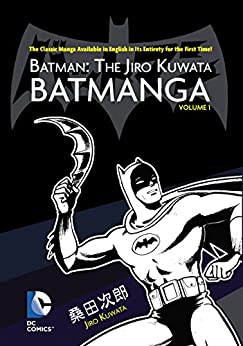
Batman: The Juro Kuwata Batmanga Volunme 1
Written and Drawn by Juro Kuwata
Published by DC Comics

The Skinny: The Other ’60s Batman

During the height of the 1960s Batman TV show, Juro Kuwata a manga-ka who brought the Dynamic Duo to Japan with his own unique spin on the Caped Crusader.
 The resulting collection was not available in English in a complete format until 2014, but it is well worth your time and consideration. The art is a delightful mix of Golden Age DC and classic manga aesthetics, riding high on an international wave of the live-action Batman TV show’s success. The stories are all fairly straightforward and of their time, but also take some interesting swings. Eschewing the Dark Knight’s well-known rogues gallery, Kuwata turned his hand to making his own villains, opening with the very strong and exceptionally well-named “Lord Death Man” and setting Batman and Robin against a super-intelligent gorilla (not Gorilla Grodd) with a fun twist, a powerful mutant that echoes the creation of Marvel’s X-Men while looking like a weird space alien, and The Human Ball, which probably sounded less hilarious in the original Japanese.
 Kuwata’s art is striking and iconic, although the stories feel somewhat poorly served by manga’s black-and-white format. Several insert sections also include red tones for a deluxe feel, but one of the key clues for one of the villains includes the fact that his powers were color based. Which came out of left field in this black-and-white comic
Batman and Robin also have a distinct feel to them in this version, with Batman being much more of a man of action rather than a detective, and this Dick Grayson is delightfully sassy.
 While not exactly ground-breaking, this collection of ‘lost’ Batman comics feels both classic and astonishingly different. Kuwata’s style is distinct and iconic, while still highly recognizable, and Batman and Robin’s adventures don’t feel too far removed from his live-action TV Adventures. It is a curious little oddity that is well worth the time of fans of both anime and Batman, if only as a reminder of where the character has gone in his many years of publication history. Batmanga Volume 1 is available digitally from Comixology or in print from your local comics shop.

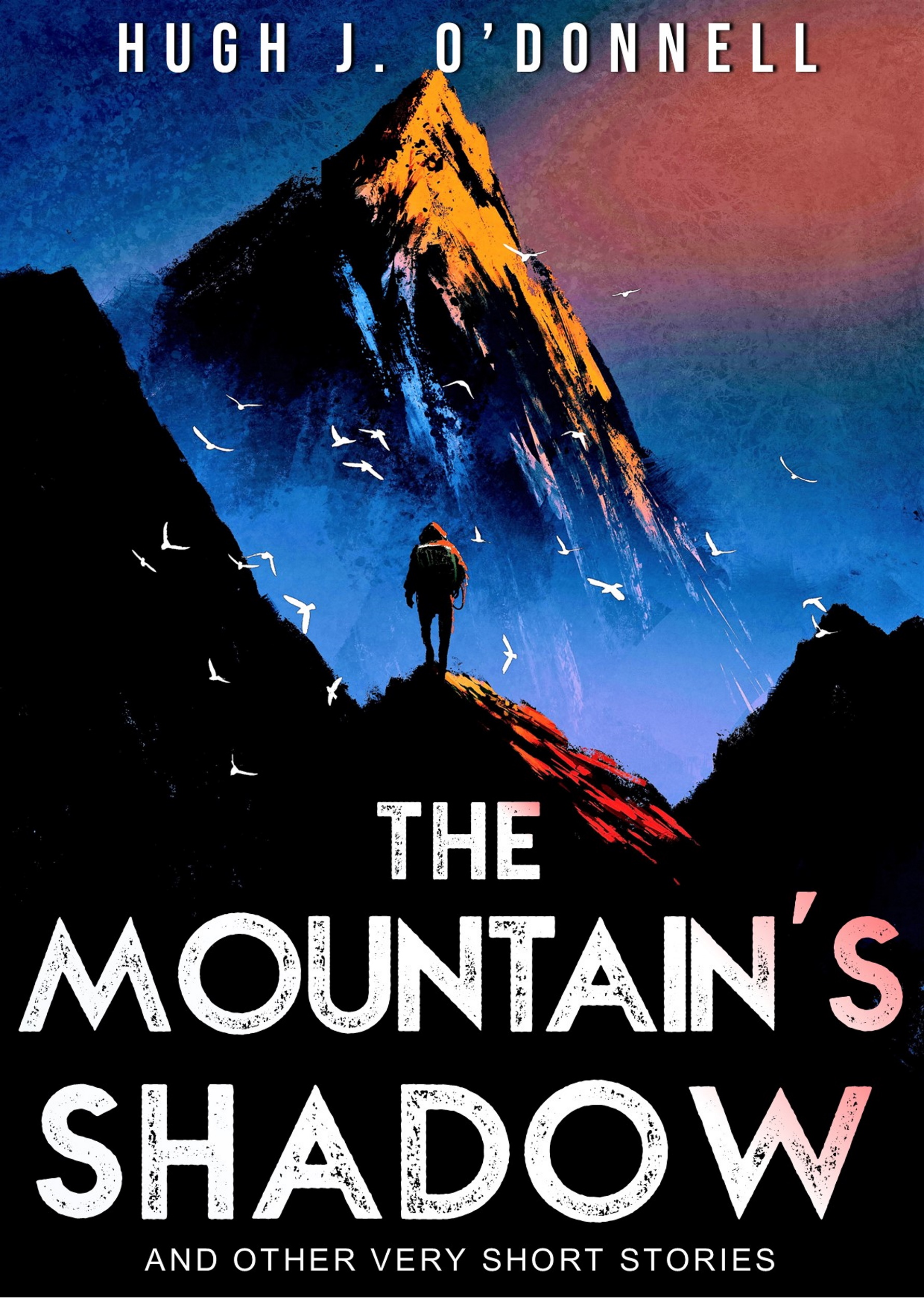
The Mountain’s Shadow is now available from Amazon and Smashwords!

Hugh Likes Comics: Chainsaw Man

Leave a comment

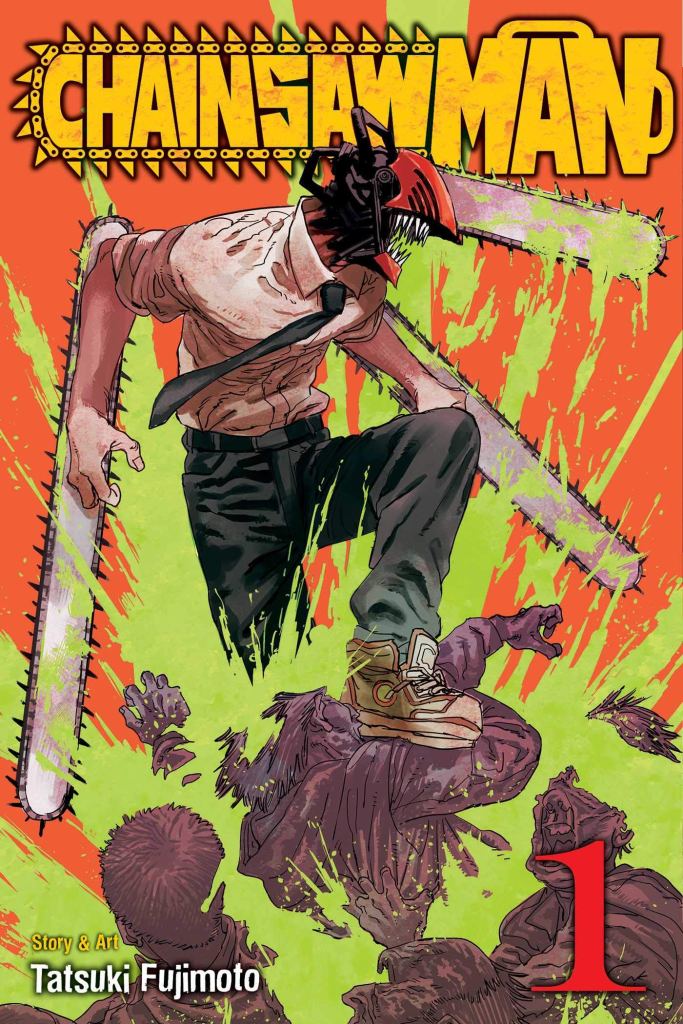
Chainsaw Man Volume 1: Dog and Chainsaw
Written & Drawn by Tatsuki Fujimoto
Published by Viz Media

The Skinny: Three chainsaws and one brain cell.

Chainsaw Man is a delight of a manga that is taking the world by storm, and I can see why. It follows Denji, a young man saddled by the Yakuza with his father’s debts. Forced to pay an impossible sum, Denji’s only companion and source of income is his pet Pochita, a dog-like devil with a chainsaw for a snout. Denji uses his monster pup to hunt other demons for cash. But when his yakuza debtors turn on him, Pochita sacrifices itself, merging with Denji to make him the eponymous Chainsaw Man, a powerful combination of human and devil.Chainsaw Man is one of those manga that sits squarely in the Venn diagram of a number of genres. It isn’t quite a horror comic, and it has a lot of comedic elements, and Denji sort of, but doesn’t quite fit into a superhero mould. The book sits somewhere uncomfortably between all three genres, allowing the tension of that placement to drive the story.In a world where devils walk the Earth, this is the type of story that examines the humanity, or lack thereof, of its characters. From the abusive Yakuza who hounded Denji’s father to suicide to his new boss Makijima, who threatens to have Denji executed if he doesn’t produce results, the humans take advantage of Denji’s situation as a half-devil for their own ends, leaving him to suffer. But Denji isn’t without flaws himself, as he uses his newfound freedom to support his one goal in life: To ever touch a boob. Largely the inhumanity of these characters is played for laughs or pathos rather than as a serious societal critique. Denji is a character raised outside of civilization, and becomes a lens to view civilization’s flaws, ramped up to eleven by the threat of marauding devils. Denji himself is so simple that he is played as a sort of a noble savage, alongside zombie-like devil girl Power. In other situations, this could be very uncomfortable, but Fujimoto pulls the trick off, for the most part.
Fujimoto’s art is detailed, and often grotesque without being overly complex or difficult to read. I read the manga on my tablet, and it came through very legibly, and is easy to follow. His monster designs are clever and unexpected, and manage to never cross the line into being too gross.
Part horror reflecting man’s inhumanity to man, part workplace comedy, part gristly spectacle, Chainsaw Man walks a thin line, but the fresh writing and fast pace propel it along fast enough that it never falls into any pits. If you’re looking for something new to read, it’s well worth your time.

Hugh Likes Comics: Rurouni Kenshin

Leave a comment

Kenshin

Written and Drawn by Nobuhiro Watsuki
Published in English by Viz Comics

Like “Lone Wolf and Cub,” “Rurouni Kenshin” is a manga about a wandering swordsman, but tonally, the two could not be farther apart.  Set in Tokyo in the 1870’s, this is the story of Kenshin Himura, a former assassin and swordsman during the Bakumatsu period of civil wars who has vowed to never kill again, but cannot give up his sword.
One of the reasons I find this comic so interesting is that it is set in set in a dynamic and chaotic historical period that I knew very little about going in.  This story is set in a Tokyo that had been Edo not very long before, still healing from the open wounds of a civli war that toppled the established social order.  It’s a fascinating setting, as full of contradictions as the characters themselves.
Through a series of events, Kenshin settles as a guest of Kaoru Kamiya, a young woman running her deceased father’s kendo school, but lacking students.  From there, he meets a series of people, each of whom has been affected by the new era in a different way.  He meets Yahiko, a young orphan whose parents were Samurai, struggling to maintain what he things honor means in a modern world, and Sanosuke, a fighter whose mentor was betrayed and killed by the Revolutionary Army Kenshin supported.  He also meets Jin-E, a swordsman like himself who, unable to put down his weapon, turned into an assassin.
“Rurouni Kenshin” fascinates me because it is so full of contradictions, and those paradoxes are built right into the characters and setting.  It is most unlike “Lone Wolf and Cub,” and other Samurai stories in that rather than praising duty over life, it is a story of a swordsman struggling to put his past behind him.  Kenshin carries a “sakabato,” a katana with the edge of the blade reversed.  This allows him to fight with his sword without killing.  These are stories not about “Life in Death,” but life beyond it, and the struggle to atone for the lives already taken.
This comic originally ran in “Shonen Jump” magazine in Japan alongside boys’ adventure stories like “Dragon Ball” and “One Piece.”  It shares some of those series’ more kid-friendly aesthetic, both in the tone of the writing and the art.  Watsuki also is heavily influenced by American super-hero comics, particularly Jim Lee’s X-Men.  The result is that Kenshin’s skills often appear more like super powers than swordsmanship techniques.  This distracts from some of the more serious themes of the comic, but still allows for some entertaining and fascinating stories from a historical period many western readers know little about.
“Rurouni Kenshin” volume one is available through Amazon, or your local comics or book store.

Hugh Likes Comics: Lone Wolf and Cub

Leave a comment

Lone Wolf and Cub Volume One:  The Assassin’s Road

Written by Kazuo Koike

Drawn by Goseki Kojima

Published by Dark Horse Comics (English Version)

Originally published in Japan in 1970, “Lone Wolf and Cub” is a seminal document of Japanese Comics (Manga). The story of an executioner turned assassin in 16th century Japan was hugely popular, becoming a best-seller and spawning a series of films, two television series, and inspiring artists and writers in Japan and around the world. Partially translated and released in the US in the 1980’s, it was not fully collected in English until Dark Horse Comics began releasing volumes in 2000.

Ogami Itto was the Shogun’s chief executioner until the treachery of the rival Yagyu clan robbed him of his position and sentenced him to sepuku. In defiance of the Shogun, Ogami became an assassin living in “Meifumado,” the Way of Demons.” He takes his only living family member, his infant son Daigoro, with him in his quest for vengeance. As such, he is called “Lone Wolf and Cub,” a peerless killer who will take on any mission for five hundred Ryo.

“Lone Wolf and Cub” is an epic story collected over twenty-eight volumes, but each volume is picaresque, discribing specific assassinations or encounters Itto and Daigoro have on their journey. Deeply beautiful and starkly violent, these stories are quintessential Japanese pulp. Like Ogami himself, they are a paradox. At once noble and at the same time murderous, they celebrate Japan’s Zen Buddhist warrior traditions while standing apart from them.

Koike’s writing details the lives of noble samurai, struggling peasants, and suffering prostitutes with a historian’s careful eye. Kojima’s work evokes Japan’s greatest artistic traditions. This is a manga where ultra-violence and gratuitous nudity are positioned directly beside deep philosophical questions and breathtaking landscapes.

“Lone Wolf and Cub” is not a comic for kids, and it may not be everyone’s cup of tea, but Volume One features nine stories of samurai action that perfectly introduces the reader to the soul of Koike and Kojima’s groundbreaking work. It was an important step in my own appreciation of the medium, and it is a great place to start if you’d like something a bit more serious in your comics reading.

Lone Wolf and Cub Vol. 1 is available digitally, in print from Amazon, or from your local comics shop.