Home

Hugh Likes Non-Fiction: Queer As Folklore

Leave a comment

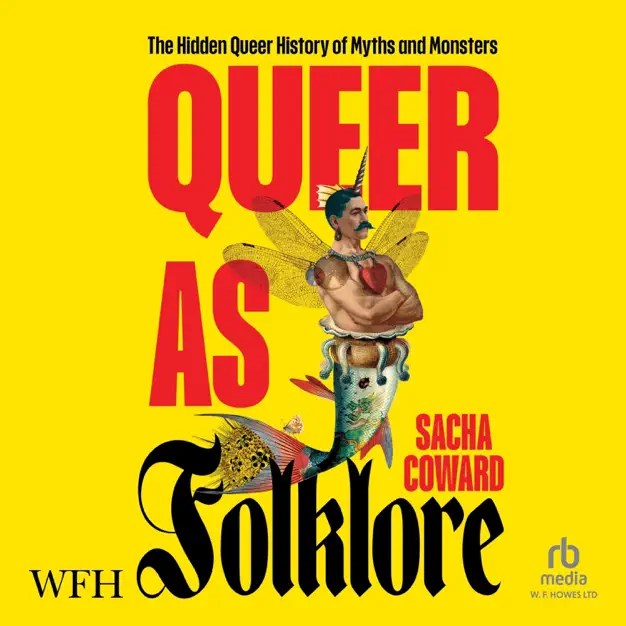
Queer As Folklore: The Hidden Queer History of Myths and Monsters
Written by Sacha Coward

Narrated by Will Watt

Published by Tantor Media

Listened to via Audible
The Skinny: A reimagining of legends and mythological creatures with a Queer lens.

Queer As Folklore examines the icons of myth and legend, and their hidden, and sometimes not so hidden connections to Queer iconography, history, and culture. Coward describes folklore as a living document, the stories that a culture tells. He presents both ancient and modern interpretations of archetypes, from the ancient to the modern. Everything from unicorns to UFOs get touched on.  Dealing largely with historical records, a lot of the history presented in this book is obscure, and depressing. So much of Queer history, particularly in Europe and America in the 18th, 19th, and 20th centuries was written in grave stones and police records, and Coward is a good anthropologist who doesn’t stray too far from his sources, even when he admits the temptation.

Each chapter focuses on a different mythological, supernatural, or pop-culture figure, presenting their mythological and historical context alongside their Queer signifiers, interpretations, and reinterpretations, along with associated Queer history and figures. Coward discusses, for example, Mermaids in their various classical and modern incarnations, and particularly focuses on The Little Mermaid author Hans Christian Andersen’s letters and tangled romantic history. He traces arguments through history, from the classical to the romantic to the modern.

The audiobook narration, delivered impeccably by Will Watt, is also charming and lively, keeping the listener engaged and not becoming a waterfall of facts and dates. I would listen to Watt read the phone book, but finding him here was a surprise and a delight, and he delivers the material well.

While a high-level overview of a number of different myths, legends, and historical figures, Queer as Folklore is a great place to start looking and reexamining these stories, and an excellent jumping off point for interested burgeoning scholars of mythology, culture, or Queer history. There is sure to be something fascinating that you haven’t heard before. I highly recommend it.
Hugh Likes Non-Fiction: Cocktails and Consoles

Leave a comment

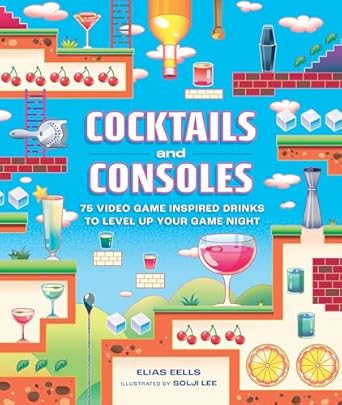
Cocktails and Consoles

Written by Elias Eells

Illustrated by Solji Lee

Published by Running Press

The Skinny: A guide for gamers looking to expand their palates and mixologists looking for new inspiration.

Cocktails and Consoles is neither a definitive guide to mixology nor gaming, but it is a mixture of the two hobbies into a whole that is both satisfying and enjoyable, embracing whimsey from both ends of the spectrum. Written by Elias Eells, host of Youtube Channel Bar Cart Book Shelf, this collection of seventy-five cocktails and mocktails inspired by video games of all different vintages and genres shows a passionate love for both the shaker and the controller.
But what is notable about this collection is the love of craft that is evident in its creation. An assembly of cocktail recipes inspired by video games could on its surface be a slam-dunk low effort product, quickly churned out and just as quickly forgotten. But Eells’ passion for mixology and gaming shines through, and he takes the reader through the subject with thoughtfulness and care, taking nothing for granted about the reader’s level of comfort for either drink or gaming. 
The recipes in the book vary from simple to complex, with a section at the front detailing the tools you’ll need as well as some of the more exotic ingredients. It even comes with recipes to makes some of the more complex mixers, from simple syrup all the way to your own orgeat.
Each recipe is inspired by a different game, from Pong all the way up to 2023’s Elden Ring. There is a single paragraph for each game, and a few illustrations and side bars provide context for the recipes. The drinks match well with the games, either with color and style, as with the Mariogarita, or by being based on in-game drinks, such as the Final Fantasy XIV ether.
Souji Lee’s illustrations and designs are eye-catching and iconic. They add color and a little extra something to the page. The layouts are colorful and flow easily, from the description of the game, to the drink, the the recipe, with extra boxes scattered for additional tips and information.
But the book itself is only half of the equation. With Cockails and Consoles as my guide I visited my local liquor and specialty grocery and stocked up on tools and supplies to make some of the drinks from the book.
I started with the Mariogarita, which was a tart and bright delightful take on the margarita. The campari added something that did more than just give the drink Mario’s signature bright red color. The Ring Drop, inspired by Sonic the Hedgehog, was bright blue from curaçao, and with two ounces of vodka, definitely goes fast.
Cocktails and Consoles is a welcome edition to the library for the gamer or armchair mixologist, and makes a great gift. You can find it wherever you buy books. And also follow Ellis Eells’ YouTube channel, Bar Cart Bookshelf, where he pairs cocktails with reviews of new Fantasy and Science Fiction books.

Hugh Likes Non-Fiction: Video Game of the Year

Leave a comment

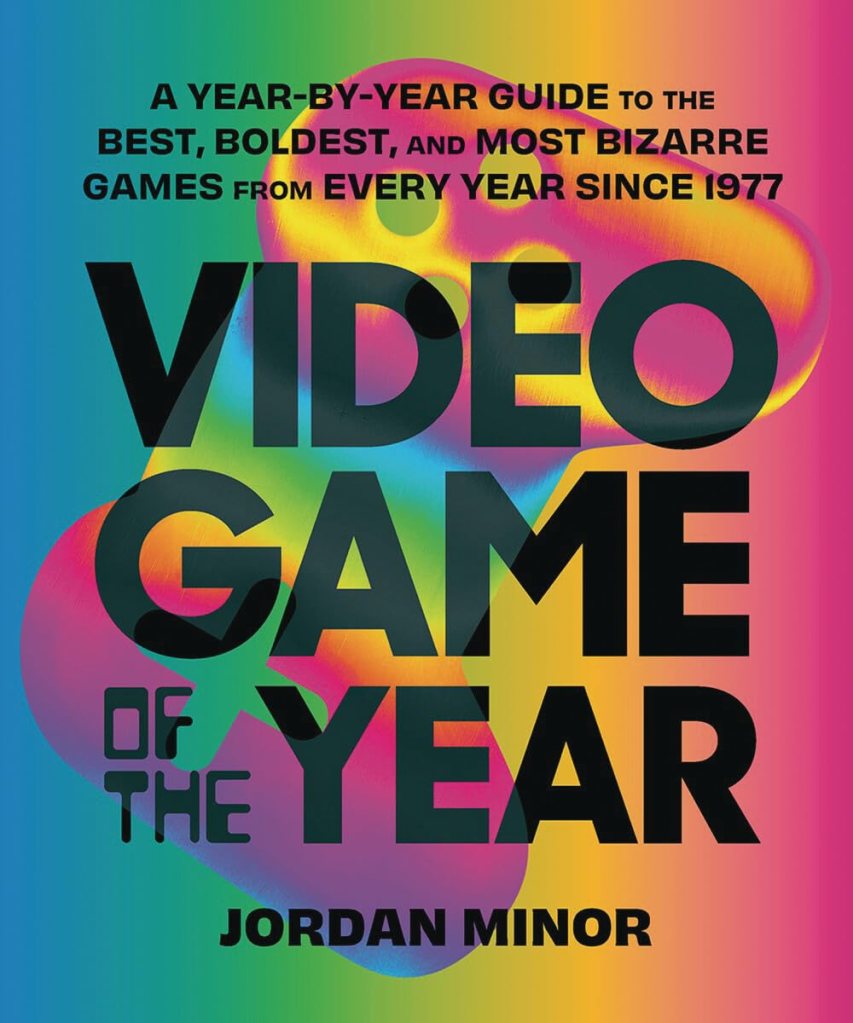
Video Game of the Year

Written by Jordan Minor
I
llustrated by Wren McDonald

Design by Heesang Lee

Published by Abrams Image


The Skinny: 40 years of Video Game History, no controller required.

As a medium, Video Games are very recent and still developing their full potential. Jordan Minor’s new collection of short personal essays, Video Game of the Year, follows them from their earliest cultural impact, the breakout (heh) hit Pong through the market crash of the ’80s, the console wars of the ’90s, the rise mobile phone phenomenon Pokemon Go, and right up to the present. Using one particular title per year as an exemplar, Minor presents a compelling history of the video game industry and hobby. He doesn’t merely catalog his favorite games like a long-form listicle, but by thoughtfully presenting games in order, delivers a narrative of the medium’s development from crude novelty to complex narrative format and cultural powerhouse.
Minor’s writing, accompanied by short inclusions from writers and professionals throughout the gaming industry, is a love letter to the medium, but doesn’t shy away from the darker portions of that history. His chapter on Minecraft highlights both its impact and its creator’s darker history. The chapter on Depression Quest considers games’ unique ability to consider difficult subject matter via interactivity and the ugly reaction and lingering cultural damage of Gamergate. While the chapters are brief, Video Game of the Year is an excellent overview of the history of the medium, and captures both its highs and lows. I wish that Jordan had included a bibliography, or a section suggesting further reading for more specific topics on gaming history for new readers, such as Masters of Doom, Game Over, or Fight, Magic, Items.
The book is formatted as a coffee table book more than a reference or standard non-fiction book. It features wonderful and eye-catching illustrations by artist Wren McDonald, who does not get enough credit for their contributions to the book. Each chapter opens with an image of players gathered on couches in front of a TV or leaning over monitors, with an iconic shot of the game on the screen. The Video in video games is as important as the interactivity, and these illustrations do just as much work as the writing in showing the importance of the selected games, what they mean and why their inclusion in Minor’s list matters
While the illustrations are great, some of the other design choices are a bit harder on the eye. The back cover copy is printed in a rainbow font on a black background, making it difficult for me to read. The style is repeated for the book’s foreword, which was also frustrating. The interior design is broken up into multiple columns on a page, like a print newspaper. I found this choice was also distracting, but none of these choices were enough to make me set the book down.
Video Game of the Year is a smart, stylish look at the history of video games as a medium. It features a number of tiny glimpses, like facets in a jewel, of a grand and often fractious art movement, hobby, and industry. While it doesn’t dig quite as deep as it could into its many topics, it is a fascinating read, and a great first step for readers curious about how gaming got its start.