Home

Hugh Likes Comics: Saga # 1

Leave a comment

Hugh Likes Comics: Saga #1

Written by Brian K. Vaughan

Art by Fiona Staples

Lettering and Design by Fonographics


Saga is a great comic.

It is the story of a young couple who struggle to build a life for themselves in spite of being caught on opposite sides of a terrible war. Hardly a new idea, but Vaughan throws some big twists into the mix. This isn’t their love story. It starts with the birth of their daughter. And the parents are from two alien species that have been fighting an intergalactic war for as long as recorded history.

Marko is an escaped prisoner of war. Alana is the guard who helped him escape, and everyone on both sides wants them dead. Alana just gave birth to their daughter, and the only things they have to protect them is his magic, her gun, and a dubious treasure map. That’s an epic challenge that only a pair of extraordinary individuals could accomplish.

But Marko and Alana aren’t heroes by any stretch of the imagination. Much like his previous work, the epic “Y the Last Man,” Vaughan is telling a story of ordinary people in extraordinary circumstances. The fact that this particular set of circumstances is on a fantastical world on the far side of a distant galaxy only goes to show his talent as a writer.

Saga,” much like that other big-time SF series, (You know the one, also begins with an ‘S’ it’s on the tip of my tongue) is the kind of space fantasy that only comes around once in a generation, and rewrites all the rules. Space fiction is primarily divided by scope. Either it is sprawling Space Opera, with grand scale battles and political maneuverings, or it is more personal and sociological fiction focusing on single characters and personal events. Saga does both, and does it in a brilliant way that satisfies the need for personal drama in the new family’s bid for freedom, and the large canvas as we see the robots, wizards, spies and bounty hunters all line up their sights on the helpless couple and their newborn.

Staple’s gorgeous and provocative art seals the deal. The opening birth scene, while not quite as in-your-face as “Miracle-Man,” doesn’t shy away. Especially when two teams of police interrupt to apprehend the fugitives. Another fine point to the art is the hand-lettered narration, which is incorporated directly in the images.

I won’t spoil any more of the plot, but Vaughan and Staples have me firmly on board for more. Right now, Saga #1 is free on Comixology. I recommend you go take advantage of that.

Hugh Likes Comics: The Top 5 of 2012

Leave a comment

Number 5:

Atomic Robo and the Flying She-Devils of the Pacific

Written by Brian Clevenger

Art by Scott Wegener, Colors by Nick Filardi

Atomic Robo” is a fun, smart action comic. The dialog sparkles, the art is bright and engaging, and the characters have a depth and grace that doesn’t get bogged down in ‘gritty’ melodrama.

This volume, set in the South Pacific after World War II, dealt with some heavy topics: the extreme determination of the Japanese Imperial Army, the discrimination faced by female pilots and mechanics in the second world war, and the abandoned stockpiles of ordinance and other deadly materiel after the conflict. It is a testament to Clevenger’s writing that the presentation manages to balance the slower character moments with dogfights, explosions, and mad science without any of the elements feeling forced or out of place. In fact, they support each other, lending the piece a sort of mad-cap gallows humor.

Number 4:

Edison Rex

Written by Chris Roberson

Art by Dennis Culver

Edison Rex is the story of a supervillain trying to make good. It is also a clever send-up of comics tropes and the industry itself. The series’s extremely flawed but charming protagonist is a fresh voice, and Roberson’s sharp wit, combined with Culver’s expressive figures and gorgeous sets, make this the comic your tablet was made for.

Number 3:

Skullkickers: Treasure Trove Vol. 1

Written by Jim Zub

Art by Edwin Huang

A massive collection of the first two trades, most of these comics came out before 2012, but the big collection came out this year, so it sneaks into this year’s list.

The mis-adventures of a human known only as “Baldy” and a Dwarf called “Shorty,” Skullkickers is an ultraviolent sword-and-sorcery buddy comedy. Equal parts Fritz Lieber and Marx Brothers, the pair struggle against fat werewolves, incompetent necromancers, and Disneyfied, but still incredibly deadly faeries. The main characters (I can’t quite call them ‘heroes’) aren’t discriminating. They’ll kill anything for 2 copper pieces. This series is over the top gory fun that manages to stay firmly on the side of slapstick. Zub’s dynamic writing and Huang’s art that makes the worst carnage downright pretty are the real saviors of this book.

Number 2

Wolverine and the X-Men

Written by Jason Aaron

Art by Various Artists

I love the X-Men, perhaps in theory a bit more than in practice. There are some iconic runs and great stories, but often the comic focussed on the down bits: The losses, the tragedies, and the plight of being different in a world that hates you. The X-men were great, but they weren’t FUN. Aaron’s team is approaching the concept from a different direction, and he’s pulling it off masterfully. With a new batch of students and a brand new school, the X-men cope with keeping everything running with a skeleton crew of adults. The characters are changing, accepting more responsibility, and still having crazy adventures fighting pre-teen arms dealers, killer space biologists, and even the dreaded League of Nazi Bowlers. The series is filled to bursting with crazy comic book moments and high concept shenanigans, but it all works and the Aaron keeps the plates spinning. I can’t wait to see where he goes next.

Number 1

Bandette

Written by Paul Tobin

Art by Colleen Coover

Bandette is an all-ages love letter to French comics, and hands down my favorite book of 2012. Coover’s digital ink-washed art is gorgeous, and unlike anything else out there today. Tobin’s writing is clever, funny, and gives you just enough of the mystery to leave you in suspense. And with a supporting cast of mysterious thieves, gruff police inspectors, and colorful villains, it can only get better from here.

You can find all of these comics on Comixology. Have your own picks? Leave a comment!

Hugh plans, muses laugh

Leave a comment

In deference to the brilliant Brand Gamblin, who I stole this from, I’m committing my writing plan for 2013 here.  It wouldn’t take much effort to look back through this blog’s archives to see that I didn’t meet my goal for writing in 2012.  I try and wear a lot of different hats in the making-stuff-on-the-internet world, and this usually results in long delays as I dicker and generally run around like a chicken with my head cut off.  2012 also had its share of personal drama, both good and bad, but this isn’t a post for excuses, this is a post to get my ass in gear.  So here, dear reader, is what you can expect from me in 2013:

Short story goals:  For the past two years, I’ve halfheartedly participated in a Facebook writing group called “52 weeks, 25 Stories.”  As you can guess, I haven’t pulled through on a lot of those stories, but I have a surprisingly large number of first drafts, fragments, and story outlines that are just collecting virtual dust on my hard drive.  I’m the sort that much prefers plowing through the pure driven white page of the first draft over wielding a deadly red pen, and this has to be the year that I buckle down, take my medicine and learn to love my inner-editor.  My first goal for 2013 is to edit a story a month and get it out the door, into the hands of the doubtlessly huge throng of magazine, podcast, and anthology editors awaiting them.

So that’s twelve stories down for the year.  My other short story goal for 2013 is to submit a new story for each prompt hosted this year at a little site you may have heard of called Every Photo Tells.  I have started a lot of stories based on prompts from the site, but my writing process is a bit too loose to reliably start, finish, and edit a story in thirty days.  This needs to be fixed, and you’ll hopefully be seeing a lot more of me there in 2013.

And now, on to the big guns.

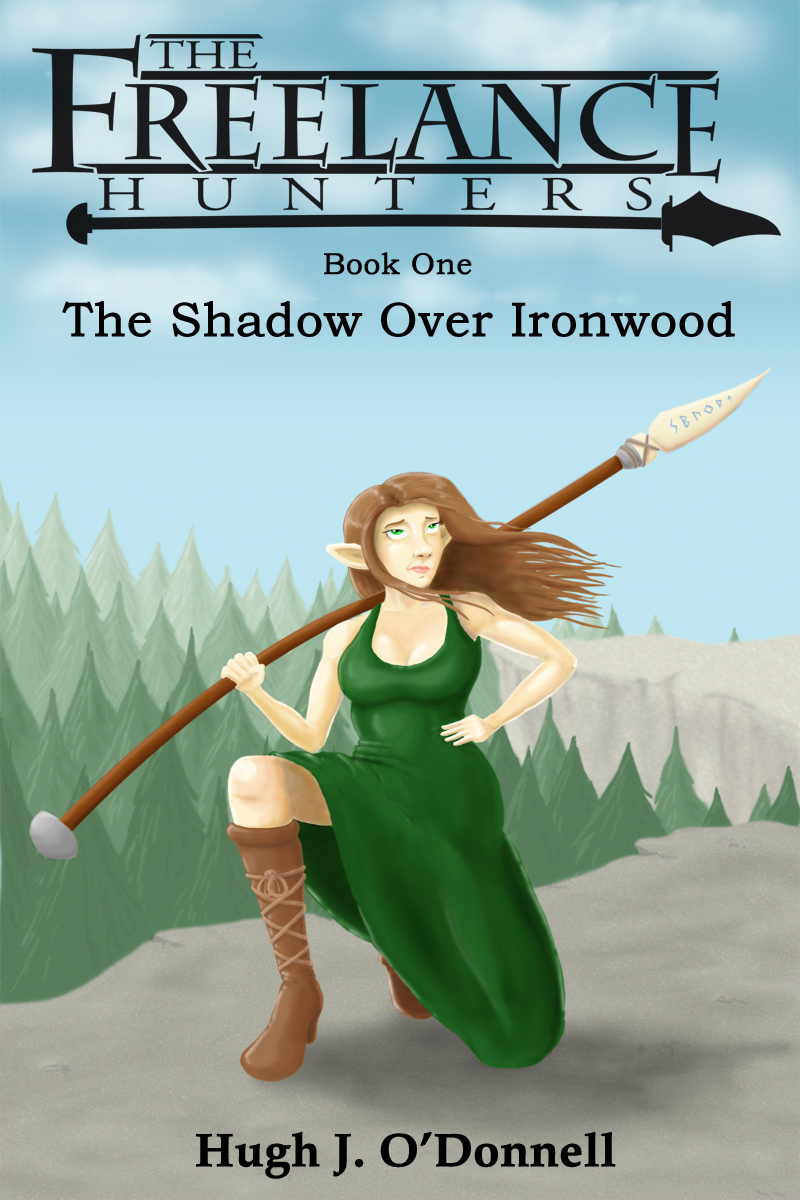
Right now, the long form work that is sitting squarely at the center of my plate is “The Shadow Over Ironwood.”  This is a novella that I’ve been working on, picking up, promising, and putting down again for years, and it needs to be finished and released in ebook by the end of March.  This is kind of a daunting task for me, because it will be my first ebook novel, and I have a lot to learn still about formatting and making the book look and function properly.

The rest of the year is going to be divided between two novels.  “FIrewalker” originally started life as a nanowrimo novel, but I found the ideas I began to play with in the work were too exciting to put down.  With some help from the folks at the Roundtable Podcast, I’ve begun to take the post-nano skeleton, and clone a real live velociraptor of a novel out of it.  My goal for this year is to mold it into shape and send it off to beta readers.

The other novel is one that I’ve been wanting to write for years, but haven’t felt ready to until now.  I’ll be beginning the first draft in February, as soon as “Shadow” is off to beta readers for final feedback.   “Changeling” is an urban fantasy story about breaking down stereotypes and finding your place in the world.  In a more immediate sense, it’s the story of a gay leprechaun hacker who solves mysteries.

Let me explain.  If there is one thing that really bothers me in media, be it movies or television or the written word, it is stereotype.  Even when characters are not necessarily NEGATIVE, I resent the idea of anyone being pigeonholed.  As a nerdy gay man of Irish-American descent, sometimes I feel like I can’t throw a rock without running into one.  “Changeling” is my attempt to steal something back, and it is extremely important to me.  I want people to be able to read it as soon as possible.

So these are my writing goals for 2013:  Three novels and two dozen short stories.  Easy, right?

Hugh Likes Comics: Avengers Vs. X-Men #1

Leave a comment

Written by:  A whole bunch of Writers, Art by John Romita Jr. (pencils)  Published by Marvel.

Available via Comixology or your local comics shop.

Let me begin by saying I don’t like ‘event’ comics. They’re a black hole of pointless continuity, distorting the plots of all the books for the characters that take part for little dramatic payoff. The last big crossover I really liked was “Infinity Gauntlet,” or maybe “Secret War,” although I really only liked that one because it was clear to me that most of the characters were having sex between the panels. My point is, a big crossover event comic has to work damn hard to impress me, and this one just isn’t very good.

I read this on my iPad via Comixology, and it clocks in at a thick 99 pages. And in all that space, nothing really interesting happens. The comic itself opens with a splashy five-page spread of a giant firebird (The Phoenix, naturally,) destroying a planet. Cut to Ms. Marvel flying around New York. The Avengers are standing around on a rooftop being dicks to each other, and she lands to join in. This scene just sets the tone for the whole comic. This is a story about superheroes being unheroic. This issue feels like a successor to a previous big status-quo changing crossover, “Civil War.” That was a story about Iron Man having all his friends arrested because a Connecticut housewife spit on him.

But before the heroes can bicker or stand around anymore, a fireball starts falling through the sky, striking the wing of an airplane and the Empire State Building on its way to earth. This gives the heroes who can fly something to do, and they spring into action. This is a good sign that you aren’t going to see anything new in this comic, with ‘Stoping a Plane Crash’ sitting just behind ‘Punching a Guy’ on the list of things a superhero does with his day. The Avengers use their flashiest powers to save the day before the comic forgets this ever happened.

The art in this is kind of strange. It is clearly New York City, but aside from the Avengers standing around looking like action figures, the city seems deserted. Spider-Man catches some people, or rubble, or something, in a net. (It must be people, as one of them claims they are leaving the city) Two people are seen in a window being shocked at something awesome Iron Man does, and that’s about the whole population of this comic.

The Avengers that don’t have the privilege of cool powers to display investigate the fireball, and find out it’s Nova, whose name can only be spoken with via a flashy logo that takes up about a quarter of a page. He wants to warn them about something, presumably the big fiery avian that’s eating planets somewhere, but he passes out instead. For those counting at home, we are fifteen pages into this comic.

In case you’re worried that those weren’t the good guys, we spend the next five pages watching Cyclops beat up a teenage girl. Then she had phoenix powers, but I’ll fast-forward. Despite the fact that he didn’t actually tell them anything, the Avengers figure out that the falling guy was running from the Phoenix, and that it is therefore totally coming here to destroy the Earth, and the Avengers have decided that they are going to stop that from happening. Which would be fine premise for a comic, except that the thing has been showing up at regular intervals and trying to mate (or something) with psychic ladies in the X-men books for YEARS and the Avengers haven’t cared, nor has the world burned to a cinder. But its a good thing they are interested this time, because Cyclops has some vaguely defined plans for the Phoenix. This is also problematic because the thing has killed his wife, several times. You’d think he’d know better.

Also, Cyclops and the X-men live on a rock in San Francisco Bay now. This is a historical allusion so obtuse that it is shooting not just over the heads of this book’s target audience, but I’ll bet good portions of the writing and editing staff are missing it, too. And it makes the Avengers showing up and telling them to hand over the girl in a big flying fortress problematic to say the least. The issue ends with Cyclops shooting Captain America and pretty much holding the girl hostage.

Fin.

The story makes little to no sense, the art is blocky and unpleasant, and the rest of the 99 pages of the comic are a self-indulgent recap of Nova hitting New York again. This is a pricey, plodding prelude to a story about beautiful people punching each other. It’s poorly put together even if that’s your thing. Give it a pass.

Still going with The Way of the Gun!

Leave a comment

As you may or may not be aware, dear reader, the multitalented Scott Roche is doing an Indiegogo campaign for his proposed anthology, The Way of the Gun.  He’s still a bit short of his goal with just over a week to go, but we can still make this happen!  First, follow this handy link to donate:

www.indiegogo.com/WayOfTheGun/x/406131?c=home

Then, leave a comment or message me to let me know that you did.  While you’re add it, leave Scott a comment and tell him I sent you.  Then, I’ll send you the ebook of your choice from my collection:  “Moving Mountains,” “The Crash,” “The Brisingamen,” or the unreleased “Liu’s Journey” in your choice of format!  So support really good fiction coming soon, and you’ll get passable fiction by me today!  You can’t lose!

Hugh Likes Comics: Bandette #1

Leave a comment

Bandette #1 written by Paul Tobin, art by Colleen Coover published by Monkey Brain Comics and available via Comixology.


Disclaimer: I recently interviewed Ms. Coover and Mr. Tobin on The Way of the Buffalo Podcast. They were delightful.

Also: For the month of November, Monkey Brain Comics will be donating its portion of sales to The Hero Initiative.

Bandette” is my kind of comic: a fun, light, bite of adventure and atmosphere available at a discount price as a digital download. One of the launch titles for Chris Roberson’s Monkey Brain line of creator-owned digital comics, “Bandette” is the story of a faux-french thief whose exploits occasionally put her on the right side of the law. In the opening pages, she explains her dubious legal philosophies to a puppy she meets in the mansion of one of the ‘bad guys’ she steals from. “This is called justice. Or larceny, one of the two.”

Bandette” is refreshingly light hearted, with beautiful ink washed art and cartoonish character designs that reinforce the timeless, child-like frivolity of the comic. It feels both modernly hip, with a heroine who is smart, resourceful, and just a touch immoral, but with the delightfully retro style of “The Pink Panther” and “Lupin III.”

Coming in with a scant 13 pages of story, issue one is a quick jaunt of a tale, both quaintly familiar and unique. In a comics market where the major publishers are rushing to embrace grim and gritty, the charm and wit of Bandette #1 makes a perfect remise en bouche.

Hugh Likes Comics: Atomic Robo & the Flying She-Devils of the Pacific #4

Leave a comment

So here’s a new little use for this blog: A new, short digital comic review every so often. I like comics, and love the Comixology app, so hopefully this will be something I can keep up with. And of course, spoilers to follow.

I’ve never really hidden my love for Brian Clevenger and Scott Wegener’s Atomic Robo comics, and I’m enjoying their latest effort: Atomic Robo and the Flying She-Devils of the Pacific # 4.

Brian and Scott have been deconstructing the issues on Nerdy Show, so go have a listen if you want to hear them discuss it in their own words.

Being the penultimate issue for the series, and man, has that word been coming up a lot around here lately, this is the big reveal of our bad guys, Chokaiten. The reader has been getting hints of their story as Japanese WWII survivors, but now we get their whole master plan. They are a weird science division of the Imperial Japanese army that, rather than surrender, went dark and is now staging a revenge attack which might destroy the western United States, unless of course Robo and the Flying She-Devils, a crew of all-female air pirates with jet packs, can stop them.

I have really been enjoying this volume of Atomic Robo just as a pulpy adventure tale. I love the aesthetics of the She-devils, all of whom are based on real indie comics creators. Their base and tech really had the feel of being held together by twine and hope, but also had the feeling of that technical leap that WWII enabled.

The Japanese villains, however, go a bit to far and becomes a bit silly. For story purposes, I can accept the idea that their country surrendered but they didn’t. But, the idea that the Japanese government forgot where all their best scientists and pilots were hidden doesn’t make much sense. The very existence of this kind of secret project being conducted by the notoriously cash-strapped Japanese forces without getting cannibalized strikes me as unrealistic, and that’s all before the UFO fighters and their earthquake bomb.

“Flying She-Devils” is a lot of fun, but it isn’t as smart as the other Action Science adventures. I recommend a read, but don’t look too deeply. This one’s just for fun.

Review: Wrayth by Philippa Ballantine

Leave a comment

Disclaimer: I have met Ms. Ballantine several times, and we are acquainted through social media. She has appeared twice as a guest on the Way of the Buffalo podcast. A review copy of Wrayth was provided by the publisher.

Wraith is the third of four books in Phillipa Ballantine’s “Books of the Order” series, and continues the spirit hunting adventures of Deacons Sorcha Farris and Merrick Chambers, along with the possessed prince-turned pirate Raed Rossin. The novel contains all of the fantasy action, cool ghost-centric magic, and dark political rumblings that fans of the series have come to expect. It moves the plot along in some very cool ways, introducing the reader to new Geistlords, spirits with immense power and subtle plans. One is the titular Wrayth, a sort of vampiric hive mind with plans of conquest. Another is the Fensena, a Coyote spirit who seems just as much the trickster as his mythological counter-part.

The Books of the Order are a fun, high-concept series full of all kinds of twists and turns, and I can’t wait for book four to bring everything to the suitably epic conclusion. Wrayth is an enjoyable entry that reveals lots of new details for our main characters, and arranges all the pieces on the board for the cataclysmic finale, but it suffers from the same problems that many penultimate series entries do: It saves a bit too much for the last book.

Overall, the novel feels a little too pared down. The pace is very fast, and rewards a careful read, but all the adventure passes by in a blur. The series focuses mainly on the three leads, with some major revelations about Sorcha’s origins, and Raed’s connection to the Rossin, the leonine geistlord that rides him. Aside from a few notable exceptions, the supporting characters feel more like extras. Raed’s crew members and the other deacons don’t really get much page space to shine. In a few places, I had to go back to the earlier entries to recall who some of the characters were. Some plot threads were snipped a bit too suddenly and cleanly, and the reader didn’t nearly get as much of a chance to steep in the wonderfully gothic atmosphere of Arkaym as in previous books. I would have loved to have seen this novel spread out over two books, or even given another hundred pages or so to breathe. Ms. Ballantine’s tales are a fine vintage, well worth sipping and savoring. Even the quick shots offered in Wrayth are fine, but I hope that the final book gives us more time to enjoy the world and characters Ms. Ballantine has created.

Support The Way of the Gun on Kickstarter!

2 Comments

You know what’s cool?  Samurai.  You know what else is cool?  Westerns.  That’s why you should go support Scott Roche’s Way of the Gun anthology on Kickstarter!

Scott is making an anthology of cool crossover Samurai westerns and he’s bringing in some really cool authors to help him out.  I’m not directly involved in this collection, but I want it to succeed, very badly.  So I’m not just putting my money where my mouth is, I’m putting up my own ebooks for backers.

Kick in $5, and I’ll send you a double pack of ebook short stories:  “The Brisingamen” and “The Crash.”  Donate $10, and I’ll send you two more:  “Moving Mountains” and the as-yet unavailable in print “Lou’s Journey.”  But if you want to get these ebook collections, you have to go support The Way of the Gun.  Already donated?  Just increase your pledge by $5 or $10 and you’ll still get the ebooks.

Can’t afford $5?  Spread the word.  Scott’s kickstarter is approaching its last week, and I’d hate to lose out on this totally awesome story collection.  Tweet, reblog, and share this post or just follow the link back to Scott’s kickstarter video and share it on Youtube.  You can help bring an incredibly awesome project to life.

Final Fantasy II: The One With The Evil Empire

Leave a comment

Original Release Date: 1988

System: Nintendo Famicom

Final Fantasy II is a game that is that feels both very different from its predecessor and very similar to its sequels. It is perhaps the strangest and most frustrating installment, but at the same time laid the foundation for many of the themes and plot elements that would become series standards.

First of all, this is a difficult game. Its learning curve is a bit steeper than the first game, and it doesn’t wait around for you to get warmed up. After the brief introductory text screen, the player is brought straight into… COMBAT! What’s more, this is a battle that your four starting characters have no hope of winning. You are completely outclassed, and MIGHT have the chance to attack once. You won’t do any damage. Rather than getting a game over screen, the characters wake up to find that they have been rescued, for the moment. Unfortunately, it’s just the three of them. One of them wasn’t found.

This missing crewman is a nice touch because it works for both the story and the gameplay, the holy duology of game writing. Leon’s disappearance personalizes and escalates the tension of the war. Having only three permanent characters leaves a slot open for new characters to join or leave the party as the game progresses, adding variety. This is a narrative trick that is commonplace later in the series, sticking characters together both for dramatic effect and to allow the player to experience multiple play styles.

While finding your missing companion is somewhat a goal of the game, the characters quickly become swept up in a rebellion against the evil empire attempting to wipe them all out. Rather than commanding a host of military units, your three characters go on supply runs, rescue missions, and commando raids to help turn the tide. This mission structure allowed FF2 to tell a much deeper story than FF1, with standout moments of betrayal, sacrifice, and triumph. The more rounded characters and personal story elevate the plot of Final Fantasy II above the comparatively retrieval quest of the first game. The thematic elements of a small band struggling against a powerful, omnipresent imperial force became a series staple.

Gameplay was also refined in the second game. Final Fantasy II completely ditched the experience points found in other games in favor of a more organic system of advancement. Instead of gaining levels by obtaining experience points, your characters’ actions determined their progress. You increased your strength by attacking, your magic by casting, and your hit points and defense by getting attacked. Weapon skills and magic worked the same way. This meant that your three characters were extremely customizable. It also meant that in order to keep gaining in power, you had to fight enemies that were more powerful than you, unless you cheated. There was a bug in the original versions of the game that allowed you to gain hit points and strength more quickly by attacking yourself. This led to some pretty unique leveling up. However, it does contribute to the game’s thematic elements. Rather than simply ticking off rungs on a latter, if feels like your characters really are developing organically.

Another unique feature to FF2 was the password system. During certain dialogues with NPC characters, the player had the chance to choose a phrase that the character had memorized, much like the dialogue trees in later Bioware RPGs. These choices usually just provided clues to the player about where they had to go next, or brought up some humorous bit of extra text. The player wasn’t able to significantly change the story by using them. It was a very basic system, but an interesting development for the time.

Despite the game’s many positive points, there are quite a few problems. The most glaring issue is the advancement system. As I stated above, the game doesn’t tell you when you gain experience, so it is VERY difficult to tell if you are making real progress. Also, because the magic system works the same way as all of the other advancement systems, your spells start out very weak. This is even true for the powerful magic you obtain late in the game. This pads out the game into a bit of a grind as the player has to fight enough random monsters so that the ultimate magic actually does a fair amount of damage.

The other major problem the game his is the hardware limitations of the 8-bit Nintendo Famicom (NES) system. FF2 has a lot of standout story moments, but many of the key plot points happen while the player is far away, searching for some macguffin in the depths of a cave on the other side of the map. Coming back to find the whole town died in the Empire’s latest attack gets old after the first couple times. Unfortunately, the 8-bit cartridge just didn’t have the power to tell the kind of story later games in the series could.

Final Fantasy II was never officially released internationally until 2003, so there is a bit less nostalgia for the game than others in the series. The game introduced some of the most enduring themes and story elements of the series, but in many ways it remains the black sheep of the Final Fantasy family.

Next up: Final Fantasy III, the point where the series began cultivating class.

Older Entries Newer Entries